




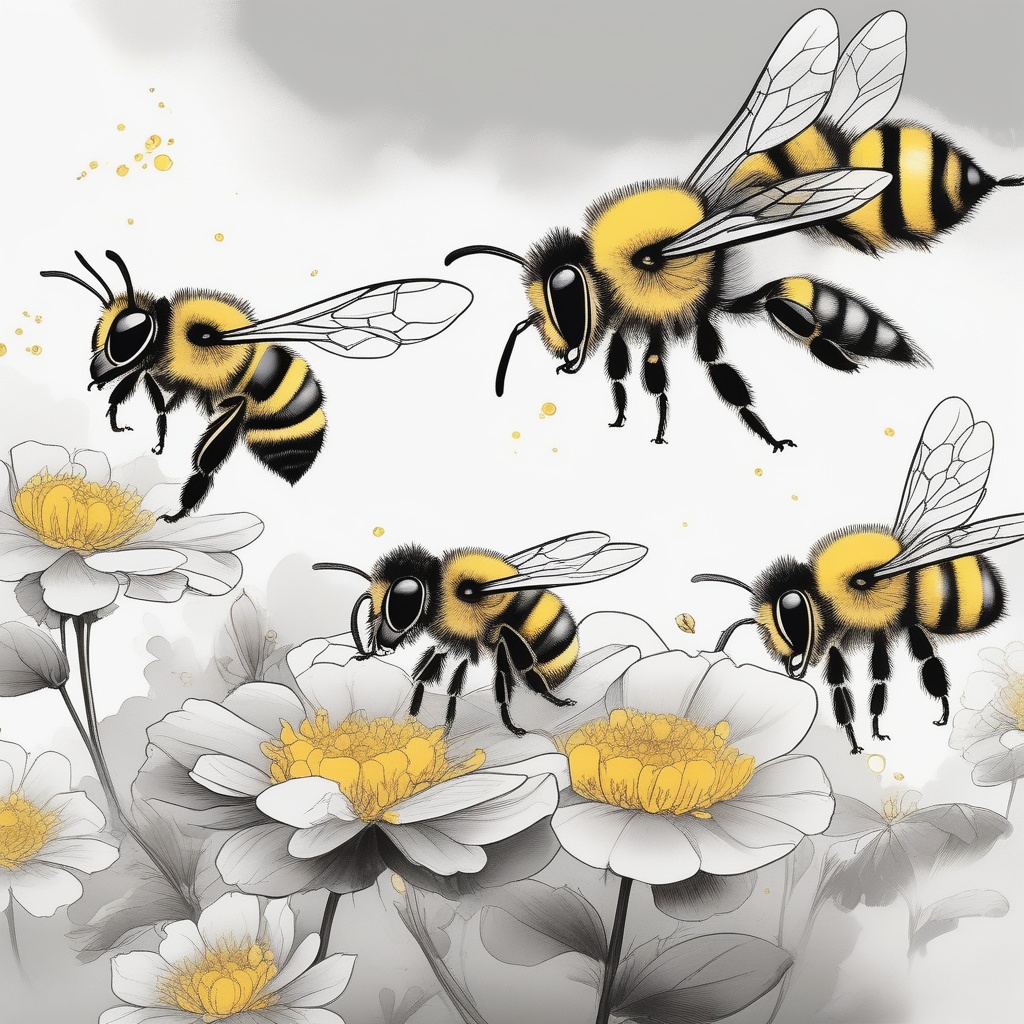
Alcohol’s Impact on Bee Motor Functions and Social Behavior
When a hive swarms around a sugar‑laden feeder, the sudden influx of ethanol can turn the bustling scene into a study in chaos. Researchers from Ohio State University have shown that even the tiniest drop of alcohol can shake a honey bee’s nervous system, mirroring how humans stumble after a few drinks. The key observations - slowed flight, diminished grooming, and a bewildering tendency to lie upside‑down - reveal a common thread between insect and human responses to ethanol.
In the wild, honey bees forage for nectar, carrying the sugary liquid back to the hive. By adding ethanol to that nectar, scientists can observe how a bee’s body reacts to a chemical that humans also ingest. The effects are unmistakable: as blood alcohol levels rise, motor coordination deteriorates. Bees lose the ability to balance on their legs, which translates into hours spent flat on their backs, unable to right themselves. This loss of postural control appears within the first ten minutes after ingestion, a blink of an eye compared to the hours it can take a human to feel drunk.
Beyond movement, ethanol also interrupts social interactions. Bees are highly social, communicating through pheromones, vibrations, and touch. Alcohol appears to dampen these channels, leading to confusion and reduced cooperation. In some trials, researchers noted an increase in aggressive behavior - a stark departure from the normally docile, cooperative nature of worker bees. While the full spectrum of behavioral changes remains under study, the initial data suggest that the nervous system’s response to ethanol is conserved across species, affecting motor and social functions alike.
Interestingly, the severity of these symptoms scales with the amount of ethanol consumed. Bees exposed to a 10% solution - roughly the strength of table wine - showed only mild disturbances after 20 minutes. In contrast, a 100% ethanol solution, equivalent to 200‑proof grain alcohol, produced immediate and pronounced incapacitation. The consistency of this dose‑response curve strengthens the case that the honey bee can serve as a reliable proxy for human alcohol studies, at least at the behavioral level.
These observations are not merely anecdotal. The research team, led by postdoctoral researchers Julie Mustard and Geraldine Wright, meticulously recorded each bee’s behavior, time‑stamping periods of flight, walking, grooming, and the notorious upside‑down episodes. The data confirm that motor impairment, memory disruption, and social disarray are interlinked effects of ethanol. As scientists explore deeper, the parallels to human cognition - such as memory lapses after heavy drinking - might unlock new insights into how alcohol alters brain function across the animal kingdom.
Moreover, the bee’s compact brain provides a unique window into molecular changes. Ethanol’s impact on neurotransmitters, synaptic plasticity, and gene expression can be traced in real time, offering a more granular view than possible in larger mammals. By mapping these molecular pathways, researchers can identify potential targets for treating alcohol‑related disorders in humans, turning a tiny insect into a powerful ally against addiction.
Ultimately, the study underscores the universality of ethanol’s influence on nervous systems. Whether in a honey bee’s abdomen or a human’s bloodstream, the compound’s signature - impaired motor control, altered social behavior, and disrupted memory - remains consistent. This consistency paves the way for cross‑species research that could accelerate our understanding of alcohol’s biology.
Experimental Setup: From Straws to Sucrose and Ethanol Solutions
The research began with a simple idea: feed bees a measured amount of alcohol and observe the outcome. To do this, the team harnessed bees inside a small, transparent tube fashioned from a drinking straw. The harness restrained the insect enough to prevent escape, yet left the legs free to perform natural motions. Inside the tube, a syringe delivered precise volumes of liquid - each solution mixed from pure ethanol and sugar to mimic natural nectar.
Three ethanol concentrations were chosen to span a realistic range: 10%, 25%, and 50% by volume. The 10% solution mirrored the alcohol content found in common wines, while the 50% solution approached the potency of industrial spirits. To push the limits, a subset of bees received a 75% solution, and a handful were given a 100% ethanol mixture - essentially pure alcohol with no sugar component. A control group received only a 100% sucrose solution, ensuring that any observed changes could be attributed to alcohol rather than sugar itself.
After feeding, each bee entered a 40‑minute observation window. High‑resolution video cameras recorded every angle, capturing the insect’s posture and movements. Researchers then parsed the footage, marking each moment spent flying, walking, grooming, or lying flat. These behavioral metrics provided a quantitative baseline for comparing the effects of varying alcohol doses.
Simultaneously, researchers took small blood samples from each bee’s hemolymph - its circulatory fluid analogous to human blood - to measure ethanol concentration over time. Using a micro‑spectrophotometer, they quantified the ethanol content at 10‑minute intervals, creating a timeline of alcohol absorption and metabolism. The data revealed a clear pattern: ethanol levels climbed steadily during the first 20 minutes, then plateaued as the bees began to metabolize the compound.
When the researchers linked the behavioral logs with hemolymph ethanol readings, a compelling dose‑response relationship emerged. Bees that ingested the lowest ethanol concentration (10%) maintained normal activity for almost an hour before showing any signs of intoxication. Those receiving 50% or higher concentrations fell to a stunned, upside‑down state within minutes. This relationship between alcohol dose and motor impairment underscores the reliability of the experimental design and its potential for future studies.
Importantly, the experimental setup was designed to maintain ethical standards. The harness allowed for the safe capture of data without harming the bees, and the feeding volumes were carefully calculated to avoid lethal doses. The team also adhered to established protocols for working with live insects, ensuring that the results reflected natural behavior rather than artificial stress responses.
Future iterations of this experiment could introduce additional variables, such as varying sugar concentrations or adding pheromonal cues, to simulate more realistic foraging conditions. By expanding the experimental framework, researchers can dissect how different environmental factors modulate the intoxicating effects of ethanol, providing deeper insight into both bee ecology and human alcohol consumption.
Why Bees Matter for Human Alcohol Research
At first glance, a honey bee’s tiny brain seems an unlikely candidate for studying a complex human disorder like alcoholism. Yet, the evolutionary conservation of neural circuits offers a powerful reason to focus on these insects. The honey bee’s nervous system contains neurotransmitter pathways - dopamine, serotonin, octopamine - that are strikingly similar to those in mammals. When ethanol interferes with these pathways in bees, the resulting behavioral changes mirror those seen in humans: impaired coordination, memory loss, and increased aggression.
One major advantage of using bees is the scale of their brains. Their neural architecture is compact enough to allow for high‑resolution imaging and gene expression studies that would be prohibitively expensive or ethically fraught in larger animals. Researchers can track how specific genes respond to alcohol exposure in real time, revealing mechanisms of tolerance and addiction that might be conserved across species.
Moreover, the social context of bee colonies adds another layer of relevance. Alcohol’s effect on social behavior - such as aggression or cooperation - has been a cornerstone of human addiction research. Bees, like humans, exhibit complex social behaviors that can be quantified. By monitoring changes in aggression, grooming, and communication after ethanol exposure, scientists can parse out how alcohol disrupts social networks, a critical component of addiction’s spread and maintenance.
Data from bee studies also have a translational edge. The dose‑response curves derived from bee behavior provide a template for estimating human risk levels. If a 10% ethanol solution induces noticeable motor impairment in bees, it suggests a threshold that might parallel human intoxication levels. While direct scaling is impossible, these relative measures help guide public health recommendations and inform the design of behavioral interventions.
In addition to behavioral insights, bees offer a unique window into the metabolic pathways that process alcohol. The enzymes responsible for ethanol breakdown - alcohol dehydrogenase and aldehyde dehydrogenase - are evolutionarily conserved. Studying how these enzymes operate in bees can illuminate variations in human metabolism that contribute to differing susceptibility to alcohol-related diseases.
Finally, bees serve as an ethical and cost‑effective model system. Working with insects sidesteps many regulatory hurdles associated with mammalian research, allowing for rapid iteration and large sample sizes. This flexibility is essential for dissecting the nuanced effects of chronic alcohol exposure, which requires repeated dosing and long‑term observation.
In sum, honey bees provide a multifaceted platform that bridges behavioral science, neurobiology, and public health. Their conserved neural circuitry, social complexity, and amenability to controlled experimentation make them an invaluable asset in the quest to understand and ultimately mitigate alcohol’s impact on human health.








No comments yet. Be the first to comment!