





Introducing the Latest Version of Google’s Enterprise Search Appliance
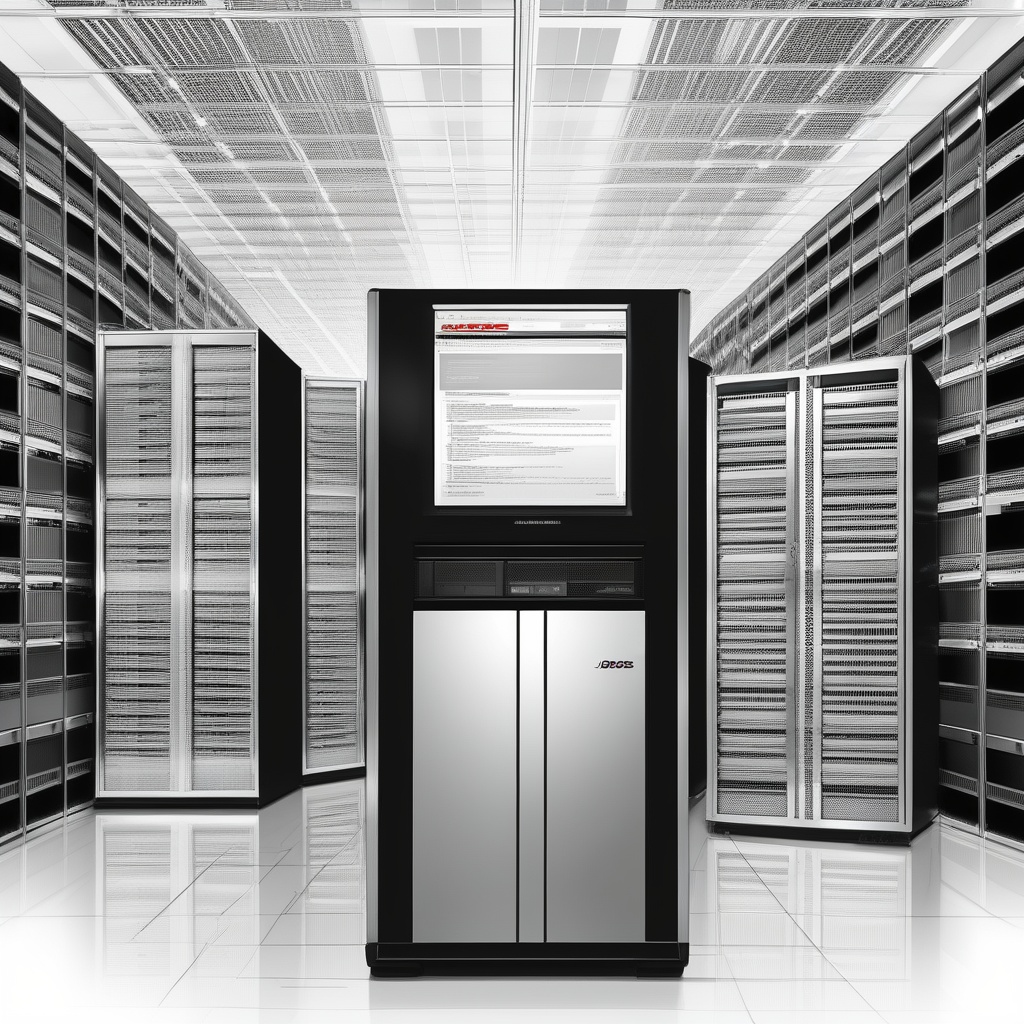
On June 2, 2004, Google made a significant announcement that reshaped how businesses think about internal search. The company rolled out an upgraded version of its Google Search Appliance (GSA), a hybrid hardware‑software system engineered to bring the same precision and speed of Google’s public search engine to corporate intranets and external websites. The upgrade was built with a clear goal in mind: to boost search performance, increase index capacity, and streamline maintenance for organizations that rely on fast, accurate information retrieval.
At the core of this new generation is a leap in query handling. The appliance can now process more than 300 queries per minute - a notable improvement over its predecessor. This higher throughput translates into fewer waits for users and a smoother experience when multiple departments pull data simultaneously. Alongside the faster query response, the GSA’s index can grow to encompass over 15 million documents. That capacity means even the largest enterprises, with sprawling document repositories, can index everything from internal reports and legal files to marketing materials and technical specifications without sacrificing performance.
Continuous crawling is another hallmark of the updated GSA. Rather than relying on periodic scans, the appliance constantly monitors source sites and files for changes. Whenever a document is added, updated, or removed, the crawl updates the index in near real time. This feature ensures that users always receive the most current information, reducing the lag that often plagues static search systems. The continuous crawl works hand in glove with Google’s proven search algorithm, delivering relevance and relevance scores that mirror the experience users expect from the web.
Google released three distinct models to cater to a range of business sizes and deployment strategies. The GB‑1001 focuses on small to medium‑sized environments and can index roughly 1.5 million documents, making it a good fit for companies with focused knowledge bases. The GB‑5005 adds a built‑in automatic fail‑over capability, designed to keep search services running even when one component encounters an issue. This redundancy is vital for organizations that cannot afford downtime in their daily operations. Finally, the GB‑8008 is built for global corporations that require a centralized deployment model. It supports large‑scale indexing while coordinating across multiple business units, ensuring consistent search results no matter where a user is located.
Installation and support are packaged together as a complete solution. When a customer purchases a GSA, they receive the hardware, the accompanying software stack, and two years of customer support. This bundled approach eliminates the need to source separate hardware or find additional maintenance partners. Support teams are available to help with configuration, performance tuning, and troubleshooting, which keeps the system running smoothly over its initial lifecycle.
Price points reflect the appliance’s capabilities. Entry‑level units start at about $32,000, while the top‑tier GB‑8008 can reach $175,000. Although the cost may seem steep, many businesses find that the productivity gains - faster search times, fewer redundant queries, and less manual indexing - offset the upfront investment quickly. Moreover, the reduction in IT overhead and the lower chance of system failure add intangible value that is difficult to quantify in a simple cost‑benefit analysis.
Dave Girouard, Google’s general manager for the enterprise division, summed up the product’s promise in a press release. “The Google Search Appliance addresses a fundamental need for better search in the enterprise,” he said. “We deliver relevant Google search results for users while lowering the cost and lessening the amount of time required to manage search on intranets and consumer‑facing websites.” His remarks echo the experience of many organizations that have already embraced the technology, noting how the appliance’s ease of use and reliable performance have become central to daily workflows.
In addition to the technical specifications, the upgrade also includes a modernized user interface that simplifies administrative tasks. Configuration is largely handled through a web‑based console, and the appliance integrates with existing authentication and authorization frameworks. That integration means security policies can be applied consistently across all search results, a feature that is especially important for regulated industries that must control access to sensitive data.
With its combination of speed, scale, continuous indexing, and enterprise‑ready features, the new GSA is poised to become a cornerstone for organizations seeking to harness the power of Google’s search technology within their own ecosystems. Whether a company wants to improve employee productivity, enhance customer self‑service portals, or support global knowledge sharing, the updated appliance offers a comprehensive solution that keeps pace with modern information demands.








No comments yet. Be the first to comment!