




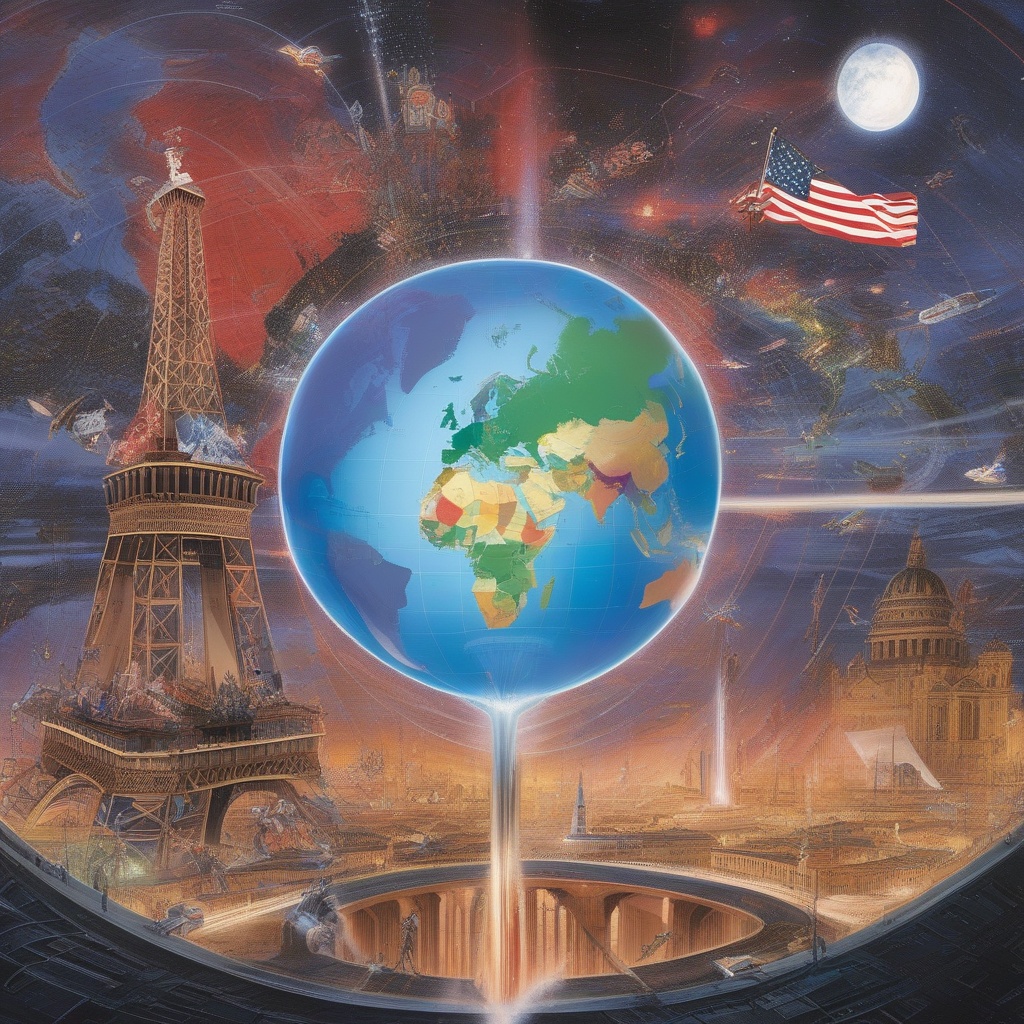
"[T]he Internet [is] the most recent and the most sinister facet of American cultural imperialism to emerge: the Internet is anchored in the United States; the vast majority of World Wide Web sites are based in the U.S and are in English; most software used to navigate the Internet is in English; and search engines are in English (
Jean-Claude Juncker seemed especially incensed, saying, "Europe must not submit in the face of virulent attacks from others."
As I am writing this, I realize that it is difficult to decide how to react to such claims. Nineteen whole countries mobilized against an American search engine?
At first, it's laughable. And then, angering. And then laughable again.
At the very least, from an American perspective, it is hard to understand. You can barely quiet the giant "so what?" boulder ping-ponging though your skull long enough process it. Could they really be that threatened by a research tool living in some abstract realm of space?
French feelings of insecurity are nothing new. They have feared intrusion of American culture for years. There are a number of laws regarding public use of language-guarding against the use of "Franglais," or English-French mutations. The word "cheeseburger" was vilified, and there is a law that at least prank, where a Canadian student googlebombed the "I'm Feeling Lucky" feature of Google to the end that when a user typed in "French military victories," a page turns up finding no examples and asking, "Did you mean French military defeats?'"
But truthfully, this goes beyond America's love-hate relationship with France. It seems the entire world is forming a love-hate relationship with America.
Take, for example, the musings of Canadian writer, China's emerging Internet market has caught the ever-expanding hungry eyes of Yahoo, Ebay, and Google.
The appetite seems to go both ways. People worldwide, the general consumer at least, are embracing what American companies have to sell. Understandably, these companies are, in turn, exploiting the markets. This is the nature of a global economy, and along with it comes, perhaps to an extreme, nationalistic outrage and rejection of what is perceived as cultural imperialism.
But realistically, isn't it as simple as America having something to sell, and the world wants to buy it? Is that a conspiracy? Or is it a challenge to the rest of the world to produce?
Those questions aside, it is becoming clear to the Europeans that a presence on the Internet has become extremely important. In the words of Hungarian Culture Minister
Please sign in to leave a comment.
Comments (0)
Google, The French, and World Domination; The Culture War Begins
0 views
Latest News
-
Revision Prompts to Tighten Prose Without Losing Your Voice
May 13, 2026 -
Memoir Writers Using AI Ethically for Memory Prompts
May 13, 2026 -
Creative Poetry Prompts Specifying Meter, Image, and Volta
May 13, 2026 -
Iterative Prompts for Turning Messy Outlines into Dynamic Scenes
May 12, 2026 -
AI-Powered Character Questionnaires That Feel Truly Specific
May 12, 2026





No comments yet. Be the first to comment!