




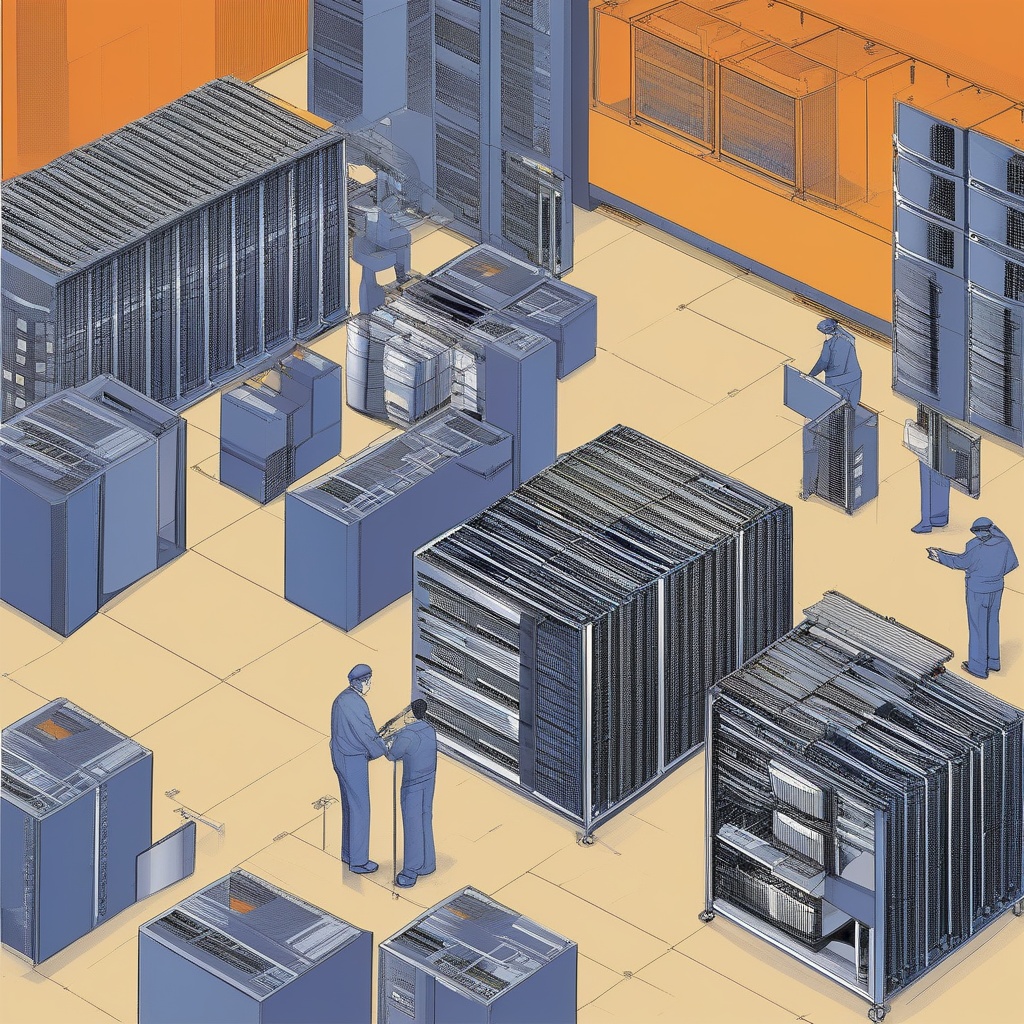
Streamlined Archiving for PeopleSoft: How Princeton Softech Meets the IBM TotalStorage Data Retention 450
When a company relies on PeopleSoft for its core financial and enterprise operations, the pressure to keep long‑term data accessible while satisfying regulatory rules grows year after year. The rate at which storage requirements for compliant data are projected to rise - at about 64 percent annually - puts a premium on solutions that can grow with the business without driving up costs. Princeton Softech’s new archiving platform addresses this challenge directly by targeting the IBM TotalStorage Data Retention 450 (DR 450), the industry’s flagship appliance for long‑term, tamper‑proof storage.
The solution, called Archive for Servers PeopleSoft Enterprise Edition, builds on Princeton Softech’s proven experience in database archiving. By integrating with the DR 450, it gives PeopleSoft users the ability to move large swaths of transactional data - such as payroll, account receivables, or supply‑chain records - into a secure, immutable archive. Importantly, the platform doesn’t lock data away forever; it preserves the ability to pull back specific subsets for analysis or audit, keeping the data usable for day‑to‑day decision making.
Unlike generic backup tools that store data in a single, often hard‑to‑retrieve format, Archive for Servers offers a structured, query‑friendly archive. Users can retrieve financial statements from a specific fiscal year or pull employee data that dates back over a decade, all without disturbing live operational systems. That distinction matters because PeopleSoft’s architecture can become sluggish when it must sift through petabytes of data to generate reports. Offloading older records to a dedicated appliance keeps the PeopleSoft environment lean and responsive.
Princeton Softech’s approach also tackles the human factor in data retention. Rather than leaving archivists to manually decide what to keep or how long, the platform integrates with IBM’s Tivoli Storage Manager (TSM). TSM automatically enforces retention policies defined by the organization, ensuring that critical records survive until the last day they’re legally required, and are then securely sealed to prevent tampering. This combination of policy‑driven retention and immutable storage meets the strictest compliance standards without demanding extra administrative overhead.
One of the most compelling aspects of the platform is its pricing model. By letting customers keep their archive on the DR 450, they avoid the recurring costs of cloud storage subscriptions or the maintenance fees of on‑premises tape libraries. The DR 450’s non‑erasable, non‑rewritable medium guarantees that data remains unchanged, while the Archive for Servers software ensures that customers pay only for the storage they need - no overprovisioning, no waste. This alignment between storage cost and data volume is particularly attractive for midsize firms that need to keep costs predictable but are also bound by ever‑expanding regulatory demands.
From a technical perspective, the solution is engineered for high throughput. While people often fear that archiving will slow down existing systems, Princeton Softech’s architecture uses asynchronous data pipelines that pull data out of PeopleSoft without locking tables. The archive can be populated during off‑peak hours, and queries can run against the archive in parallel with live operations. That design reduces the risk of performance bottlenecks that can derail business processes.
Another benefit comes from the software’s compatibility with existing PeopleSoft data models. Rather than requiring a re‑schema or new tables, the archive layer reads directly from the database schemas PeopleSoft already uses. This means that the migration path is straightforward: administrators can start archiving immediately after installing the platform, without re‑architecting their applications.
Princeton Softech’s partnership with IBM adds further confidence. The product has passed IBM’s rigorous TotalStorage Proven Program, which evaluates third‑party software for full interoperability with the DR 450. Being the first vendor to achieve that certification signals that the solution meets IBM’s strict standards for reliability, security, and performance. Customers can therefore be assured that their investment in the DR 450 remains protected and fully supported.
When PeopleSoft users ask about the impact of long‑term archiving on their day‑to‑day workflows, the answer is clear: the Archive for Servers platform preserves their ability to access critical data whenever needed, while freeing up space and reducing query times on the live system. By combining a proven archival strategy with a secure, policy‑driven storage appliance, Princeton Softech gives enterprises a cost‑effective, compliant, and scalable path to manage their data lifecycle.
Seamless Compatibility and Proven Integration Through IBM’s TotalStorage Proven Program
One of the biggest concerns for companies looking to add a new archival component is how well it will play with the existing IT ecosystem. Princeton Softech’s Archive for Servers tackles this concern head‑on by building on the IBM TotalStorage proven architecture. The platform was evaluated against the DR 450 through IBM’s TotalStorage Proven Program, a certification that tests for full integration, data integrity, and performance under realistic workloads.
During the certification process, the software was tested in a variety of environments: from smaller mid‑market deployments to larger, multi‑region configurations. The result was a robust, production‑ready solution that can seamlessly move data from PeopleSoft to the DR 450 and back again when necessary. This level of validation removes a significant amount of risk for customers; they no longer have to worry that an untested third‑party tool will break their ERP workflow or cause data corruption.
The integration with IBM Tivoli Storage Manager (TSM) is a critical element of the overall solution. TSM’s policy engine governs when data is archived, how long it stays accessible, and when it is sealed. Because TSM already sits in many enterprises’ storage stacks, adding Archive for Servers does not require a separate management layer. Instead, administrators can continue to use the familiar TSM console to set retention policies that apply to both live PeopleSoft tables and archived copies. This unification simplifies day‑to‑day operations and reduces the learning curve for storage teams.
From a security perspective, the combined solution adheres to industry best practices. The DR 450’s write‑once, read‑many architecture ensures that once data is stored, it cannot be altered or overwritten, satisfying the non‑erasable requirement that regulators often impose on financial records. Princeton Softech’s software adds an additional layer of cryptographic protection, encrypting data at rest before it reaches the storage appliance. The encryption keys are managed through the organization’s existing key management system, meaning there is no extra overhead for compliance teams.
Performance is another area where the partnership shines. The DR 450 is engineered for high‑throughput, low‑latency access to large data sets. By matching that hardware with Archive for Servers, customers can retrieve archived records quickly - often within seconds of issuing a query. This performance boost is particularly noticeable when the archive contains billions of rows of transactional data, such as payroll entries or account receivables. In those scenarios, retrieval times that would normally take minutes on a tape system drop to milliseconds on the DR 450.
In terms of scalability, the platform can handle growth both horizontally and vertically. The DR 450 itself scales by adding additional storage nodes to a cluster, allowing customers to increase capacity without re‑architecting the archive. Archive for Servers supports this scaling natively; it can write to multiple nodes simultaneously, and the software automatically balances load across the cluster. This elasticity means that organizations can grow their data archives over time without disrupting existing workflows.
Princeton Softech also offers robust monitoring and reporting tools. The platform can generate compliance reports that map each archived record to its retention policy, making it easier for auditors to verify that data is being handled correctly. Additionally, administrators can set up alerts that notify them when a retention window is about to close, or when data reaches the maximum age allowed by the policy. These proactive notifications reduce the risk of non‑compliance and give auditors a clear audit trail.
When customers compare this solution to traditional backup or tape‑based archives, the differences become apparent. Tape archives often require manual intervention to retrieve data and can suffer from latency and storage inefficiencies. Cloud‑based object storage offers elasticity but can incur ongoing operational costs and may not provide the same level of tamper‑evidence as a write‑once appliance. The combination of Archive for Servers and the DR 450 strikes a balance: it offers hardware‑level immutability, high‑performance access, and a policy‑driven management interface - all within the existing IBM ecosystem.
Ultimately, the result is a cohesive, low‑friction addition to any PeopleSoft deployment that wants to meet regulatory requirements without adding operational complexity. By leveraging IBM’s proven architecture and Princeton Softech’s dedicated archiving expertise, companies can confidently store their most sensitive data for the years it needs to survive.
Driving Compliance and Cost Savings for Enterprises with a Unified Information Lifecycle Management Solution
Regulatory mandates have turned data retention from a best practice into a legal obligation for many businesses. Whether it’s Sarbanes‑Oxley, GDPR, or industry‑specific rules, companies must prove that they preserve key records for a specified period - often many years - while also maintaining the ability to access them when needed. Princeton Softech’s integration with the IBM TotalStorage Data Retention 450 offers a clear answer to these twin demands: it provides a secure, compliant archive that also keeps data useful.
Alan Stuart, IBM’s Chief Strategist for Data Retention Solutions, notes that compliance storage demands are escalating rapidly. He explains that companies must “maintain access to information on‑demand” and that solutions like the TotalStorage Proven Program help reduce total cost of ownership. Princeton Softech’s partnership with IBM brings that vision to life by delivering a platform that marries IBM’s hardware strengths with a software layer designed for PeopleSoft environments.
From an information lifecycle management (ILM) perspective, the platform supports the entire journey of data: capture, storage, retention, and eventual secure deletion. When a transaction enters PeopleSoft, it remains in the live system for the period required for daily operations. Once it becomes “historic,” the Archive for Servers software automatically moves it to the DR 450. The data stays there until the retention policy, defined in TSM, dictates otherwise. When the data’s shelf life ends, it is sealed in place - no deletion, no alteration - ensuring a verifiable audit trail that regulators expect.
The impact on cost is significant. Traditional backup solutions often involve redundant tape storage, expensive hardware, and manual procedures. Cloud object storage, while cost‑effective at scale, incurs ongoing monthly fees and may not provide the tamper‑evidence needed for certain records. In contrast, the DR 450’s write‑once architecture means that once data is stored, there are no additional costs for maintaining it. Moreover, by offloading archived data from the live PeopleSoft database, the platform reduces database licensing and maintenance expenses, as smaller, leaner tables require less storage and fewer hardware resources.
Roy Satterthwaite, Vice President for Tools and Technology at PeopleSoft, highlights that customers need a focused archival solution that supports their long‑term data and business needs. By integrating Archive for Servers with the DR 450, the solution satisfies this need by providing a single, unified path for archiving, retrieving, and auditing data. The integration also simplifies upgrades and personalization: administrators can apply software patches or re‑configure retention policies without worrying about breaking the archive link.
Princeton Softech’s Active Archive Solutions further bolster the platform’s resilience. These solutions address the risk of deleting valuable production data without ensuring future accessibility - a common pitfall that can lead to compliance violations. Active Archive Solutions work in concert with the DR 450’s immutable storage to maintain a “living” archive that is both secure and usable. The result is a system that keeps applications running smoothly while guaranteeing that all regulated data remains compliant over time.
Peter Gerr from the Enterprise Strategy Group points out that enterprises face a “significant challenge” in managing rapidly growing databases while staying compliant. He credits integrated solutions like those from Princeton Softech and IBM for helping customers “manage the entire information lifecycle” and “provide immediate improvements in managing database growth.” This perspective underscores that the platform is not only a compliance tool but also a performance enhancer for PeopleSoft users.
With the platform’s immediate availability, companies can start addressing compliance requirements without delay. The installation process is straightforward: administrators download the Archive for Servers package, configure it to connect to the PeopleSoft database, and point it at the DR 450. Once the initial data load is complete, the system takes over, moving new data into the archive automatically and keeping live tables lean.
Beyond cost and compliance, the solution delivers strategic value. By preserving historical data in an accessible format, organizations can perform trend analysis, support forensic investigations, and comply with audit requests without the overhead of restoring from tape backups. The ability to retrieve data subsets quickly also supports real‑time decision making, allowing finance teams to pull year‑end financial statements from archived records in minutes rather than hours.
In sum, Princeton Softech’s partnership with IBM delivers a comprehensive, ILM‑oriented solution that tackles the most pressing compliance challenges while also improving system performance and reducing costs. For PeopleSoft users facing stringent data retention rules, the combined platform offers a proven, scalable, and secure path forward.







No comments yet. Be the first to comment!