




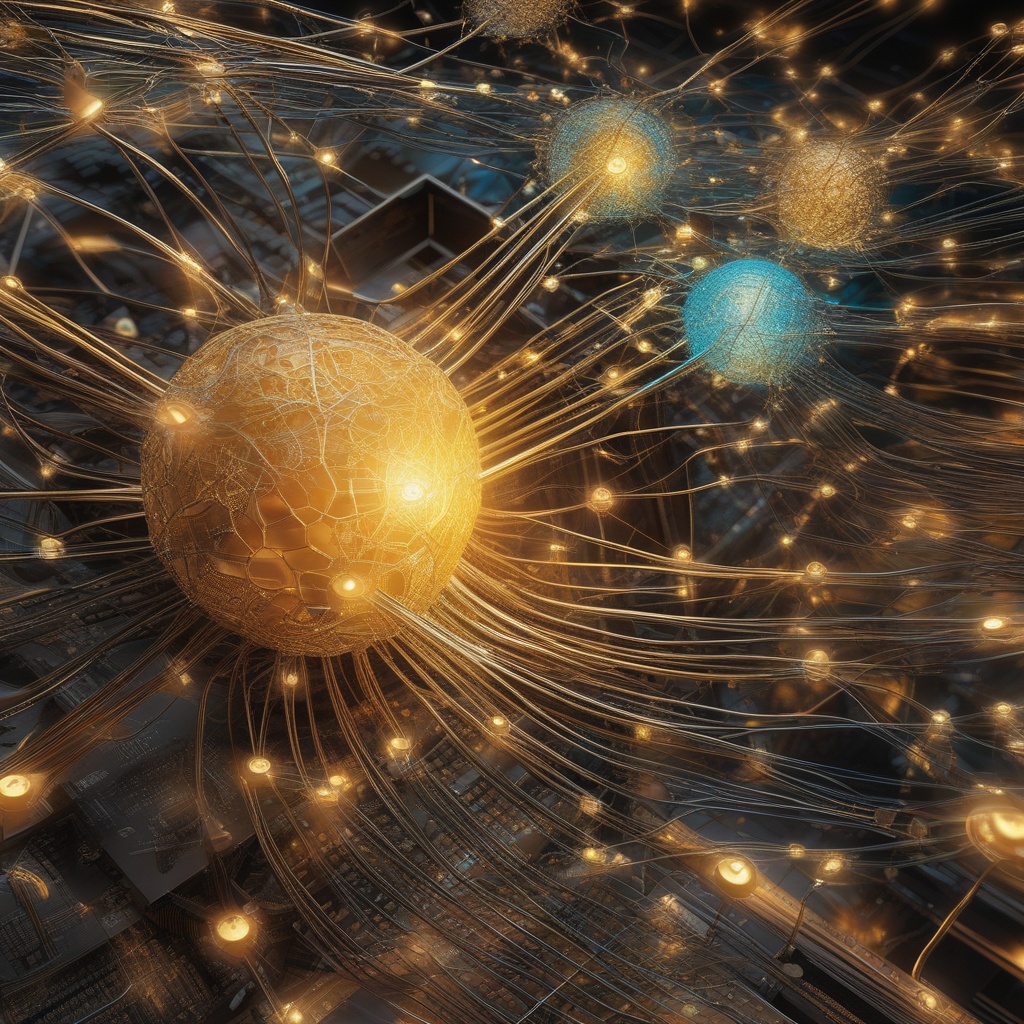
The history of neural computing is an epic tale of pioneering research, roadblocks, and breakthroughs. This intricate discipline seeks to mimic the workings of animal nervous systems, the complexities of which have fueled advancements in artificial neural networks (ANNs). Here, we take a closer look at the development of this fascinating field, its milestones, and its real-world applications.
artificial neural networks (ANNs). However, their model had a notable limitation—it lacked a learning mechanism, a fundamental part of any neural system.
Perceptron Learning Rule. This rule was instrumental in defining the weights in a single-layered network, a structure where all neurons connect directly to inputs. Despite the progress, the field took a hit when Minsky and Papert declared that single-layer perceptrons couldn't solve specific problems, such as the exclusive OR (XOR) function. This statement caused a substantial reduction in federal funding for neural network research.
Hopfield networks—an asynchronous network model—leveraged an energy function to provide potential solutions to NP-complete problems.
Hopfield networks—an asynchronous network model—leveraged an energy function to provide potential solutions to NP-complete problems.
The mid-80s marked another milestone with the discovery of Carnegie Mellon University leveraged a backpropagation network to sense highway conditions and assist in steering a Navlab vehicle. This system was designed to alert drivers who may be impaired by sleep deprivation, alcohol, or other factors, helping prevent lane deviations.
The potential applications of this technology extend far beyond safety alerts. We envision a future where such systems autonomously drive vehicles, leaving us free to indulge in activities like reading newspapers or chatting on our cell phones. The promise of extra free time makes this an exciting prospect.





No comments yet. Be the first to comment!