UPDATE 4/9/08: Seems there was some confusion sparked by this piece, which is, at best, a muddled, meandering, word-labyrinth posing as an unconventional, smart-alecky essay on web journalism/blogging. That's okay, any reader would find himself in good company lost amid my verbose effluvia. For crying out loud, I used a word like "bildungsroman" and made references not just to Roman mythology but also to an obscure Persian king 3,500 years dead. I take full responsibility for that and for trying to force readers to read between the lines to understand this piece wasn't really about Wikipedia or Powerset. I had an opportunity to illustrate a point rather than just come out and say it, and I took it, and if more than one person doesn't get it then I failed at illustrating it effectively. C'est la vie. I'll try to refrain from being too artistic with my points in the future. So, let's make the point clear: Online journalists (and increasingly traditional journalists) and bloggers, such as the one described in a New York Times piece whose ambition leads them to insomnia and cardiac arrest, are under enormous pressure to not just be first with a story, but also to evaluate and analyze first, and to do both things more often. This trend makes it more difficult for writers to do their job effectively and responsibly. They have less time to fact check, more time speculate, and incentive to get that speculation out there, which only serves to cloud the truth, which is the ultimate goal of journalism. It's also hard on the PR industry because suddenly there are all these new sources and writers to work with, and the Internet just increases the number of possible requests for comment that come in, and all of them can't possibly be answered. They have to judge who is most important to answer. Luckily, Wikipedia thought I was one of those important people to answer and I was able to dig up the truth of the matter, which is presented before going on to what I thought would illustrate the point via what I thought was quite obviously a fun bit of "faction" (fact + fiction), the point being that the truth is often much different than what can be imagined (but you probably already knew that). Powerset's Mark Johnson notes also that it is difficult for natural language search engines to separate the two. That doesn't surprise me. That's like asking a robot to understand sarcasm and the meaning within voice intonation. Sometimes a human can't convey that right to another human, much less a machine. So, below is yesterday's essay. I've reformatted and put the important parts in bold, such as the quote from Brian Vibber, the thesis (which comes awkwardly toward the middle), and the subtle grammatical clues beginning with "just imagine if," which indicate in grammar that what follows is presented in the subjunctive mood, or as we might know it, idle speculation. The speculative part has been put in italics to separate it. I even added open and close imagination tags. Perhaps next time, I'll publish with a disclaimer, an idea that, frankly, kind of saddens me.
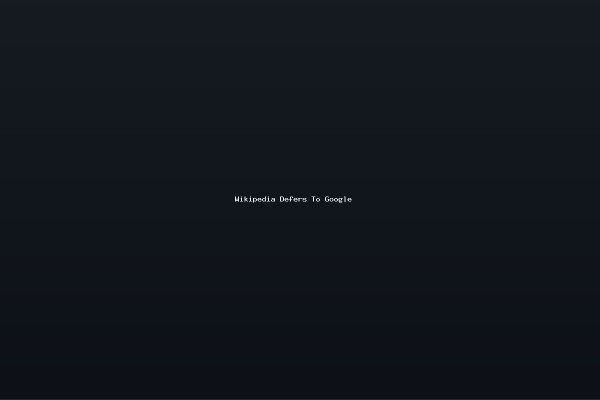
Blame information overload. If you did a search on Wikipedia today, you might have been greeted with this message: "Wikipedia search is disabled for performance reasons. You can search via Google or Yahoo! in the meantime."
That got me all excited about the possibilities (cuz search is in my "beat") and immediately sent me into a fit of speculation via keyboard. I asked questions nobody answered; I took screenshots; I relayed a humorous egg-head anecdote, a sort of flash-literary bildungsroman about how I discovered it, and by the time I had finished, well, my question was answered, so let's save some time and get it out of the way, in a more blogger fashion:
Wikipedia took down its search engine today for maintenance and let Google and Yahoo conduct searches for them instead. Wikipedia search sucked before. Now it might be better because searchers can choose between MediaWiki, Google, Yahoo, Windows Live, Wikiwix, and Exalead. You may have been able to do this before. I don't remember because I tried to search there once or twice and said never again. This time, though, Wikipedia was pretty good at bringing back relevant results for my favorite imposter king, Smerdis, also known as Gaumata.
 Wikimedia Foundation CTO Brian Vibber said, "Search was temporarily disabled as a load-reducing measure during the investigation of an unrelated problem (a change to log page lookups which used bad indexing, bogging down the database servers). It was reenabled a few hours later, once the unrelated problem had been fixed."
Hmmph. A lot can change over lunch.
A few things remain true, though. Powerset and Wikia Search are still out there somewhere under wraps and ambitious rhetoric, and Wales & Co., after all that jazz about Wikia Search, made Wikipedia search better by deferring to the experts. Props for making it better, though. I love Wikipedia.
But it also kind of illustrates the problems with this century's great media transformation as writers and bloggers are expected more and more to sacrifice thoroughness for speed. (Which seems more important now that we know bloggers are I told my colleague that was likely very funny in a sad, dark humor kind of way, but I was too pathetically educated to get it. This must be what talking to Dennis Miller is like.He sent me a link to Wikipedia, which, in his instant-messaging haste was absent a URL parameter. This led me to the Wikipedia search page (and later to the conclusion that, yes, naming it But I also remember those grandiose predictions made by Wikipedia founder Jimmy Wales about how his search project Powerset blog mentions Wikipedia for explanatory purposes, but rumors circulating in January also spoke of a
Suggest a Correction
Found an error or have a suggestion? Let us know and we'll review it.










No comments yet. Be the first to comment!