




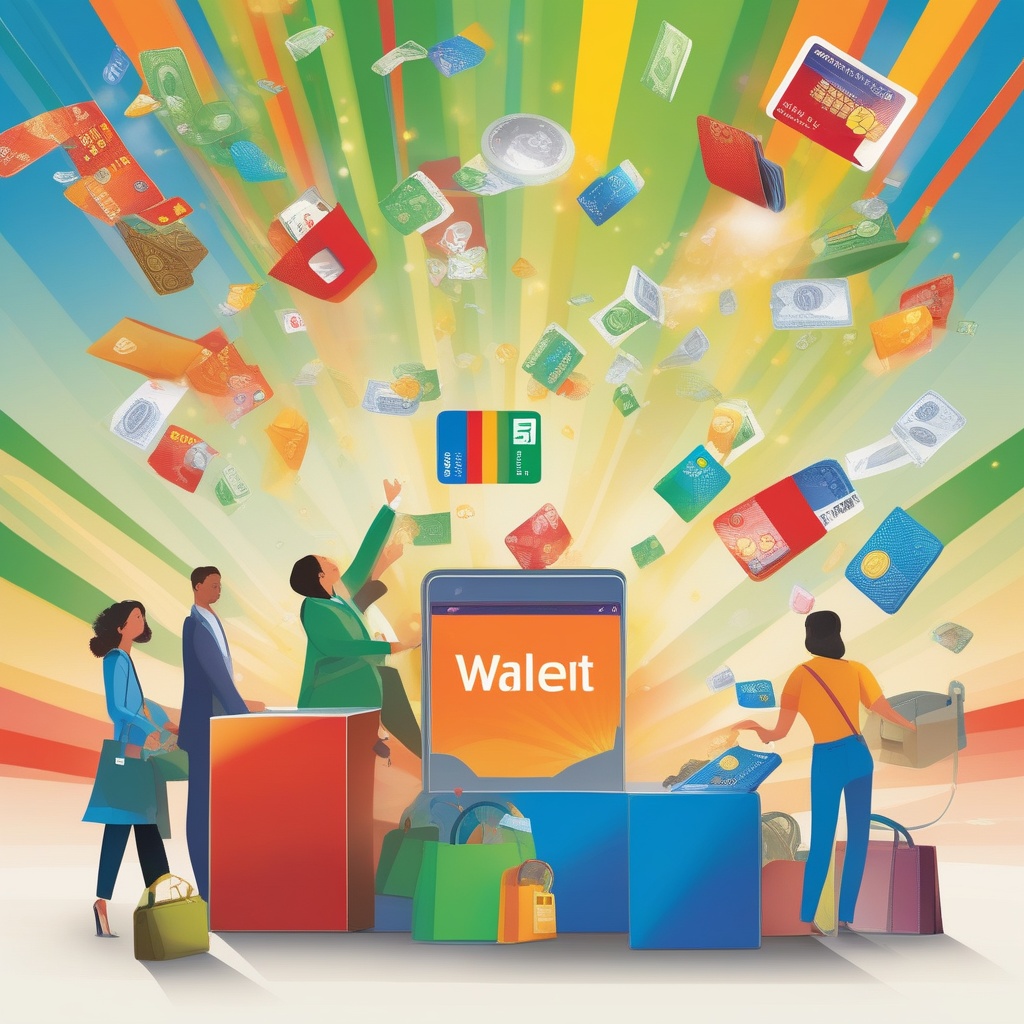
Since the announcement of the Google Wallet, many have speculated that Google was in the process of developing a competitor to eBay's PayPal system. For those who haven't been following, here's a little history: on April 13, 2005, Google filed documents stating its intention to form the Google Payment Corp, which is being called the Google Wallet. When word got out about the payment service, many thought Google was going to directly challenge the billion dollar a year PayPal person-to-person payment service, which is owned by eBay.
 categorically denied these rumors by telling the Associated Press the search engine was in no way developing such a product and that "G-Money" (
In light of Schmidt's statements, many who follow the industry have begun speculating about other uses for the upcoming Google Payment system. One of the most promising outlooks came from her blog that the Google Wallet would be an ideal vessel to consolidate micropayments, one of the harder things to do considering the electronic nature of the Internet.
By having a centralized payment system, Charlene feels the Google Wallet would be ideal for consolidating micropayments, similar to the method they use to track AdSense/AdWords clicks, which also deals in smaller monetary values.
Charlene offers the following scenario in which she feels the Google Wallet could work wonders in:
But what if I were to put together a mix of children's songs (via Creative Commons) featuring my kids'? I could stream it out as an Atom feed, include payment information in it for Google Wallet, and have it aggregated on Google Music. Voila - we just created an open marketplace for music. Repeat the same recipe for video, ebooks, and yes, even technology research reports.
Sounds like a very plausible idea, especially from Google's perspective.
However, when you consider murdok. Visit murdok for the
categorically denied these rumors by telling the Associated Press the search engine was in no way developing such a product and that "G-Money" (
In light of Schmidt's statements, many who follow the industry have begun speculating about other uses for the upcoming Google Payment system. One of the most promising outlooks came from her blog that the Google Wallet would be an ideal vessel to consolidate micropayments, one of the harder things to do considering the electronic nature of the Internet.
By having a centralized payment system, Charlene feels the Google Wallet would be ideal for consolidating micropayments, similar to the method they use to track AdSense/AdWords clicks, which also deals in smaller monetary values.
Charlene offers the following scenario in which she feels the Google Wallet could work wonders in:
But what if I were to put together a mix of children's songs (via Creative Commons) featuring my kids'? I could stream it out as an Atom feed, include payment information in it for Google Wallet, and have it aggregated on Google Music. Voila - we just created an open marketplace for music. Repeat the same recipe for video, ebooks, and yes, even technology research reports.
Sounds like a very plausible idea, especially from Google's perspective.
However, when you consider murdok. Visit murdok for the
Suggest a Correction
Found an error or have a suggestion? Let us know and we'll review it.





No comments yet. Be the first to comment!