




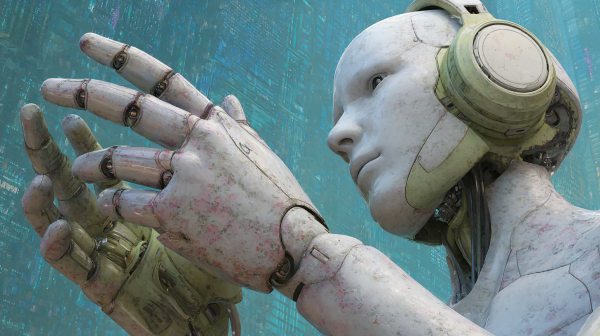
Writing a science fiction novel is hard. Writing one with AI assistance is also hard, just in different ways. The challenge shifts from staring at a blank page to steering a very eager collaborator who wants to info-dump about quantum mechanics and describe every spaceship corridor in excruciating detail.
I've spent a lot of time using Claude for long-form fiction, and sci-fi specifically presents a unique set of problems and opportunities. The model is incredibly well-read across the genre. It knows its Asimov from its Alistair Reynolds, its hard sci-fi from its space opera. That knowledge is both a gift and a curse, because left unchecked, Claude will produce something that reads like a competent pastiche of everything rather than something that feels like yours.
Here's what I've learned about getting genuinely useful sci-fi writing out of it.
Start With World-Building, Not Plot
The instinct is to jump straight into outlining your story. Don't. Sci-fi lives and dies on its world, and Claude is at its absolute best when you use it as a world-building partner before you ever write a scene.
The trick is to give it constraints. An AI with unlimited creative freedom will build you something generic. An AI working inside a box will surprise you.
That last line is important. Telling Claude to ask questions first turns it from a content generator into a collaborator. It'll probe at the edges of your idea, find contradictions you hadn't considered, and suggest implications you might have missed. I've had it ask things like "if FTL is that expensive, who controls access to it and what does that do to power structures?" and suddenly I've got a political system I never planned but absolutely need.
Build Your Characters Outside the Story
Claude writes better characters when it knows them deeply before it ever puts them in a scene. The problem is that most people describe their characters in broad strokes and expect the model to fill in the rest. It will, but it'll fill in the gaps with cliches. The grizzled captain. The plucky engineer. The android learning to feel.
Instead, have a dedicated conversation just about your protagonist. Get specific about the weird stuff. The contradictions. The petty details that make a person feel real.
When you eventually start writing scenes, you can reference this conversation. Claude will remember the nail-biting and the recycled water and weave them in naturally instead of giving you the generic "she ran a hand through her hair" fidget that shows up in every AI-written character.
The Science Problem
Here's where sci-fi gets tricky with AI. Claude knows a lot of actual science, and it really wants to show you. Left unguided, your character won't just use a gravity drive. She'll use a "graviton field manipulation array that exploits the curvature of local spacetime through controlled application of exotic matter with negative energy density." Nobody talks like that. Nobody thinks like that. And readers don't want to parse it.
You need to establish a science voice for your book early and enforce it consistently.
This reframes the entire approach. Instead of info-dumps about fictional physics, you get passages where a character slaps the side of a console because the display is flickering again, and the reader understands the ship is old without being told its manufacturing date and maintenance history.
Writing Action and Tension
Claude's default mode for action scenes is too clean. Every beat is logical. Character A does X, then Character B responds with Y. It reads like a turn-based strategy game. Real action is messy and disorienting and the point of view character doesn't fully understand what's happening until it's over.
The difference this makes is night and day. You go from "She drew her sidearm and fired two shots at the approaching hostile, striking it in the upper torso" to something that actually makes your pulse move. The character hears the scrape of something on metal, her hand is on her gun before she's decided to reach for it, the muzzle flash whites out her vision, and then she's standing there with her ears ringing and something is on the floor that wasn't on the floor before.
Dialogue That Doesn't Sound Like a Briefing
AI-written sci-fi dialogue has a very specific disease. Every conversation sounds like a mission briefing or an exposition delivery system. Characters explain things to each other that they would both already know. They speak in complete, grammatically perfect sentences. They never interrupt each other, never trail off, never say something stupid or irrelevant.
This is one of those prompts that transforms the entire feel of a manuscript. When characters stop being exposition robots, they start feeling like people stuck in a situation, which is what every good sci-fi novel is actually about.
Managing Consistency Across a Long Project
The biggest practical challenge with using Claude for a novel is context. The model doesn't remember chapter three when you're writing chapter twenty. Your ship's engineer was named Torres in act one and now Claude is calling her Torrez. The gravity on the station was 0.8g and now it's being described like Earth normal.
The solution is a living reference document. I keep a running bible that I paste into the conversation when starting new sections.
That last instruction matters more than you'd think. Claude's instinct when it encounters a contradiction is to quietly smooth it over, picking whichever version seems more convenient for the current scene. That's how inconsistencies sneak into a manuscript. You want it to stop and ask.
First Drafts vs. Polished Prose
There's a workflow question that every AI-assisted novelist has to answer: do you use Claude to generate rough drafts that you then heavily rewrite, or do you try to get polished prose out of it from the start?
For sci-fi specifically, I've found that rough drafts work better. The genre requires so much internal consistency and accumulated detail that polished prose from a model tends to paint you into corners. A rough draft gives you the shape of a scene without committing too hard to specific phrasing.
This produces something that's genuinely useful as a starting point. You'll rewrite most of the actual sentences, but the bones of the scene will be solid. The emotional beats will land in the right places. The pacing will work. And you'll have a framework to write into rather than a blank page to stare at.
The Genre Knowledge Trap
I mentioned this at the top, but it deserves its own section. Claude has read a staggering amount of science fiction, and if you're not careful, your novel will read like a remix of everything rather than something original.
The phrases "the void of space," "the hum of the engine," "the cold light of distant stars," and "she let out a breath she didn't know she was holding" will appear in your manuscript approximately four thousand times if you don't actively prevent it.
This forces Claude out of its comfort zone and into territory where it has to actually create instead of recombine. The results are almost always better than what you'd get from the default. You'll get descriptions that surprise you, details you wouldn't have thought of, and a world that feels lived in rather than assembled from parts.
When to Stop Using It
There are parts of a sci-fi novel where Claude is invaluable and parts where you're better off on your own. It's great for world-building, brainstorming plot problems, writing rough drafts of action sequences, and generating the kind of technical-but-not-too-technical descriptions that sci-fi demands. It's also good at finding plot holes if you describe your story to it and ask what doesn't hold together.
Where it struggles is the deeply personal, quiet moments. The scene where your protagonist realizes she's become someone she doesn't recognize. The conversation where two characters don't say what they actually mean and the reader has to feel the gap between what's spoken and what's felt. Those scenes require a kind of emotional specificity that you're better off writing yourself, even if it's slower and harder.
The best AI-assisted sci-fi novel isn't one where the AI wrote most of it. It's one where the AI handled the heavy lifting so the author had more energy left for the parts that only a human can do right. That's the real trick. Not getting Claude to write your book for you, but getting it to carry the weight so you can focus on the parts that matter most.
Comments (0)
Please sign in to leave a comment.


Latest News
-
Beta Reader Feedback: Turning Notes into a Revision Plan
May 18, 2026 -
Enhance Your Synopsis Writing with Structured AI Outlines
May 18, 2026 -
Query Letter Practice Prompts to Hook Literary Agents
May 18, 2026 -
Research-Light Historical Flavor for Authentic Fiction Writing
May 17, 2026 -
Scene Sequel Technique: Boosting Fiction Writing with AI Pair Work
May 17, 2026

No comments yet. Be the first to comment!