




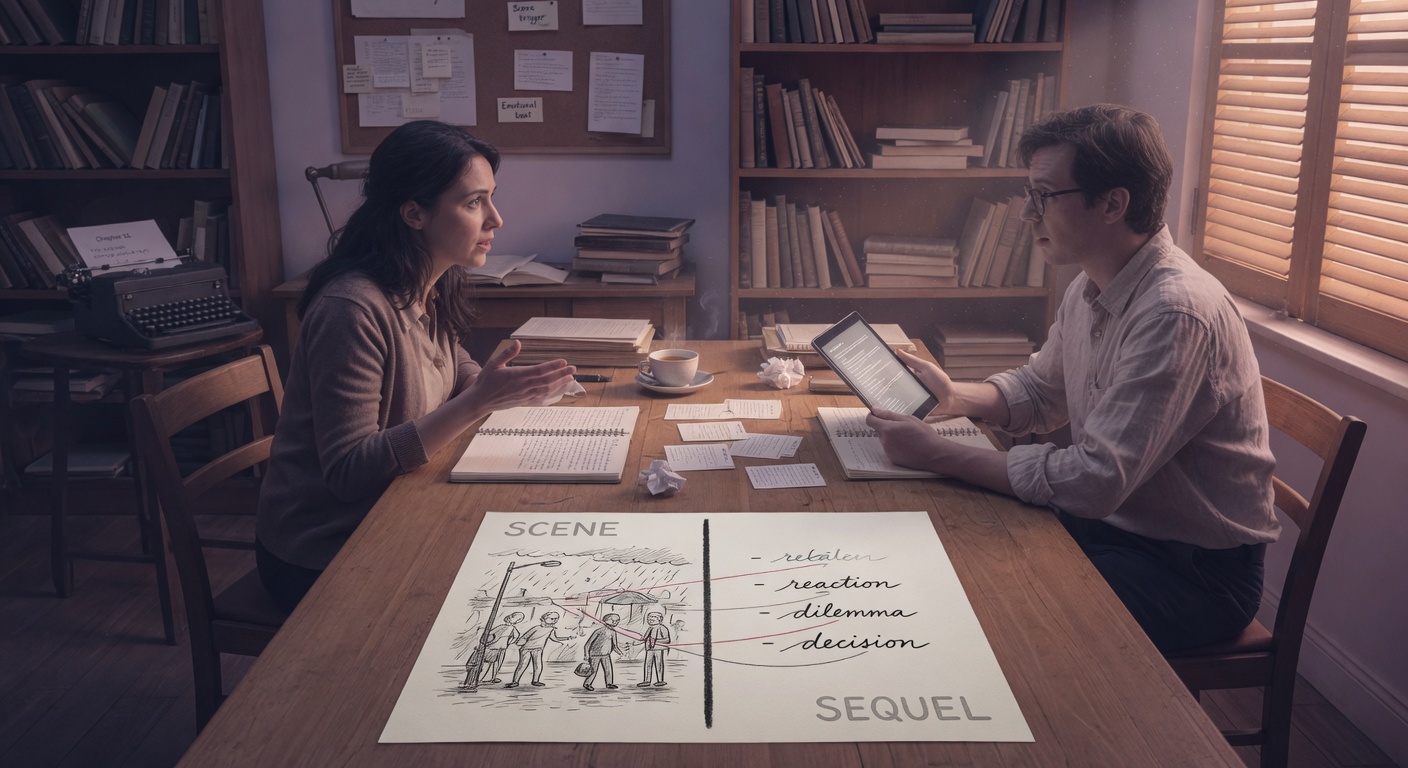
The scene-sequel method breaks stories into alternating units. A scene drives the character toward a goal, hits obstacles, and ends in disaster. The sequel lets the character react, face a dilemma, and choose a new direction. When writers pair with an AI model, they can generate quick drafts of either unit, then revise them to match their own sense of pacing and voice. The model supplies raw material, yet the writer still decides what stays and what gets cut.
Many authors use this pattern to keep momentum on longer projects. They draft a scene, feed the result to the AI for a possible sequel, then edit both pieces so the emotional tone remains consistent. The process works best when prompts specify length, point of view, and the exact emotional beat required. Without those details the output drifts into generic language that the writer must rewrite anyway.
Targeted Prompts for Scene and Sequel Drafts
Use this prompt right after you outline a scene goal and conflict so the model produces a focused action beat rather than summary.
Apply this prompt when you need a sequel that shows the character's emotional reaction and forces a fresh decision without advancing external plot yet.
Run this prompt when you want the AI to generate dialogue that reveals character voice during the middle of a sequel dilemma.
After the model returns text, read it aloud and mark any phrases that sound like the AI rather than your characters. Replace those lines with wording that fits the rest of your manuscript. This step keeps the work from drifting into a neutral register that many models default to.
Revision Exercises and Workflow Checks
Use this prompt after you have a full scene-sequel pair and want the AI to suggest only structural cuts, never new content.
Try this prompt when you need to test whether a sequel decision actually propels the next scene.
Run the next prompt when you want the model to adjust tone across a scene-sequel pair for a specific genre shift.
Genre adaptation works best when you add one concrete constraint to every prompt. For poetry, ask the model to keep each line under eight syllables and end the sequel unit on an image instead of a stated decision. For memoir, require the output to reference only events the narrator could have witnessed firsthand. For fiction, specify the exact setting objects and forbid any historical facts the model might invent. In every case, compare the returned text against your own notes before accepting changes.
AI output still requires your judgment on emotional truth and factual accuracy. If a suggested dilemma contradicts earlier character history, discard it. If the model supplies a detail that feels borrowed from common training data rather than your world, replace it with something only you would notice. The goal is to finish with prose that sounds like your voice, not an average of many voices.
No comments yet. Be the first to comment!