




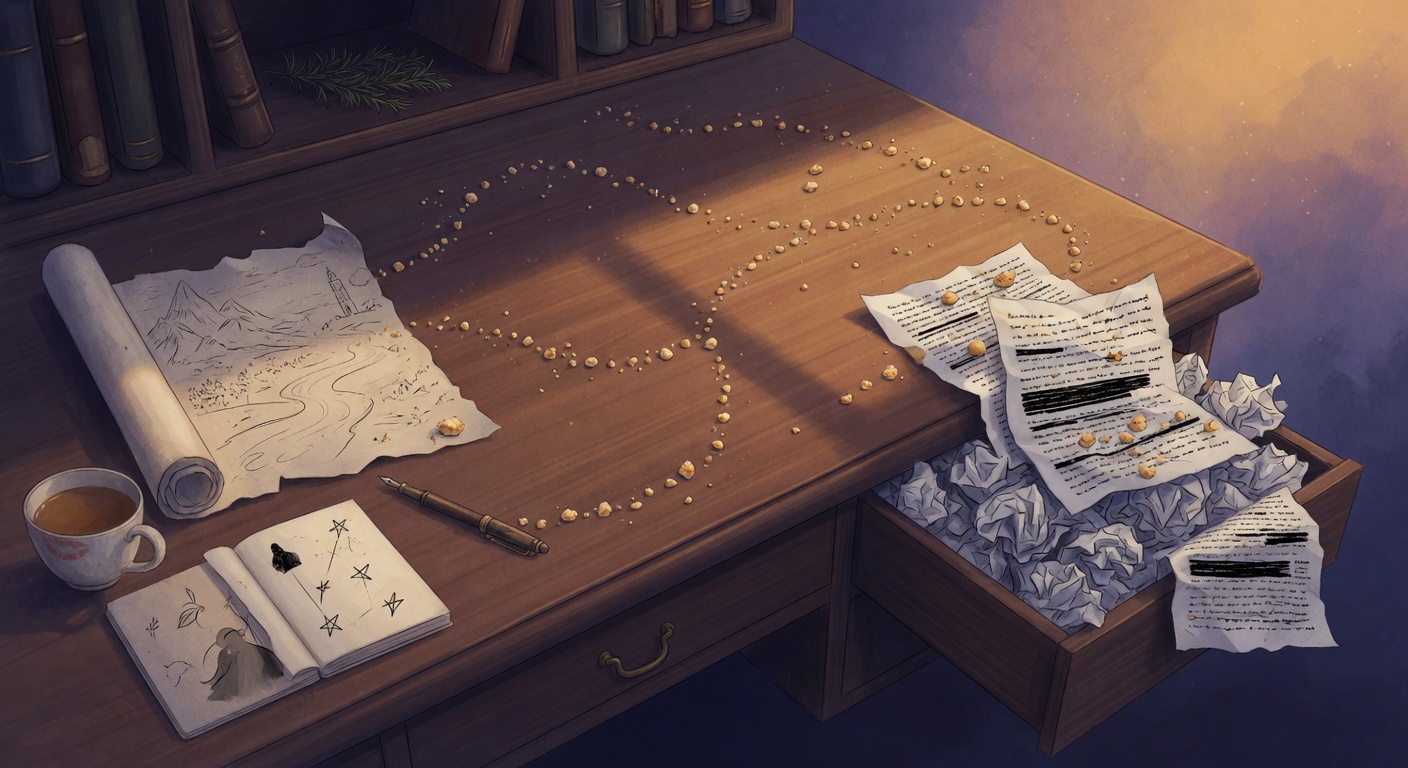
Strong fiction lets readers discover the world through action and implication rather than long blocks of explanation. Breadcrumbs work because they arrive inside moments that already matter to the characters. A single line of dialogue about a ration stamp can tell more about scarcity than three paragraphs of history. Readers stay inside the scene instead of pausing to absorb background. This approach keeps momentum while still building a believable setting over time.
Exposition dumps often appear when writers fear readers will miss something important. The result is a sudden lecture that breaks the spell. Characters stop behaving like people and start reciting facts they already know. The fix is not to remove every detail but to move those details into lived experience. A soldier checking her boots for wear tells you about long marches without naming the war. The difference lies in placement and timing rather than in how much you know about your world.
Workflow Prompts for Weaving Breadcrumbs
Use this prompt when you have a scene in mind but need to replace a planned info dump with smaller details shown through action.
Use this prompt when planning a new chapter and you want to list possible breadcrumbs before writing.
Use this prompt after drafting a chapter when you want to check whether details are spaced well.
These prompts work for fiction by focusing on visible actions and dialogue. For poetry, change the request to imagery and line breaks so the same information arrives through metaphor rather than plot. In memoir, ask the model to replace background with a remembered object or conversation that carried the same weight at the time. The structure stays useful because the constraint on brevity remains the same across forms.
AI output still requires your judgment. A suggested detail might fit the world yet clash with the voice you have built for a particular narrator. Read the suggestion aloud. If it sounds like the model rather than your character, revise or discard it. Fact checking matters when the breadcrumb touches real history or science. Treat the model as a fast sketch artist, not the final authority on what belongs in your story.
Prompt Exercises for Trimming Dumps
Use this prompt on any paragraph that feels like a lecture from the author.
Use this prompt when you need to convert a long setting description into a shorter sequence that still orients the reader.
Use this prompt when revising an early chapter that introduces too many rules at once.
Adapt these for poetry by asking the model to replace explanation with recurring images that gain meaning across stanzas. Memoir writers can request the same cuts but keep the focus on what the younger self noticed rather than what the adult narrator now understands. The core request stays identical: move information into experience instead of summary.
Personal voice remains the final filter. An AI suggestion might be efficient yet flatten the rhythm you want for a particular narrator. Read every revised passage in the context of the surrounding pages. If the change speeds the story at the cost of the tone you care about, keep the original or find a middle version. The model offers options quickly. Your ear decides which option serves the larger work.
Over many drafts the habit of planting small details becomes automatic. You begin to notice when a character can demonstrate a rule instead of stating it. The world feels thicker because readers assemble it themselves. That assembly creates investment. The story moves forward while the setting continues to accumulate weight in the background.




No comments yet. Be the first to comment!