




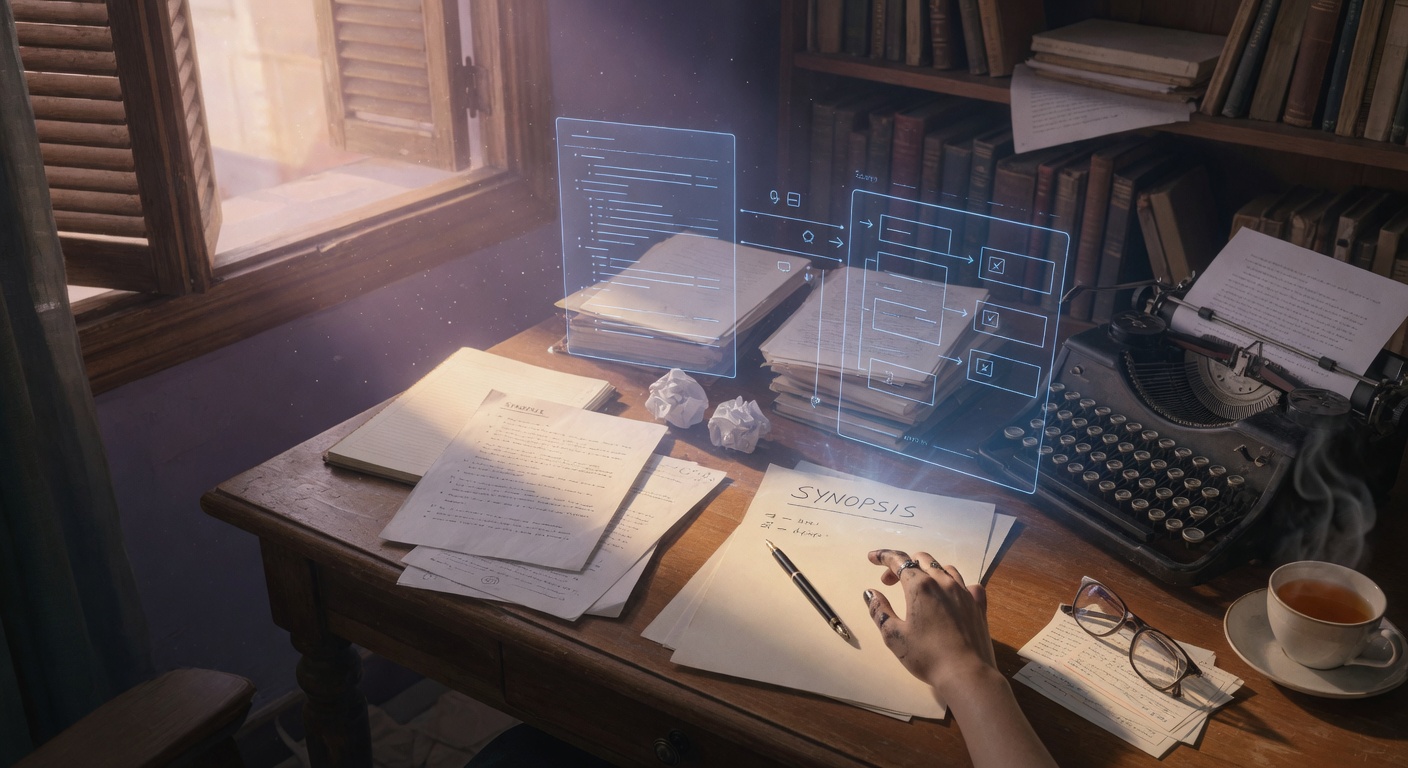
Synopsis writing often stalls when writers try to compress an entire project into a few coherent pages. A structured outline generated with AI can break that logjam by forcing the material into clear segments before any polishing begins. The key is to treat the model as a temporary scaffold rather than a replacement for your own choices about what belongs and what can be cut.
Begin by feeding the model a short list of your main events or themes. Ask it to return only headings and one-sentence summaries under each heading. This keeps the first pass short enough to review quickly and reveals gaps in sequence or emphasis before you invest time in full paragraphs. Once the headings feel right, you can expand selected sections one at a time rather than rewriting the whole document at once.
Workflow Prompts for Crafting Synopsis Outlines
Use this prompt after you have listed your major plot turns or thematic beats but before you attempt any narrative prose.
Run this prompt when you need to test whether your central conflict holds across the middle of the story.
Apply this prompt once the basic acts are in place and you want to check pacing across chapters.
These workflow prompts produce short, scannable output that you can rearrange or discard without losing hours of work. After the model returns the structure, read it aloud to hear where your own voice needs to take over.
Exercise Prompts to Revise and Adapt Synopses
Launch this prompt when you have a rough synopsis and want to test its tone against a specific market.
Use the next prompt after you have a complete draft and need to verify that every major character receives at least one active choice.
Try this prompt when moving between genres so the same material receives the right level of abstraction.
The same prompts shift easily across forms. For poetry, replace the act headings with thematic movements and ask for image clusters instead of events. For memoir, substitute personal chronology for plot points and request reflective sentences rather than dramatic ones. In each case the model still supplies only the requested shape, leaving final judgment about accuracy and voice to you. Fact-checking names, dates, or legal details remains your responsibility, as does preserving the cadence that feels like your own work. When the outline begins to sound generic, stop feeding it new instructions and return to your original notes.
No comments yet. Be the first to comment!