




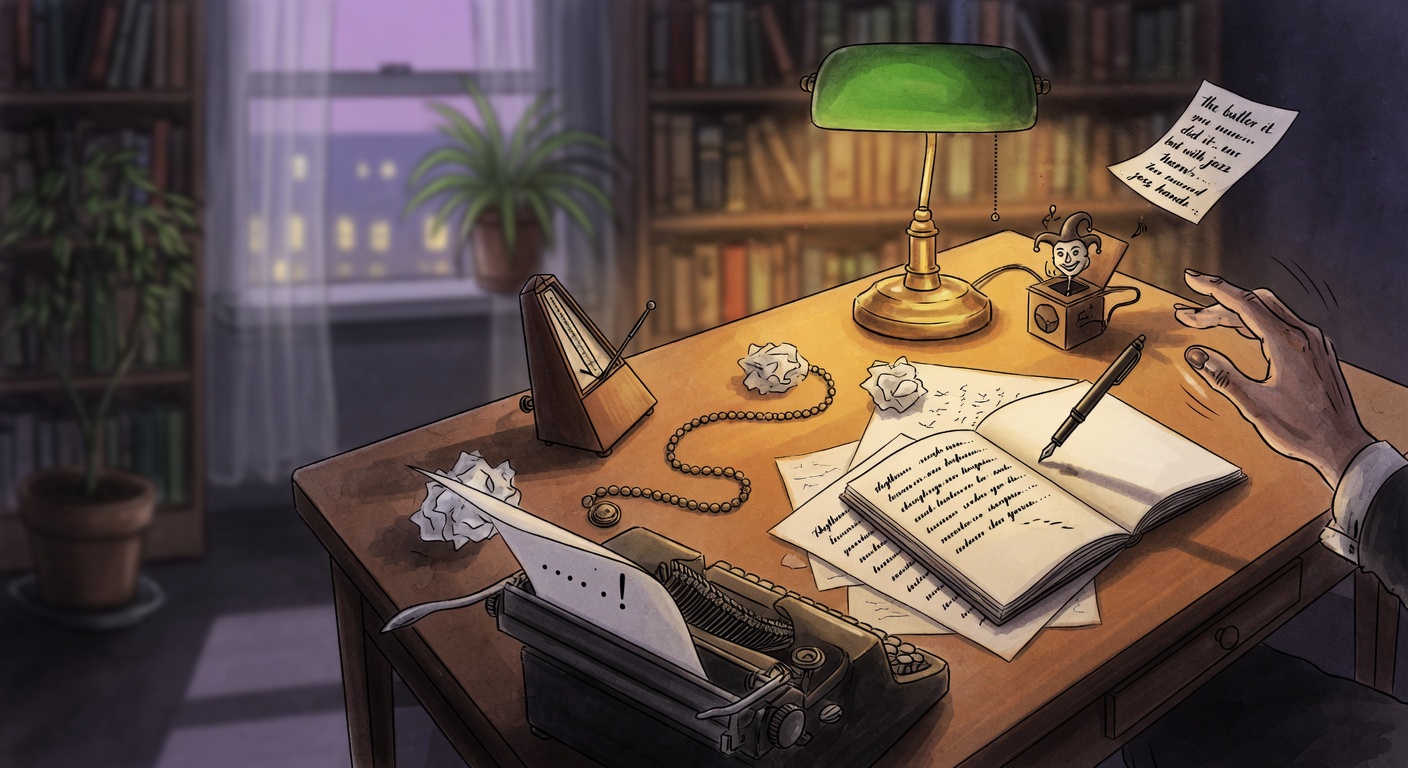
Humor in prose often works through the quiet machinery of rhythm and the jolt of an unexpected turn. Sentences that speed up or slow down at the right moment can prime a reader for laughter before the surprise arrives. Many fiction writers, poets, and essayists now turn to language models to sketch these patterns quickly, then reshape the output with their own ear. The key is to give the model clear instructions about cadence and reversal rather than asking for jokes outright.
Good prompts treat the AI as a drafting partner that proposes variations. You feed it a short seed, a length target, and a rule about where the rhythm should shift. The model returns a block of text you can read aloud, mark up, or discard. Over time this loop sharpens your own sense of timing because you see concrete examples rather than abstract advice. Still, the final choice of which beat to keep belongs to the writer, since only you know the larger emotional arc of the piece.
Workflow for Rhythm Prompts
Use these prompts early in a drafting session when you need a block of prose that moves with deliberate pacing. Paste the entire prompt, replace the bracketed seed with your own material, and request one fresh version at a time. Read the result out loud before deciding what to keep.
When you want dialogue that relies on repetition and shortening beats to create comic pressure.
When you need a descriptive paragraph that builds expectation through lengthening clauses before a quick reversal.
When revising an existing anecdote for stronger timing in memoir or personal essay.
Exercises for Surprise Elements
These prompts help you practice the turn itself. Run them after you have a rough scene so the surprise can play against already established expectations. Generate three versions, then combine the strongest beats from each.
When you want a scene that plants a running image and pays it off with an abrupt change in scale.
When shaping a short poem or prose poem that hides its joke until the final line.
When testing a character voice that undercuts its own seriousness at the end of a paragraph.
These same prompts adapt across genres by changing only the seed material and the output length. In fiction you supply a plot situation and ask for scene length; in poetry you request line count and stanza breaks instead; in memoir you paste a real memory fragment and keep the factual core intact while adjusting cadence. The model handles the rhythm mechanics in each case, leaving you to judge whether the surprise lands inside the larger piece.
AI output remains raw material. Run every generated block through your own ear and fact-check any details that slipped in. The model does not know your personal history or the tone of surrounding pages, so treat its suggestions as options rather than finished work. Over several rounds the process trains both the tool and your own timing.




No comments yet. Be the first to comment!