




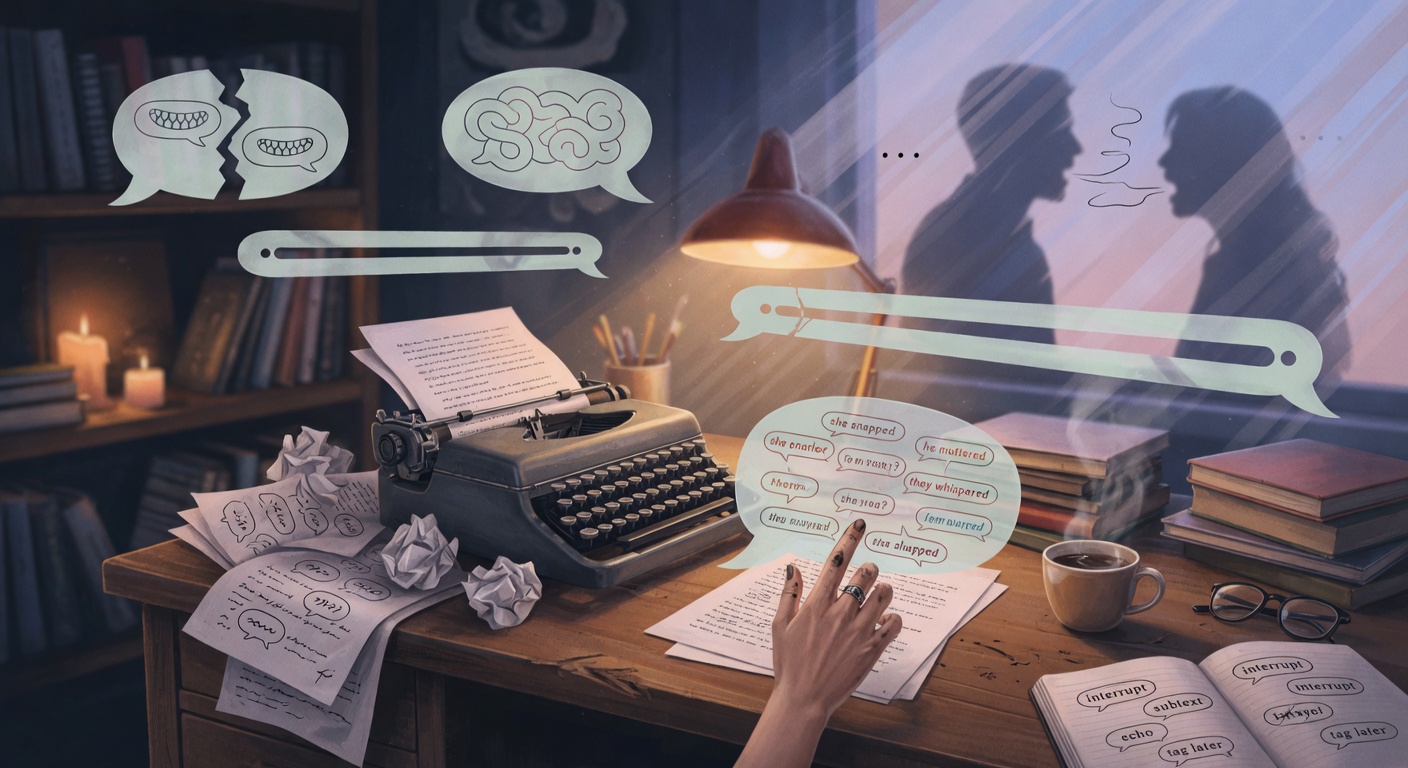
Dialogue in a first draft often arrives in bursts that capture the basic exchange but miss the tension or personality that makes readers lean in. Writers who use AI for drafting know the model can generate lines quickly, yet those lines tend to sound reasonable rather than distinctive unless the request includes clear constraints on subtext, rhythm, and what remains unsaid. The difference shows up when the prompt asks the model to treat dialogue as action instead of explanation.
Consider a scene where two siblings argue over an inheritance. A plain request might produce polite disagreement. A sharper prompt directs the model to let one character interrupt with a childhood memory that reframes the current dispute, while the other answers only with questions. The output then carries forward the story rather than pausing for exposition. This approach works because the instructions limit length and force revelation through omission.
Poets adapt the same pattern by asking for dialogue that fits within a set meter or stanza count, turning spoken lines into rhythmic units that advance both plot and sound. Memoir writers tighten the prompt around remembered phrasing, requesting the model to preserve the original cadence of family speech while clarifying emotional stakes. In each case the core request stays the same: limit lines, highlight what is withheld, and keep the exchange under a stated word count so revision remains manageable.
AI output still requires the writer to check whether the suggested lines match the larger arc already established on the page. A model has no access to earlier chapters, so any reference to past events needs manual confirmation. Personal voice emerges only after the writer replaces or rearranges the generated phrases to restore the exact tone that belongs to that project alone.
Prompt Patterns for Generating First-Draft Dialogue
Use this prompt when a scene summary exists but the spoken lines feel interchangeable. It forces the model to embed one piece of withheld information per speaker and to keep total exchanges brief.
Poets can change the final instruction to require lines that scan in iambic pentameter while preserving the same withholding rule. Memoir writers replace the scene summary with a recalled family incident and add the constraint that phrasing must echo documented speech patterns from letters or journals.
Apply the next prompt when character voice needs sharpening before any plot movement occurs. The request centers on a single trait expressed through speech rhythm rather than adjectives.
Fiction writers keep the output as straight prose. Poets convert the same request into a request for three tercets where the mechanic's diction appears inside the poem's rhyme scheme. Memoir authors add a note that the tool references must come from the writer's own documented family history rather than invention.
The third pattern helps when dialogue must advance plot without summary statements. It requires the model to embed necessary information inside a disagreement.
Adaptation for poetry turns the output into a single stanza where the disagreement supplies the volta. Memoir writers specify that the colleagues are drawn from real colleagues and that the hidden fact must align with verifiable timeline details.
Revision Workflows for Dialogue Already on the Page
Once raw dialogue exists, a second set of prompts turns the model into a diagnostic reader that flags missed opportunities rather than rewriting wholesale. These prompts work best when the writer pastes a block of existing lines and adds one focused constraint per pass.
Start with a prompt that isolates subtext gaps. The model must identify one line where a character could imply rather than declare an emotion, then supply a replacement that keeps the original length.
Fiction authors run this pass on every scene. Poets request the replacement line to fit an existing rhyme or syllable count. Memoir writers add the instruction that the concrete action must come from documented memory rather than new invention.
A second revision prompt targets pacing by asking the model to compress or expand silences. The writer controls whether the change shortens or lengthens the beat.
Genre adjustments follow the same pattern: poets turn the physical action into an image that occupies one line of verse, while memoir writers ensure the action matches a recorded detail from the period being described.
The final workflow prompt asks the model to test consistency across two characters who have appeared in earlier pages. The writer supplies a short previous sample so the model can compare speech habits.
Poets adapt the request to ask for a metrical habit instead of a lexical one. Memoir writers limit the supplied sample to verbatim quotations from journals or recordings so the restored habit remains factual.
After any of these prompts, the writer still decides whether the suggested change serves the larger manuscript. AI cannot track every prior decision about a character's history or the factual record in nonfiction, so each output receives a quick cross-check against the surrounding pages before it stays in the draft.


No comments yet. Be the first to comment!