




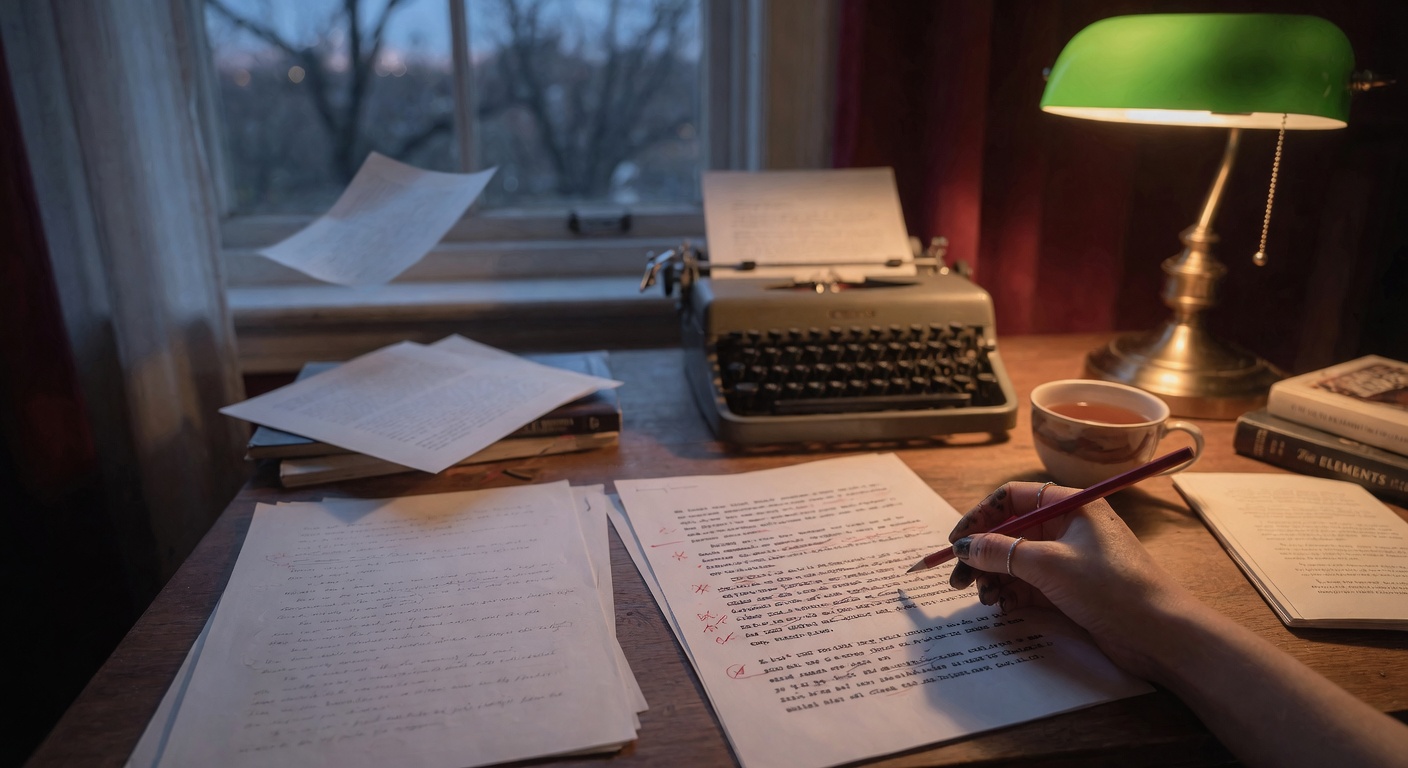
Many writers reach for AI once a draft sits on the page and the sentences start to blur. The goal at that stage is rarely a full rewrite. Instead the useful move is to isolate one sentence, ask the model to test its clarity, and decide what to keep or change. This approach leaves the larger shape of the work untouched while sharpening the surface. Over time the habit trains the eye to notice weak verbs or stacked modifiers without outside help.
Sentence level work also respects the different demands of fiction, poetry, and memoir. A novelist might want rhythm that carries a character through a room. A poet might trade a few words for stronger sound. A memoir writer might protect a precise memory even when the phrasing feels slightly awkward. The same prompt can serve all three once the instructions name the genre and the effect the writer wants.
Prompts for Revising Individual Sentences
Use this first prompt when a sentence carries important information but feels long or indirect. Paste the sentence and the surrounding line for context.
Apply the next prompt when dialogue has started to sound like summary. The model needs a clear reminder to stay inside the characters voices.
Turn to this prompt for descriptive passages that have grown static. It forces attention to verbs and sequence.
These prompts work across genres when the user adds a short clause at the end. For fiction add "Treat this as third person limited narration focused on one character." For poetry add "Keep line breaks and pay attention to sound." For memoir add "Protect the emotional tone of the original memory." The model then adjusts its suggestions without needing a new prompt from scratch.
Workflow Prompts for Full Draft Passes
Once several sentences have been revised, a broader pass can check consistency. The next prompt asks the model to scan a paragraph for repeated patterns rather than rewrite it outright.
Use this prompt after a full chapter or poem sequence when the writer wants to test whether every sentence earns its place.
The final prompt helps when the writer is unsure whether the sentence level changes have altered the intended voice. It asks for a side by side comparison rather than a single polished version.
After running any of these prompts, read the suggestions aloud. AI output can flatten subtle emotional shading or introduce facts that were never in the original memory. The writer still decides which changes belong. Over several sessions the prompts become less necessary because the ear learns to catch the same problems unaided.




No comments yet. Be the first to comment!