




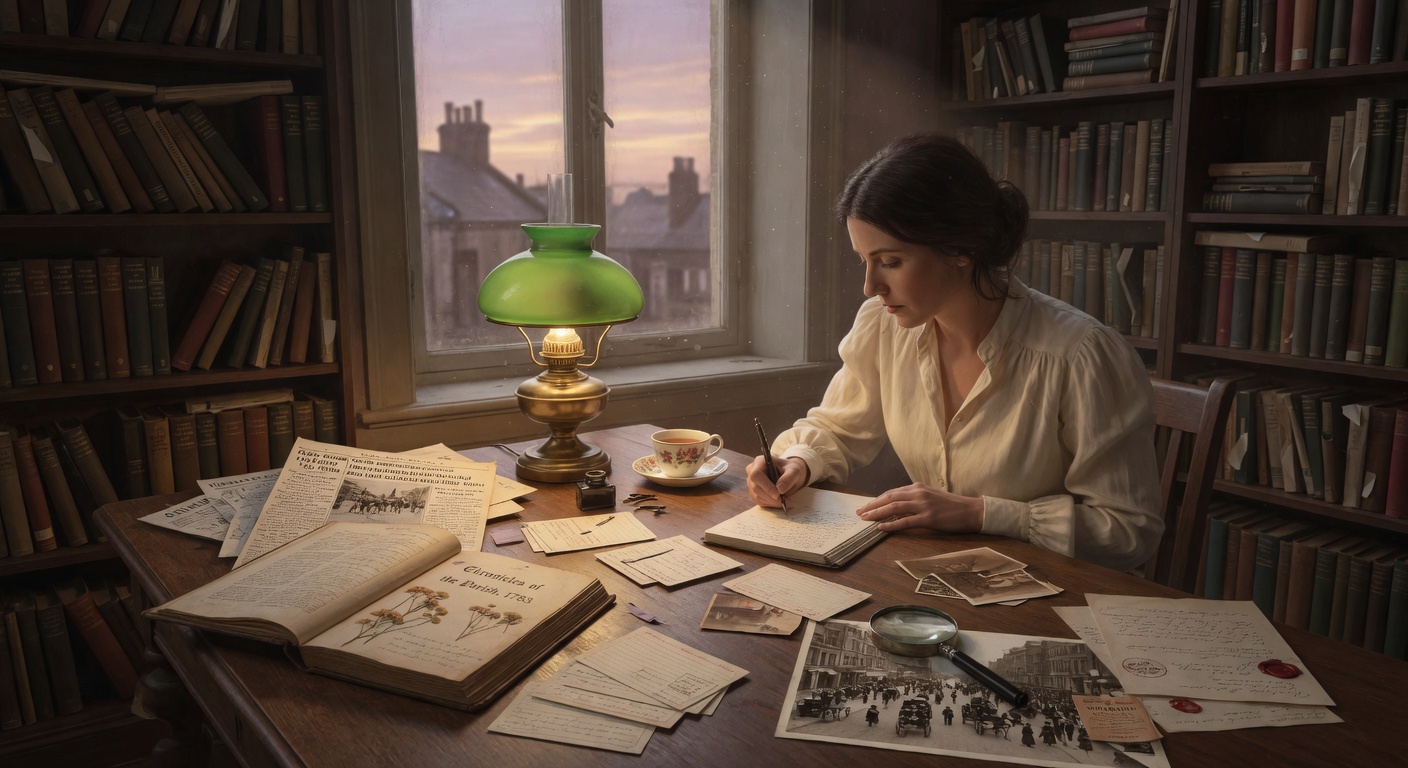
Many writers reach for AI when they want the texture of another century without spending weeks in archives. The goal is not perfect accuracy but a light seasoning of details that make a scene feel lived in. A few well chosen objects, a turn of speech, or a social habit can anchor a reader faster than long explanations. AI helps generate those starting points quickly, yet the writer still decides what fits the story and what rings false.
Think of the tool as a conversation partner who has skimped on homework. It can recall common images from novels or films, but it sometimes mixes eras or invents customs that never existed. The practical habit is to treat every suggestion as a draft to test against a diary entry, a letter, or even a simple web search for confirmation. Your own reading and intuition remain the final filter.
Historical flavor works best when it appears in small, repeated ways rather than in one heavy block of description. A character who wipes a quill on a sleeve three times in a chapter tells readers more about daily life than a paragraph on ink production. AI prompts can surface these tiny actions once you give them a clear role and a narrow output shape.
Prompts for Everyday Period Details
Use this prompt when a scene needs concrete objects that characters can handle or notice without stopping the action.
Use this prompt when dialogue must carry period flavor without sounding like a textbook.
Use this prompt when you want a character voice that feels consistent across several scenes.
These prompts adapt easily across forms. For fiction, add a sentence asking how the detail could create friction with another character. For poetry, replace the word count with a request for three lines in a chosen meter that incorporate the same objects. Memoir writers can append a note asking the model to compare the detail to a modern counterpart the narrator might remember, keeping the historical layer intact while letting personal reflection surface.
Workflow for Turning Suggestions into Draft Pages
Use this prompt after you have a rough scene and want AI to propose revisions that tighten historical texture.
Use this prompt when you have written a synopsis and need to test whether the historical setting supports the plot beats.
Use this prompt when you are shifting from prose to a short poem and want constraints that still respect the era.
After any of these exchanges, copy the useful lines into your own file and change at least two words so the passage begins to sound like your voice rather than the model's. AI output often carries a slightly formal cadence; reading the lines aloud usually reveals where your natural phrasing should take over. Fact-checking remains your responsibility, especially for dates or laws that affect character choices. When the suggestion feels off, discard it quickly and ask the model for a different angle instead of trying to salvage every line.
Over several sessions the prompts become part of a private shorthand. You learn which details the model tends to repeat and which ones spark fresh images you would not have considered. The process stays light because the research burden never shifts entirely to the tool. You still decide which historical notes serve the story and which ones can wait for a later draft or a separate notebook.


No comments yet. Be the first to comment!