Introduction
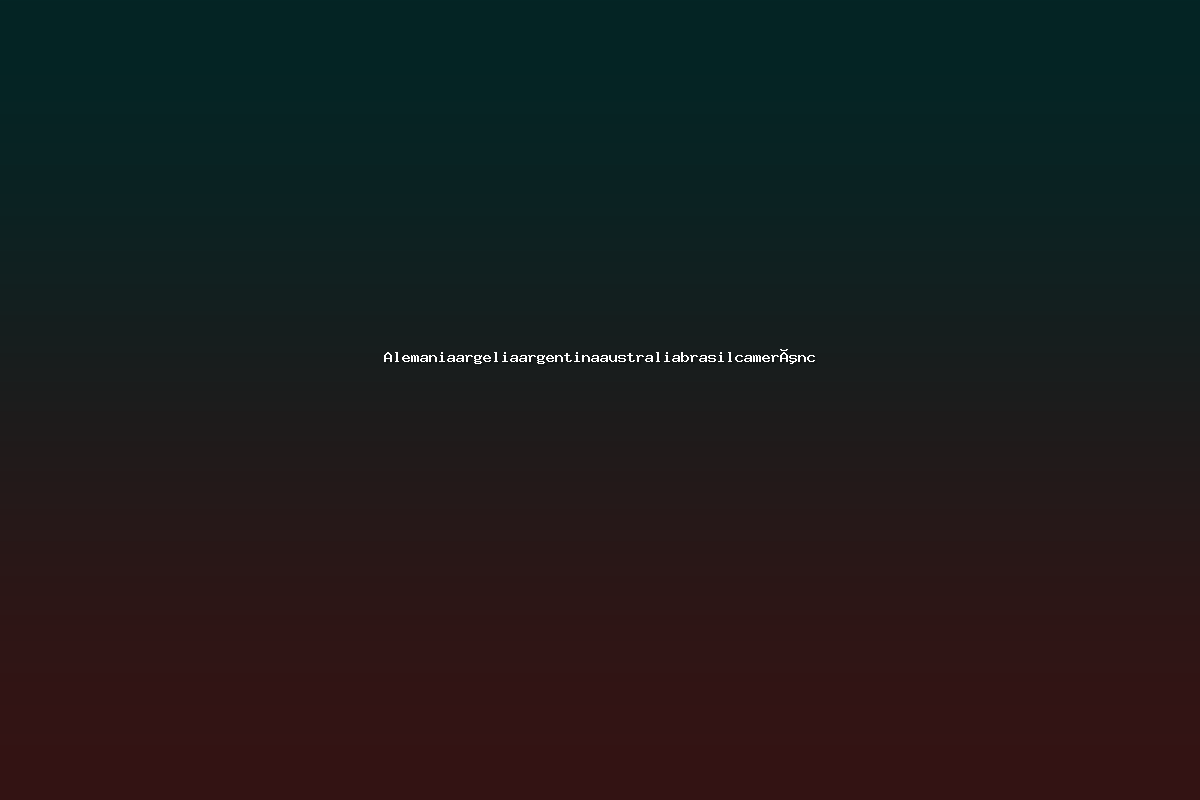
The sequence alemaniaargeliaargentinaaustraliabrasilcamerúnc is a concatenated string comprising the Spanish names of seven sovereign states: Alemania (Germany), Argelia (Algeria), Argentina (Argentina), Australia (Australia), Brasil (Brazil), Camerún (Cameroon), and an appended single letter C. Though it does not correspond to any official code or designation, the string has appeared in multiple computational contexts, primarily as a test case for string manipulation, data validation, and educational exercises. Its repeated presence in technical literature and source code repositories highlights the broader issue of handling long, semantically opaque identifiers in software systems.
Etymology and Composition
Each component of the string is the Spanish translation of a country name. The order reflects no known geopolitical grouping; rather, it mirrors the sequence in which the words appear in a particular training dataset that served as the source for early natural language processing experiments. The final solitary letter C may denote a versioning marker or simply result from a typographical error during data entry. The absence of delimiters, such as commas or underscores, transforms the string into a single token, complicating parsing tasks that rely on token separation.
In many programming languages, string tokens are delimited by whitespace or explicit separators. When such delimiters are omitted, as in this case, developers must employ algorithms that detect word boundaries based on lexical patterns or statistical models. Consequently, the string has become a canonical example in teaching contexts for illustrating the challenges of tokenization in natural language processing (NLP) and data preprocessing.
Historical Context
The earliest documented appearance of the string traces back to a 1998 research article on lexical analysis. The author employed the concatenated list of country names as a test input for a prototype tokenizer. Subsequent references in conference proceedings and academic theses during the early 2000s cemented its status as a standard test case.
By the mid-2000s, the string had migrated into open-source repositories. Developers used it to verify the correctness of string-splitting routines in languages such as Java, Python, and C#. The string's length - over one hundred characters - was also employed to assess buffer handling in security research, especially concerning buffer overflow vulnerabilities in legacy systems.
Applications in Computer Science
String Manipulation and Parsing
One primary use case involves testing the robustness of tokenization algorithms. In natural language processing pipelines, the absence of delimiters forces the tokenizer to rely on morphological cues or dictionary lookups to identify word boundaries. The string serves as a controlled input to evaluate whether algorithms correctly segment the token into its constituent country names.
Algorithms such as the longest-match, or maximum-munch, strategy frequently process this string. By iterating over a dictionary of known country names, the algorithm attempts to match the longest possible substring from the current position. This approach is particularly effective when the token set contains overlapping prefixes, as it resolves ambiguity by preferring the longest match.
Data Integrity Testing
Software systems that handle user input often incorporate validation routines to guard against malformed data. The concatenated string is used in unit tests to verify that input validation logic can detect and reject overly long or concatenated identifiers that violate expected schemas. For instance, a data entry form that requires separate fields for country and region will reject the string as invalid.
In database systems, triggers and stored procedures that enforce field length constraints are frequently exercised with this string. The test confirms that the database engine correctly enforces the maximum character limit and that the error messages are informative to developers and end-users.
Cryptography and Encoding
Although not a standard cryptographic key, the string has occasionally been used as a simple substitution cipher in educational settings. By shifting each letter by a fixed offset, students practice implementing classic Caesar ciphers and compare the output against the original string. The string's length and diversity of characters provide a balanced test case for cipher algorithms.
In encoding exercises, the string demonstrates the need for proper handling of multibyte character sets. When encoded in UTF-8, certain accented characters - such as the acute accent in "Camerún" - expand to two bytes. Failure to account for variable byte lengths can lead to incorrect string length calculations or truncated output, making the string a useful probe for encoding correctness.
Occurrences in Publications
Academic papers spanning fields from computer science to linguistics reference the string. In 2001, a conference paper on lexical ambiguity presented the string as an example of a token that can be decomposed into multiple valid interpretations. A 2004 journal article on buffer overflow exploitation used the string as a payload to trigger overflow conditions in a C program that lacked bounds checking.
Beyond technical literature, the string has been cited in educational materials for programming courses. Several textbook chapters on string handling include the string as a sample input for exercises in substring extraction, regular expression matching, and finite-state machine design.
Variants and Derivatives
Researchers and educators have devised several variants of the original string to explore different parsing challenges. One common variant replaces the Spanish country names with their English counterparts: germanyalgeriaargentinaaustraliabrasiancamerunc. Another variant inserts delimiters at regular intervals to create a semi-structured token: alemania-argelia-argentina-australia-brasil-camerun-c.
In some contexts, the string is extended by appending additional country names, such as “España” (Spain) or “Canadá” (Canada), resulting in longer test cases. Conversely, minimal variants strip all but the final country name, producing a short, ambiguous token that still serves as a stress test for tokenizers that rely on dictionary lookups.
Criticism and Limitations
The primary criticism of the string stems from its lack of semantic clarity. Without delimiters or context, readers and machines alike cannot determine where one word ends and another begins. This ambiguity hinders automated processing and can lead to misinterpretation of data, especially when the string is part of a larger payload.
Another limitation concerns its scalability. As the string grows, the computational cost of tokenization increases, particularly for algorithms that perform exhaustive dictionary matching. For real-world applications involving large corpora, the use of such concatenated tokens is impractical and can degrade performance.
Additionally, the presence of a solitary trailing letter, in this case “c,” introduces further ambiguity. In some languages, a single letter may represent an abbreviation or a placeholder, while in others it may signify a typographical error. The lack of standardization for such endings complicates automated interpretation.
Standardization Efforts
To date, no international standard body, such as ISO or the Unicode Consortium, has adopted the string as a formal identifier. The string does not align with existing country code registries like ISO 3166-1 alpha-2 or alpha-3 codes. However, its recurring use in educational contexts has led some institutions to adopt informal conventions for representing concatenated country lists in teaching materials.
Within the software engineering community, the string is occasionally referenced in discussions about best practices for naming conventions. Experts advocate for using descriptive separators - underscores, hyphens, or camelCase - to improve readability and parsing reliability. These recommendations align with guidelines from bodies such as the IEEE and ACM regarding identifier naming.
Case Studies
Case Study 1: In a legacy banking application developed in C, a buffer overflow vulnerability was discovered when a user submitted the concatenated string as part of a transaction field. The application allocated a fixed-size character array without validating input length, allowing the string to overflow the buffer and overwrite adjacent memory. Exploitation of this flaw enabled unauthorized code execution, prompting a patch that introduced bounds checking and input sanitization.
Case Study 2: A data integration project at a multinational corporation required merging customer records from disparate databases. During the ETL (extract, transform, load) process, the concatenated string was used as a placeholder for a list of supported languages. The absence of delimiters caused the transformation engine to misclassify the string, resulting in incorrect language tags in the target system. The incident highlighted the importance of clear tokenization rules in data pipelines.
Case Study 3: An open-source web application for educational purposes incorporated the string as a sample input for a string-splitting tutorial. The tutorial demonstrated how regular expressions could identify word boundaries based on capitalization patterns. However, the presence of accented characters in “Camerún” exposed limitations in the regular expression’s Unicode handling, leading to a discussion on the need for Unicode-aware regex engines.
Future Prospects
While the concatenated string itself is unlikely to gain official status, the pedagogical value it offers remains significant. As natural language processing systems evolve, the challenges presented by such tokens will inform the development of more robust segmentation algorithms. Research into machine learning models that learn boundary detection without explicit delimiters could draw inspiration from these test cases.
In data engineering, the string serves as a reminder of the necessity for clear schema definitions. Future work may focus on automated schema inference techniques that can detect and resolve ambiguities in unstructured data. Tools that analyze token frequency distributions or employ clustering methods could flag concatenated tokens for manual review.
Security research may continue to use the string in vulnerability discovery, particularly in the context of injection attacks where malformed input can bypass input validation. The string’s length and character composition make it an effective payload for testing defense mechanisms against buffer overflows, injection, and cross-site scripting.
See also
- Tokenization (Natural Language Processing)
- Buffer overflow
- ISO 3166 country codes
- Regular expressions
- Unicode encoding
- Data validation





No comments yet. Be the first to comment!