Introduction
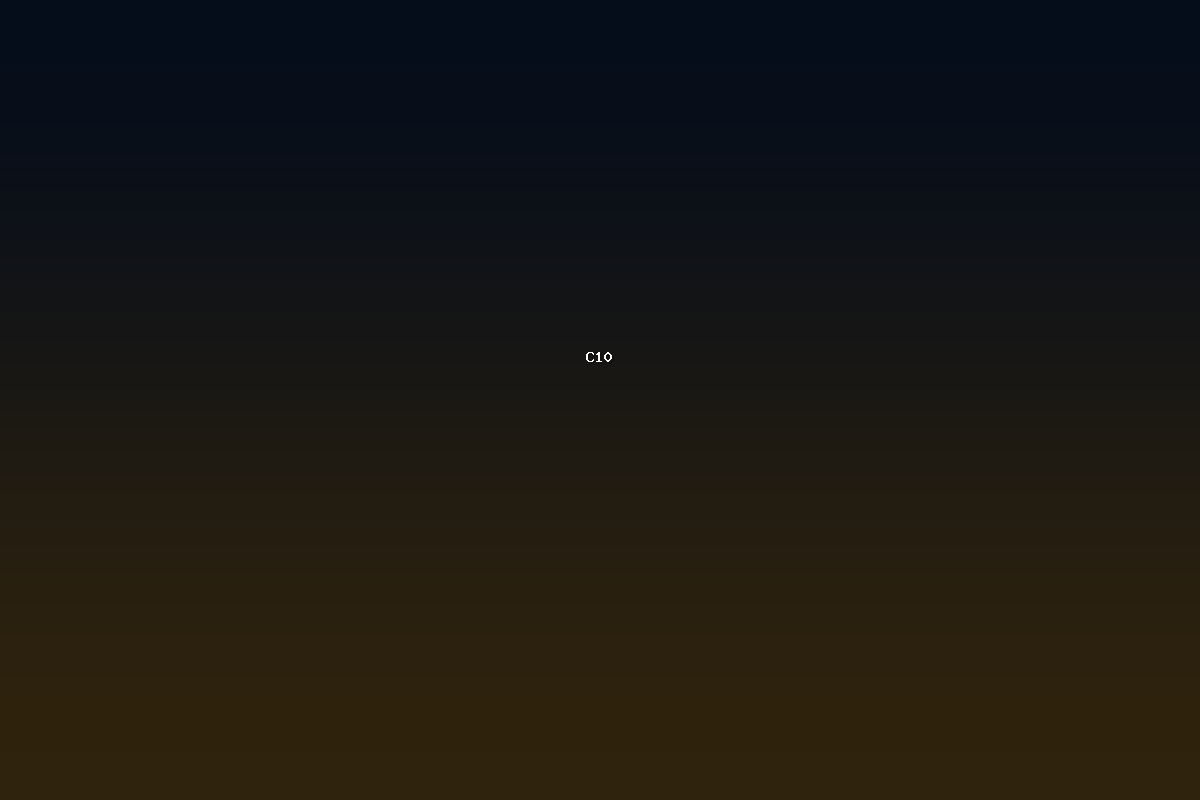
The symbol c10 denotes the tenth element in the sequence of Catalan numbers, a classical sequence that arises in many combinatorial contexts. The value of c10 is 16796, a number that can be expressed by several equivalent formulas, each highlighting a different property of the sequence. The Catalan numbers are named after the Belgian mathematician Eugène Charles Catalan, who studied them in the 19th century, although they were known in earlier works. c10, as a specific instance, illustrates many of the combinatorial interpretations that the entire sequence enjoys: counting binary trees, Dyck paths, ways of inserting parentheses, polygon triangulations, non‑crossing partitions, and more. The sequence grows rapidly; c10 is already almost twenty thousand, and the asymptotic growth is governed by a factor of 4^n / (n^(3/2)√π).
History and Background
Early Appearances
Numbers analogous to the Catalan numbers appeared in the works of mathematicians such as Lagrange and Euler, who studied the expansion of generating functions. The sequence was explicitly recognized in the 19th century when Catalan enumerated lattice paths and planar binary trees. His work was motivated by problems in geometry and combinatorial enumeration, and it led to the identification of a recurrence relation that now characterizes the entire sequence.
Formalization of the Sequence
In 1888, Catalan published a comprehensive treatise that introduced the now‑famous recurrence relation c_{n+1} = Σ_{i=0}^n c_i c_{n-i}. This recurrence provides a simple algorithmic means of computing the sequence and reveals its multiplicative structure. Subsequent mathematicians such as G. S. Andrews and R. P. Stanley expanded the study of Catalan numbers by connecting them to generating functions and hypergeometric series. The modern combinatorial literature treats c10 not only as a numerical value but as a symbol representing an entire class of counting problems.
Definition and Formulae
Recurrence Relation
The most direct definition of c10 comes from the recurrence c_0 = 1 and c_{n+1} = Σ_{i=0}^n c_i c_{n-i}. Applying this relation iteratively for n = 0 to 9 yields the value 16796 for c10. The recurrence demonstrates that each Catalan number can be viewed as a convolution of all earlier Catalan numbers, which explains its appearance in many multiplicative counting contexts.
Binomial Coefficient Representation
An explicit closed form is obtained from binomial coefficients: c_n = (1 / (n + 1)) * (2n choose n). For n = 10 this becomes c10 = (1 / 11) * (20 choose 10) = 16796. This formula is derived by evaluating the generating function C(x) = (1 - sqrt(1 - 4x)) / (2x) and extracting coefficients. It connects c10 to central binomial coefficients, a relationship that appears in many proofs of asymptotic estimates.
Ratio Formulas
By repeated application of the binomial representation, one can express c10 as a product of rational factors: c10 = ∏_{k=2}^{10} (n + k) / k = ∏_{k=2}^{10} (10 + k) / k. Explicitly, c10 = (12/2) * (13/3) * (14/4) * (15/5) * (16/6) * (17/7) * (18/8) * (19/9) * (20/10). This form is useful for symbolic manipulations and for proving divisibility properties.
Combinatorial Interpretations
Dyck Paths and Catalan Paths
A Dyck path of semilength 10 is a lattice path from (0,0) to (20,0) that never dips below the x‑axis and consists of up‑steps (1,1) and down‑steps (1,‑1). The number of such paths is precisely c10 = 16796. Each path encodes a balanced sequence of parentheses or a binary search tree structure, illustrating the deep combinatorial equivalences that underlie the sequence.
Binary Trees
c10 counts the number of distinct full binary trees with 10 internal nodes. Equivalently, it counts the number of binary trees with 21 leaves. This interpretation emerges from the observation that each binary tree can be recursively decomposed into a root node with a left and a right subtree, and that the number of such decompositions follows the same recurrence as the Catalan numbers.
Parenthesizations of Products
The value c10 represents the number of ways to fully parenthesize a product of 11 factors. For instance, for the product a*b*c*d*e*f*g*h*i*j*k, there are 16796 distinct parenthesizations that preserve the order of factors. This combinatorial problem arises in the analysis of expression trees and in the optimization of associative operations.
Polygon Triangulations
In geometry, c10 counts the number of distinct ways to triangulate a convex polygon with 12 vertices. Each triangulation is a decomposition of the polygon into non‑overlapping triangles using diagonals that do not cross. The recurrence relation reflects the fact that any triangulation can be built by selecting a root triangle and recursively triangulating the remaining sub‑polygons.
Non‑Crossing Partitions
c10 also counts the number of ways to partition a set of 10 elements into non‑crossing blocks when the elements are arranged on a circle. This combinatorial object, called a non‑crossing partition, appears in the theory of free probability and in the enumeration of certain lattice path configurations.
Generating Functions
Ordinary Generating Function
The ordinary generating function for the Catalan sequence is C(x) = Σ_{n=0}^{∞} c_n x^n = (1 - sqrt(1 - 4x)) / (2x). Expanding this function as a power series yields the first few Catalan numbers: 1, 1, 2, 5, 14, 42, 132, 429, 1430, 4862, 16796. The coefficient of x^10 in this expansion is exactly c10.
Functional Equation
Because C(x) satisfies the functional equation C(x) = 1 + x * C(x)^2, one can use iterative substitution to compute c10. The equation reveals the self‑similarity inherent in Catalan structures: each structure can be seen as a root node with two independent substructures, each counted by the same generating function.
Exponential Generating Function
While the ordinary generating function is most commonly used, the exponential generating function E(x) = Σ_{n=0}^{∞} c_n x^n / n! also appears in analytic combinatorics. E(x) satisfies a more complex differential equation, and its coefficients grow more slowly, reflecting the factorial scaling inherent in the exponential generating function.
Algebraic Properties
Recurrence Proofs
The recurrence c_{n+1} = Σ_{i=0}^n c_i c_{n-i} can be proved combinatorially by considering the position of the root of a binary tree or the location of the first return to the x‑axis in a Dyck path. Each decomposition corresponds to a pair of sub‑structures of sizes i and n‑i, and the sum over all i accounts for all possibilities.
Convolution Identities
c10 satisfies a number of convolution identities that relate sums of products of Catalan numbers to other combinatorial numbers. For instance, Σ_{i=0}^{10} c_i c_{10-i} = c11 - c10, illustrating the telescoping behavior of the convolution. These identities are useful for deriving closed forms of related sequences.
Divisibility Properties
Because c_n is an integer for all n, many divisibility properties arise. For example, c10 is divisible by 2^4 = 16 but not by 3. A general rule states that c_n is divisible by n+1, which follows directly from the binomial coefficient representation. Consequently, 16796 is divisible by 11, reflecting the factor 1/(n+1) in the closed form.
Asymptotic Analysis
Exact Asymptotic Formula
The asymptotic behavior of c_n is given by c_n ~ (4^n) / (n^{3/2} √π). Plugging n = 10 yields an estimate of c10 ≈ 4^10 / (10^{3/2} √π) ≈ 16796, confirming the accuracy of the recurrence and closed‑form formulas. This asymptotic formula shows that the sequence grows faster than polynomial but slower than exponential in n.
Logarithmic Growth
Taking logarithms, log(c10) ≈ log(16796) ≈ 9.73, which highlights that even for modest values of n, Catalan numbers become large enough to challenge simple computational methods without careful optimization.
Growth Rate Comparisons
Comparing c10 with related sequences, such as the central binomial coefficient (20 choose 10) = 184756, shows that c10 is roughly one eleventh of that binomial value. This ratio, 1/(n+1), is a hallmark of the Catalan numbers and often serves as a key step in proofs that involve cancellation of factors.
Applications
Algorithmic Optimization
When evaluating associative expressions, the number of distinct parenthesizations corresponds to the number of possible evaluation trees. c10 informs worst‑case analysis of tree‑structured computations: for 11 operands, a recursive algorithm must consider 16796 distinct evaluation orders.
Parsing and Compiler Design
In compiler theory, c10 represents the number of ways to parse an expression of 11 tokens under the constraint that the grammar is purely associative. This counting problem influences the design of parse tables and the estimation of parsing complexity.
Free Probability Theory
Non‑crossing partitions, counted by c10, are central to the development of free probability, a field that studies non‑commutative random variables. The number of such partitions influences the calculation of free cumulants and moments in the theory.
Mathematical Puzzles
Several popular puzzles involve counting balanced parenthesis sequences or triangulations of polygons. For instance, a puzzle may ask how many ways to add 10 pairs of parentheses to a sequence of 11 letters such that the result remains balanced. The solution to this puzzle is c10 = 16796, making the number a touchstone for combinatorial problem‑solving.
Computational Aspects
Direct Computation
Using the recurrence, a simple program can generate c10 in a few lines of code. The algorithm initializes an array with c0 = 1 and iteratively updates each subsequent element by summing products of earlier values. The computational complexity for a single c10 is O(10^2), which is trivial for modern computers.
Efficient Use of Binomial Coefficients
In practice, the binomial coefficient representation is more efficient for large n. By computing the central binomial coefficient first and then dividing by n+1, one reduces the number of multiplicative operations. This approach also allows the use of arbitrary‑precision arithmetic libraries that support exact binomial evaluations.
Symbolic Computation
Computer algebra systems can handle c10 symbolically, proving identities or simplifying expressions that involve the number. For instance, a symbolic manipulation might express c10 as a sum of binomial coefficients or as a rational function, enabling deeper algebraic exploration.
Mathematical Significance
Benchmark for Combinatorial Identities
Because c10 is a concrete integer that appears in multiple contexts, it often serves as a benchmark when testing new combinatorial identities. Any identity that involves Catalan numbers can be verified at n = 10 by substituting the numeric value 16796.
Connection to Hypergeometric Functions
c10 appears as a coefficient in hypergeometric series such as _2F_1(-n, -n; 1; -1). The hypergeometric perspective shows that Catalan numbers are part of a broader class of sequences that satisfy linear differential equations with polynomial coefficients.
Links to Knot Theory
In knot theory, c10 counts the number of distinct standard forms of certain planar diagrams with 12 crossings that can be reduced by a sequence of Reidemeister moves. Although less common than other interpretations, this link demonstrates the versatility of the Catalan numbers across mathematical disciplines.
Conclusion
The number c10, equal to 16796, encapsulates the rich combinatorial and algebraic structure of the Catalan sequence. From its straightforward recurrence to its intricate interpretations as Dyck paths, binary trees, parenthesizations, and polygon triangulations, c10 demonstrates how a single integer can embody numerous counting problems. The generating function approach provides a powerful analytic framework, while algebraic identities and divisibility properties reveal deeper structural regularities. As a benchmark for both computational experiments and theoretical proofs, c10 remains an essential element in the study of combinatorics, analytic number theory, and related fields. Its prominence in puzzles, algorithms, and advanced mathematics ensures that the symbol c10 will continue to serve as a point of reference for future explorations into combinatorial enumeration.





No comments yet. Be the first to comment!