




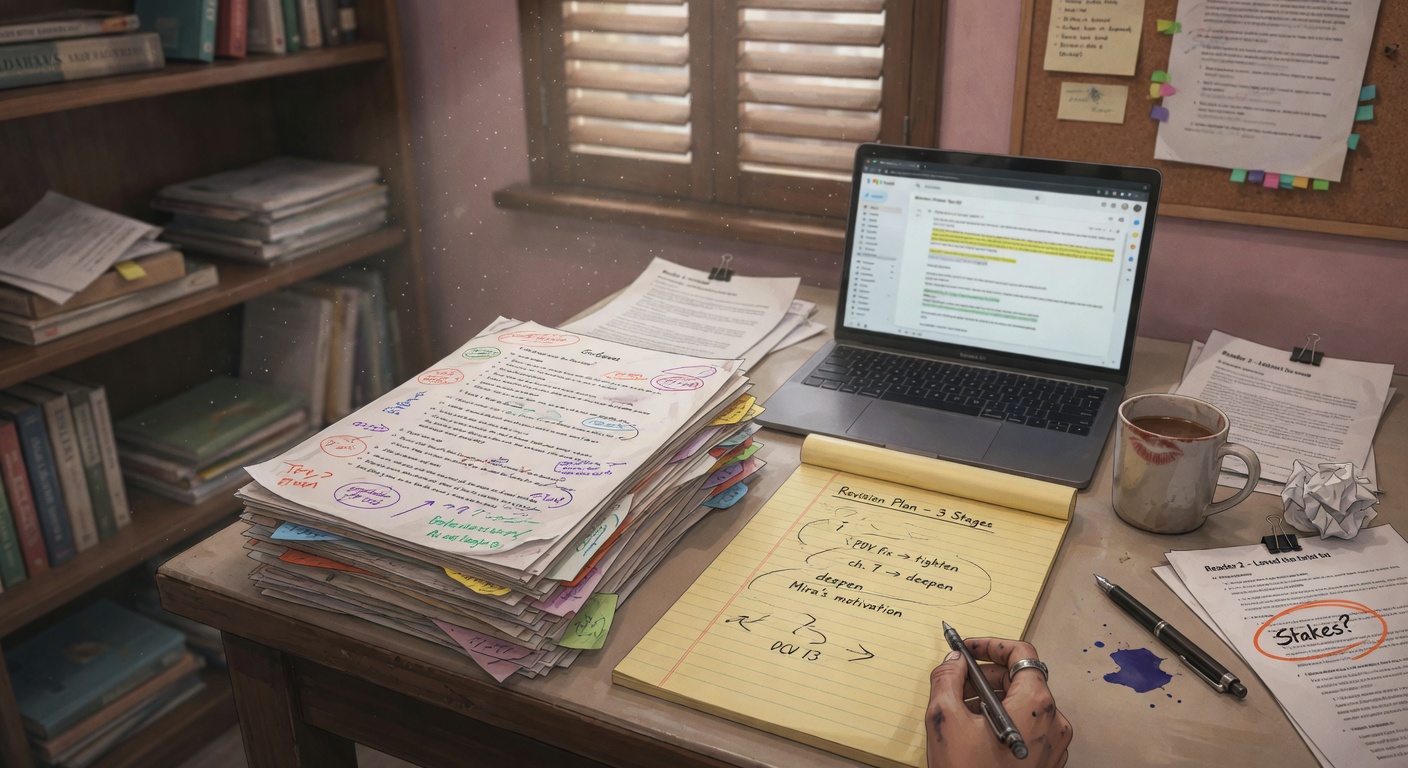
Receiving detailed notes from beta readers often leaves writers with a mix of useful observations and scattered suggestions. The real work begins when you sort those comments into a sequence of changes that respects the story you set out to tell. AI chat models can speed up the sorting step by grouping similar points and drafting sample revision sequences, yet the final choices about what stays or shifts remain yours. Your judgment shapes the outcome because only you know which reader reactions align with the core intent of the piece.
Start by copying the raw feedback into a single document and labeling each note with a short tag such as character, pacing, or ending. This simple pass reduces the pile into clusters that feel less overwhelming. Once the clusters exist, you can feed them to an AI model along with a short summary of your original goals. The model returns a possible order of attack, but you still review every item for fit with your voice and the facts you have already established in earlier drafts.
Prompts to Organize Feedback into Priorities
Use this prompt when beta notes mention several plot holes scattered across the middle chapters and you need a ranked list of fixes before you open the manuscript.
Use this prompt after you have tagged notes for a poetry manuscript and want help deciding which imagery complaints deserve new drafts first.
Use this prompt when memoir feedback highlights missing emotional context around family events and you want a clear sequence for adding reflection without turning the piece into therapy notes.
Exercises to Test Revision Changes
Apply this prompt once you have chosen two or three changes from your priority list and want to see how dialogue might shift under the new arrangement.
Run this prompt when poetry feedback suggests the ending feels abrupt and you want constrained options that still respect the established rhythm.
Choose this prompt after memoir readers ask for clearer stakes in a travel section and you need to test adding one new sensory detail without expanding the whole chapter.
After the model supplies these outputs, read them against the original pages rather than accepting any suggestion outright. Cross check any factual claims the model inserts, especially dates or locations in memoir work. Keep your own sentence rhythms intact by reading the suggested passages aloud before you paste anything into the master file. This extra pass protects the distinctive voice that beta readers came to appreciate in the first place.
Over several sessions the same workflow repeats: cluster the notes, prompt for order, test one change at a time, then decide. The process does not remove the need for your own taste, yet it turns a stack of comments into a manageable checklist that points to the next concrete edit. Writers who track which prompts produce usable drafts soon learn to adjust the role or constraints for their particular genre without starting from scratch each time.




No comments yet. Be the first to comment!