




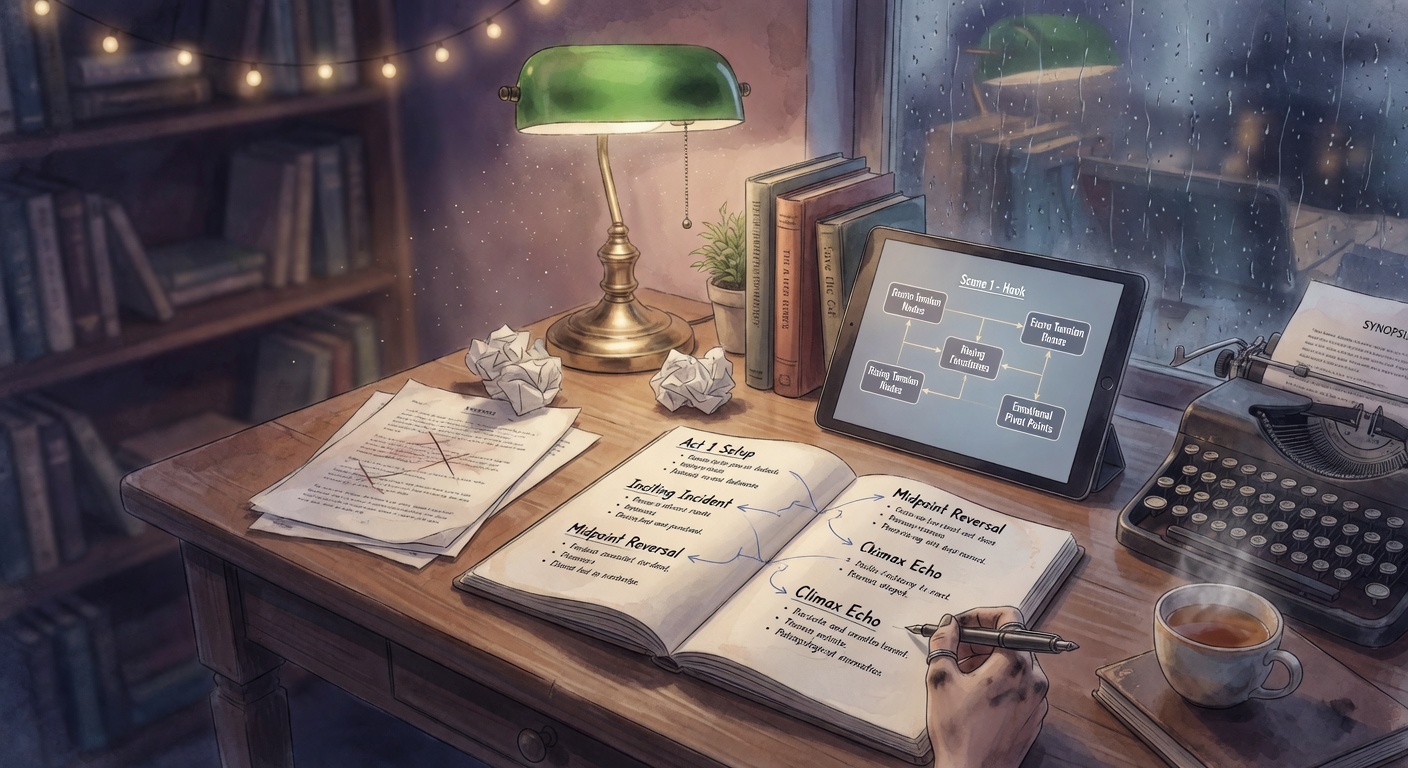
Many writers turn to AI when facing the blank page of a synopsis because the task demands both compression and clarity. A good synopsis captures the core movement of a story without flattening its tension. Structured outlines help the model stay organized so the output does not wander into vague summary. You can guide the process by feeding the model a clear sequence of steps rather than a single open-ended request. The result gives you a workable skeleton you can then reshape with your own judgment.
Before any prompt, spend a few minutes listing the major beats you already know. Note the inciting incident, the midpoint reversal, and the final choice your protagonist faces. These anchors keep the AI from inventing events that contradict what you have written. Once you have those points on paper, you are ready to ask the model for help expanding them into a full outline.
Prompts for Crafting an Initial Synopsis Outline
Use the first prompt after you have listed your three to five anchor beats. It forces the model to respect those beats while producing a numbered outline that stays under a set word count per section. The output shape is deliberately rigid so you can scan it quickly and spot where your own voice needs to enter later.
Label this prompt for high-level plot mapping
Label this prompt for threading character voice through the synopsis
Label this prompt for genre adaptation notes
These prompts work across genres when you swap the focus words. In fiction you emphasize causal links between events. In poetry you replace events with recurring images or sonic patterns. In memoir you shift the emphasis to memory triggers and the distance between past and present self. The model follows the same rigid structure in every case, which makes side-by-side comparison simple.
Exercises for Revising and Strengthening Your AI Outline
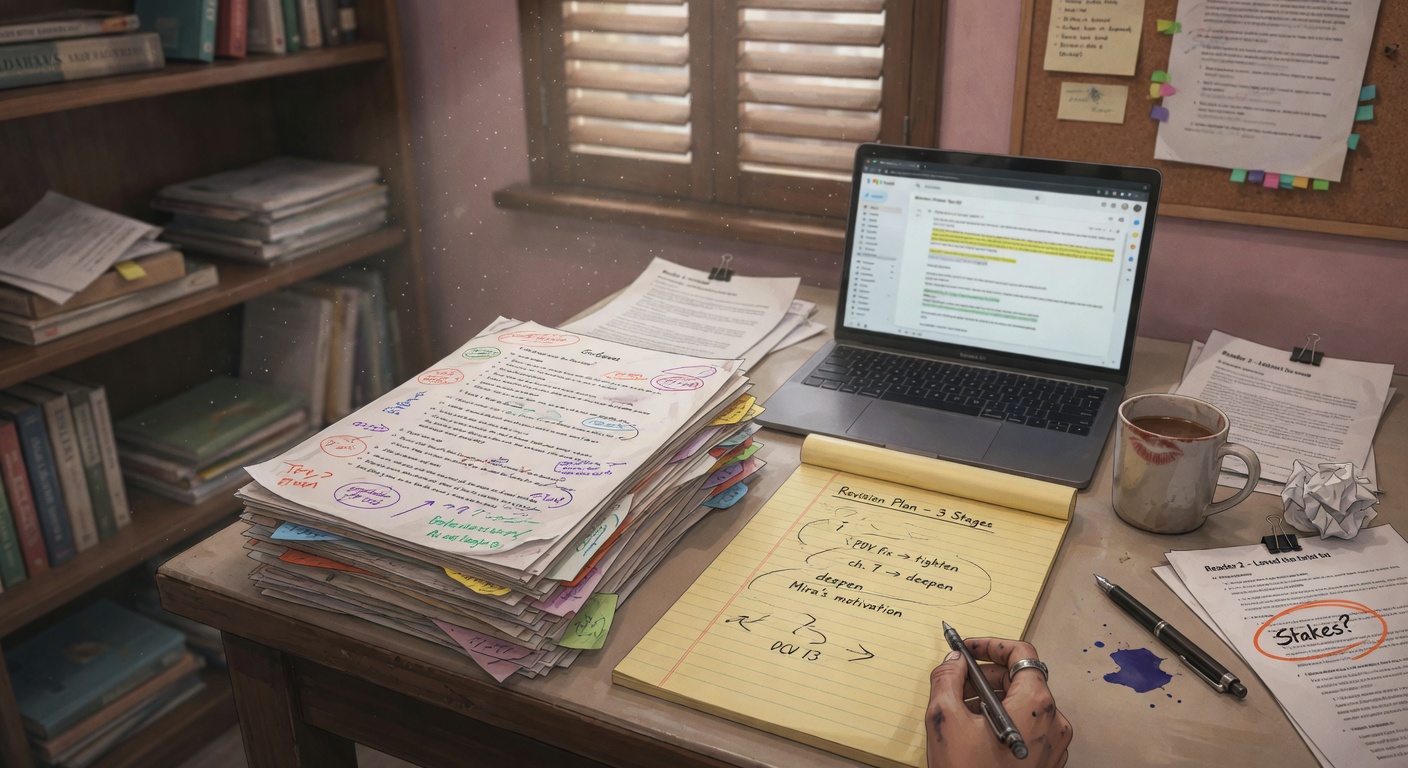
After you receive an outline, the next step is controlled revision rather than wholesale acceptance. The following prompts treat the AI output as raw material that still requires your editorial eye. Run one exercise at a time so you can measure the effect of each change on overall coherence.
Label this prompt for tightening language and removing filler
Label this prompt for checking factual or logical consistency
Label this prompt for injecting personal voice after AI assistance
Once you finish these exercises, read the final version aloud. If a sentence feels borrowed rather than earned, cut it and replace it with a detail only you could have noticed. AI can organize material and suggest phrasing, yet the final test remains whether the synopsis still carries the pressure of your own story. Keep a separate document of discarded lines so you can return to them when you revise the full manuscript. Over several cycles the outline becomes less a machine product and more a record of your own decisions about what matters.



No comments yet. Be the first to comment!