





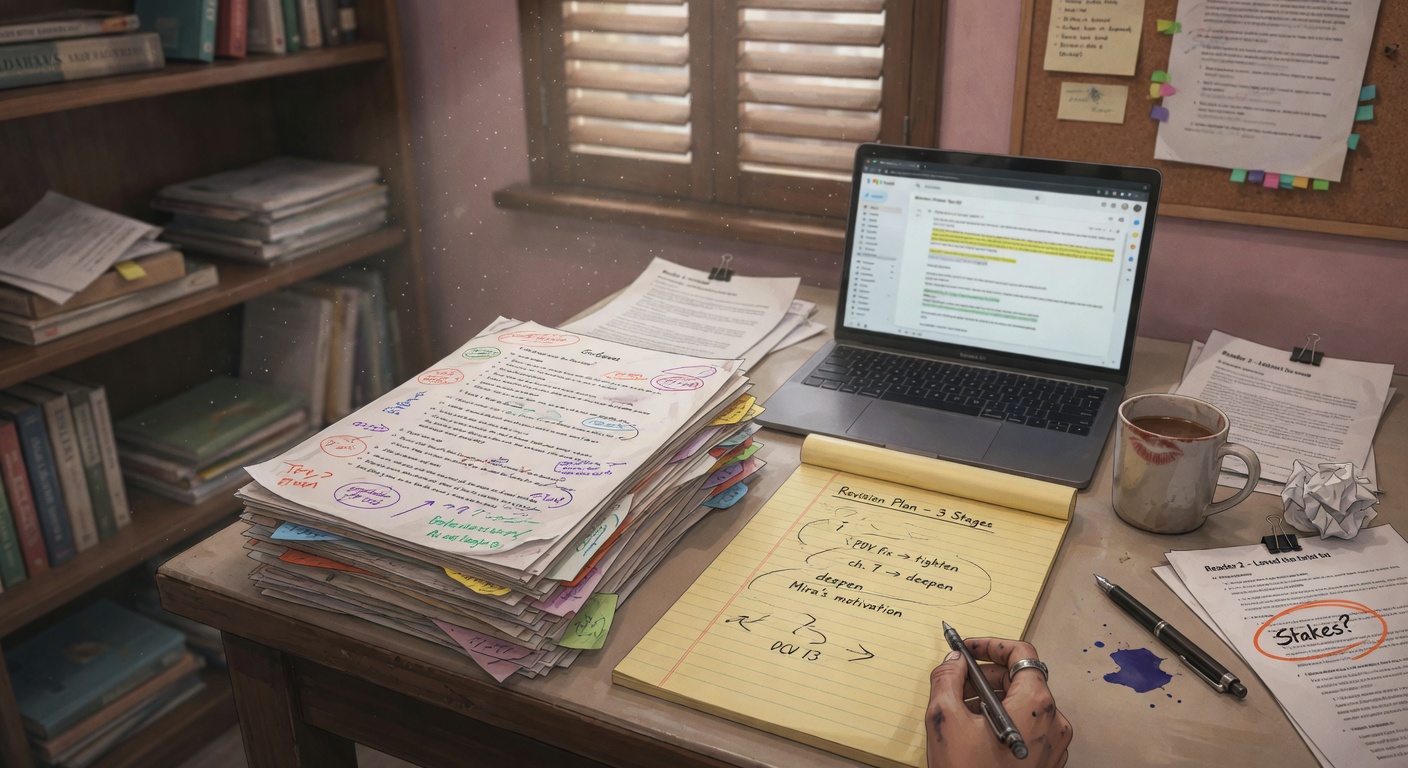
Many writers turn to AI during revision because fresh eyes on a manuscript can surface patterns that slip past after multiple drafts. When the goal is stronger sensitivity and representation, the tool works best as a mirror rather than an authority. It can flag repeated phrasing that reduces a character to a single trait or suggest alternate ways a scene might land for readers whose backgrounds differ from the author's. Yet the final choices remain with the writer, who brings lived context, research, and personal voice that no model can replicate.
Representation questions often surface around dialogue, interior thought, and the balance of power among characters. A prompt that asks the model to read for specific risks, such as accidental stereotyping or unequal emotional labor, produces more usable notes than a vague request for "better diversity." The same prompt can be adjusted for poetry by shifting attention from plot events to imagery and line breaks, or for memoir by asking how a passage might read to family members who appear in it.
Fact-checking remains essential. When a prompt returns a suggestion involving cultural detail, verify it against primary sources or sensitivity readers rather than accepting the output at face value. Personal voice also matters. If a revision feels fluent yet no longer sounds like the rest of the manuscript, set the AI suggestion aside and rewrite from scratch using only the flagged issue as a guide.
Prompts to Refine Dialogue and Voice
Dialogue carries much of the weight when readers judge whether a character feels fully present. Small word choices can imply education level, regional origin, or attitude toward authority. Running a finished scene through a focused prompt helps isolate moments where speech patterns flatten or lean on shorthand. The three prompts below target different entry points: one examines power dynamics inside a conversation, another checks for microaggressions that might appear in casual exchanges, and the third tests whether a single character's voice stays consistent across emotional beats.
Use this prompt right after drafting a conversation between characters who hold unequal social positions.
Use this prompt after completing a full chapter or short story that includes characters from backgrounds different from the author's own.
Use this prompt when revising a character who speaks in several scenes spread across the manuscript.
Workflow Exercises for Revising Scenes and Summaries
After line-level work, larger structural passes benefit from prompts that treat the scene or synopsis as a unit. These exercises encourage the model to map how space, attention, and outcome distribute among characters. Because the output shape is constrained, the writer receives concrete revision options rather than general praise. The prompts can be adapted for poetry by replacing "scene" with "stanza sequence" and asking about image distribution instead of action. In memoir, the same structure works if the prompt adds a clause about protecting the privacy of real people mentioned.
Use this prompt once a scene draft is complete but before polishing prose.
Use this prompt when preparing a synopsis or query letter that must convey ensemble representation accurately.
Use this prompt during a late-stage pass when checking for unintended narrative framing.
After running any of these prompts, compare the suggestions against your own research notes and the manuscript's established rules for each character. Discard anything that smooths away necessary conflict or flattens a voice you have already tuned through earlier drafts. The goal is sharper awareness during self-editing, not a checklist that replaces judgment.



No comments yet. Be the first to comment!