




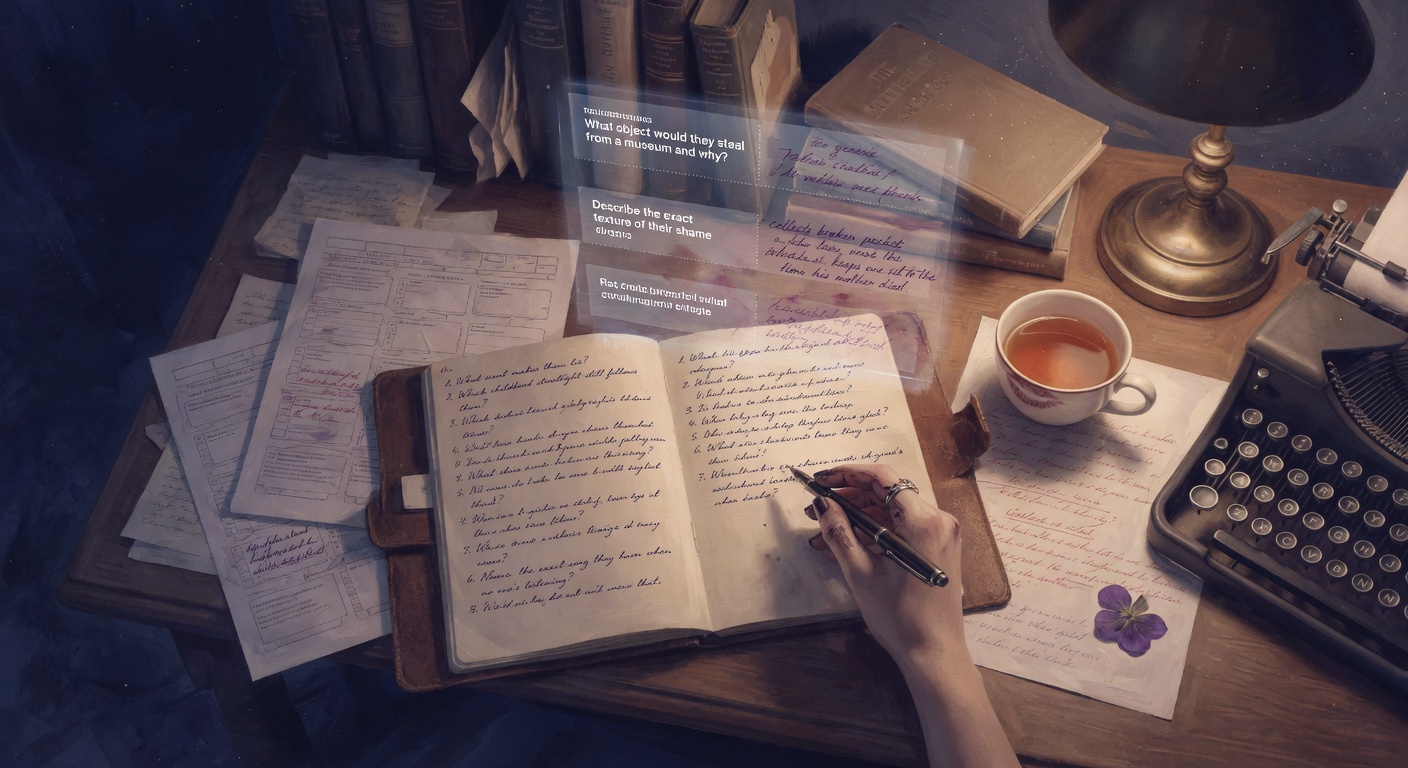
Many writers start with standard character sheets that ask about favorite foods or earliest memories, yet these often produce flat results because they ignore the specific pressures of a story. When you feed an AI a detailed premise first, it can craft questions that dig into contradictions shaped by plot, setting, and theme. The difference shows up quickly in early drafts, where characters begin to resist easy summaries and instead reveal habits that clash with their stated goals.
AI works best here as a tireless question generator rather than an oracle. You still decide which answers belong in your manuscript and which ones reveal only private backstory that never reaches the page. Fact checking matters when a prompt pulls in historical details or cultural references; the model may invent plausible sounding customs that require verification against primary sources.
Prompts That Generate Tailored Questionnaires
Use this first prompt after you have written a one paragraph summary of your story premise and listed three concrete pressures on the main character.
Adapt the same prompt for poetry by adding the instruction to request answers that favor image and rhythm over narrative explanation. For memoir, replace the fiction premise with a real event and ask the model to ground every question in verifiable sensory details from that period rather than invented drama.
Try this second prompt when you want the questionnaire to incorporate genre constraints such as a magic system or a historical timeline.
For poetry, instruct the model to turn each question into a prompt for a short lyric sequence instead of scene seeds. Memoir writers can swap the world rule for a documented social condition and ask for questions that reference specific archival sources.
The third prompt works well once you have partial answers and want to deepen one thread.
Exercises for Testing Character Voice Through Scenes
Run this prompt after you have collected five questionnaire answers and want to hear how the character might speak under pressure.
Fiction writers can add a genre note such as requiring the refusal to hinge on a magic cost. Poets might request the output as a short dramatic monologue with line breaks that highlight repeated phrases. Memoir adaptations replace the ally with a documented family member and insist on verifiable dialogue patterns from letters or recordings.
Use the next prompt to check consistency across different emotional registers.
Poetry versions can ask for paired short lyrics instead of scenes, each centered on a single recurring image. Memoir writers substitute real documented events for the news and lie, then request the model to flag any invented details for later checking.
The final prompt helps when you need to revise an existing scene that feels off voice.
Across genres the same revision prompt works if you first specify whether the output should stay in prose, shift to verse, or stay anchored to documented memory. In every case the model supplies options; your judgment decides which lines survive into the finished piece and which ones get discarded because they drift from the personal voice you are building.


No comments yet. Be the first to comment!