




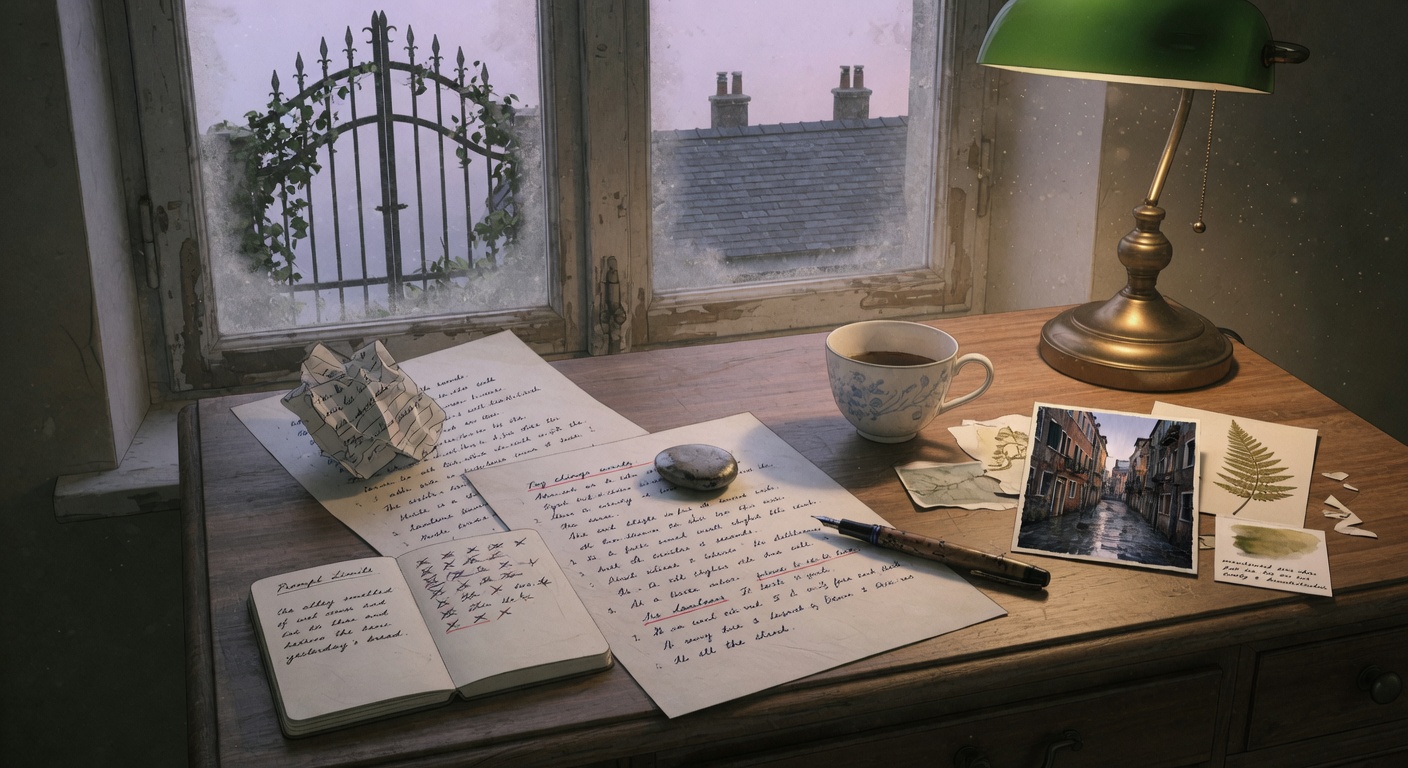
Constrained prompts push an AI model to focus tightly on setting details instead of drifting into plot or character backstory. Writers often start with a loose request like describe a rainy street and receive generic results. Adding limits such as word count, required senses, or historical accuracy narrows the output so the details feel immediate and usable. The same approach works whether the piece is a short story scene, a poem sequence, or a memoir passage about a childhood kitchen.
One practical way to begin is to list three concrete constraints before you paste anything into the chat. Decide on length, the dominant sense, and one unexpected object that must appear. These rules keep the model from defaulting to familiar images like dripping awnings or wet cobblestones. You still review every line for fit, because the model cannot know the larger rules of your fictional world or the emotional tone you need for a particular chapter.
Targeted Prompts for Vivid Setting Work
These prompts treat the model as a detail generator that must obey strict rules. Each one asks for a single focused paragraph or stanza so you can drop the text straight into your draft and revise from there. The constraints differ enough that you can rotate through them during a single writing session without repetition.
Use this first prompt when you need an opening image that emphasizes sound over sight and must stay under one hundred words.
Use this second prompt when you want a setting that supports dialogue, so the environment must supply small actions a character can perform while speaking.
Use this third prompt for poetry that must compress setting into tight lines while still naming a precise time of day.
Adapt any of these by swapping the genre instruction in the first sentence. For memoir, change literary fiction to personal essay and add the phrase drawn from lived memory. For poetry, keep the line-count rule but allow one internal rhyme if the original prompt does not forbid it. The core constraints on length and required elements stay the same so the output remains easy to compare across drafts.
Revision Workflows Using Constrained AI Prompts
After you have a rough scene, constrained prompts help locate weak spots in the setting without rewriting the whole passage. The model receives your existing text plus a narrow task such as replace every abstract noun with a specific object. You decide which suggestions survive, because the model does not track emotional continuity across pages.
Run this first revision prompt when a setting paragraph feels flat and you want to test stronger verbs tied to place.
Use this second prompt when dialogue feels detached from its surroundings and you need the setting to supply one interrupting action.
Apply this third prompt when you are trimming a longer descriptive block and want to keep only details that affect character movement.
These revision prompts work across genres once you adjust the output shape. In fiction the model returns prose sentences. For poetry you can add the instruction return the result as four broken lines instead of sentences. Memoir writers often add the clause keep the first-person perspective so the suggested details stay consistent with a remembering voice. After the model replies, read the suggestions against your own knowledge of the place or period. If a detail contradicts a fact you already established, discard it and keep the version that matches the rest of your manuscript.



No comments yet. Be the first to comment!