




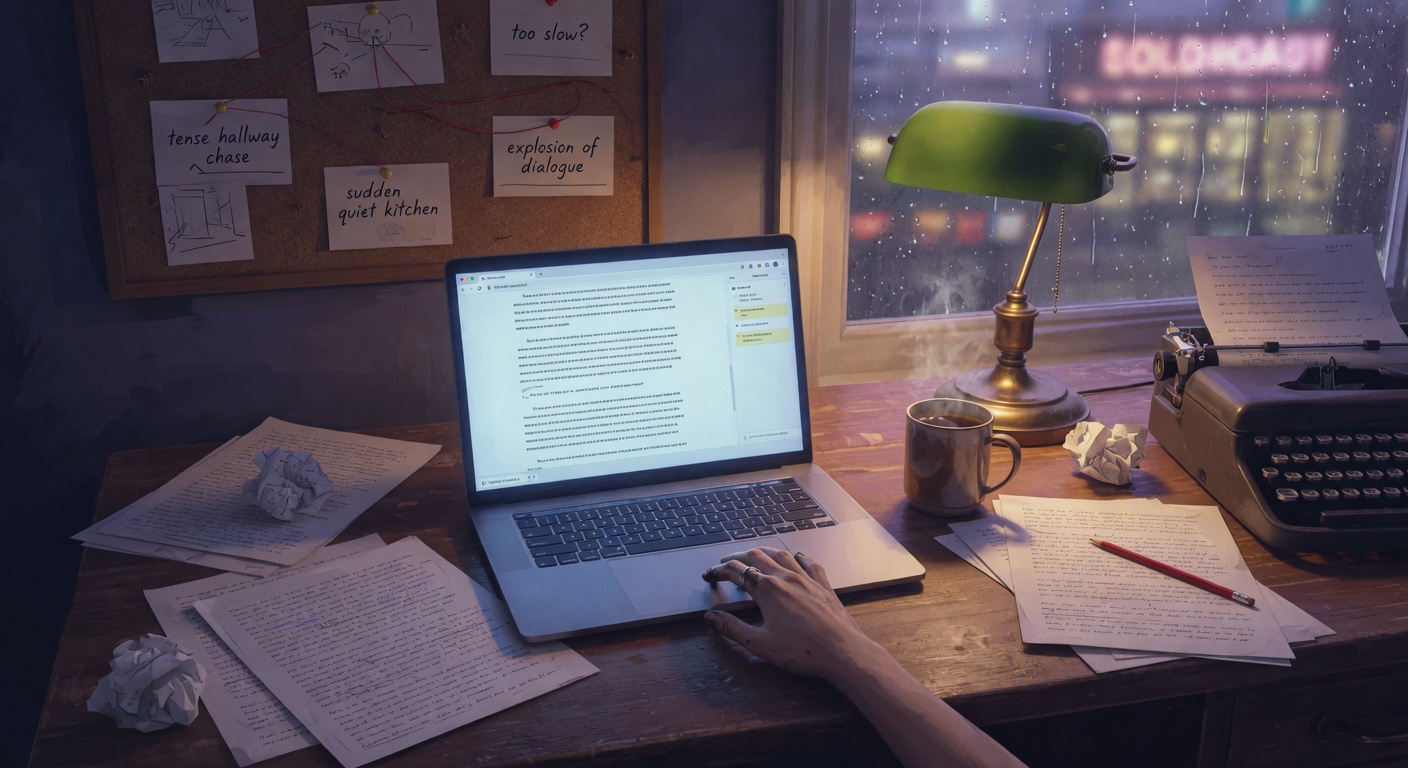
Scene pacing determines whether readers stay immersed or drift away. When you draft a chase through city streets or a quiet conversation in a kitchen, the rhythm of sentences and events shapes tension. Many writers now turn to language models for quick input on these rhythms, yet the quality of feedback depends on how precisely you frame the request. Vague questions produce vague answers, while targeted prompts guide the model toward observations about speed, buildup, and pauses.
Start by pasting a short excerpt rather than an entire chapter. Models handle limited context best when you isolate the passage you want examined. Include a sentence or two that states your intended effect, such as making the reader feel time slow during a revelation or accelerate during conflict. This context helps the model compare what you wrote against what you hoped to achieve.
Workflow Prompts for Routine Pacing Checks
Build a simple sequence you repeat after every major scene. First, read the passage aloud once yourself. Then feed it to the model with instructions that focus on measurable elements like sentence length variation and the placement of white space on the page. Ask for concrete suggestions rather than general praise or criticism. Run the same excerpt through two different prompts on separate days so you can notice patterns in the responses.
After you receive comments, mark the original text with your own notes before deciding which changes to keep. The model offers one perspective among many; your ear as the writer still decides whether a suggested cut preserves voice. Over several weeks this workflow becomes automatic and surfaces recurring pacing habits you can adjust across projects.
Use this prompt when you have just finished a scene and want an overview of its overall speed and momentum before line editing begins.
Use this prompt after you have tightened a dialogue exchange and want to test whether the back-and-forth advances or stalls the scene.
Use this prompt when you have written a reflective passage in memoir or personal essay and need to decide how much summary versus scene to keep.
Prompt Exercises for Genre-Specific Scene Flow
Different forms require different pacing signals. In a novel the reader tracks time through action and setting changes. In a poem the line break itself creates breath and hesitation. Memoir often balances private reflection with public event, so pacing choices affect both intimacy and clarity. Adapt the base prompts by naming the form and the unit you want measured, whether that unit is a paragraph, a stanza, or a single memory block.
Poets can ask the model to treat line length and stanza breaks as timing devices. Memoir writers can request comments on how quickly the narrative moves from external event to internal response. Fiction writers can focus on the ratio of scene to sequel. These small substitutions keep the same underlying request while matching the conventions of each genre.
Try the first prompt below when you have a fast-cut action sequence in fiction and want to verify that the reader can still track physical movement.
Apply the next prompt to a poem draft when you want feedback on how stanza length controls emotional pressure.
Use the final prompt when revising a memoir scene that blends present observation with past memory and you need to control how quickly the reader shifts between the two time frames.
These prompts remain useful only when you compare their output against your own reading. Run the same passage through a prompt, apply one change, then reread the revised version aloud. If the adjustment still feels off, discard it. The model cannot replace the hours you have spent listening to your own sentences, yet it can point out habits you no longer notice on your own. Over time the practice sharpens both your drafting and your revision eye.


No comments yet. Be the first to comment!