


The Retrofitting Problem (And Why AI Lets You Solve It in Reverse)
Most series foreshadowing fails for a mundane reason: the author didn't know what they were foreshadowing when they wrote the first book. Then the sequel arrives, the plot demands a revelation, and suddenly that old detail about the grandmother's pocket watch needs to mean something it was never designed to mean. Readers with good instincts feel this. The payoff lands, technically, but it sits slightly wrong—like a picture that's been rehung an inch from its original hook.
The conventional advice is to outline the whole series before you write book one. That's fine if you're the kind of writer who can do it. Most aren't. Series arcs evolve. Characters surprise you. The thematic concerns of book three are often invisible until you've finished book two. Demanding a complete five-book outline before you type chapter one is a reliable way to either produce a rigid, mechanical series or to never start writing at all.
AI changes the calculus here because it lets you work from a vague series direction rather than a fixed series plan. You don't need to know that the villain in book four is the mentor's estranged daughter. You need to know something like: this series is about inheritance—of power, of trauma, of responsibility—and the mentor carries secrets about the institution he built. That's enough to seed. The AI becomes a collaborator for thinking forward and backward simultaneously: what could this detail become, what could it have already been, and how do we plant the version that serves the story without locking the door on anything.
The prompts in this piece are designed for that mode of work—reverse-engineering foreshadowing into a manuscript you've already drafted (or are mid-draft on), without requiring a finished sequel and without the kind of heavy rewriting that breaks your momentum.
Motif Architecture: Building Symbolic Infrastructure That Can Carry Weight
A motif only works as foreshadowing when it appears early enough to feel organic, recurs with enough variation to feel intentional, and carries escalating meaning rather than simply repeating. The problem is that identifying your own accidental motifs—the images and phrases you reached for instinctively—requires the kind of distance from the manuscript that's hard to manufacture when you're deep in it.
This is where AI earns its keep. Feed the AI a significant portion of your manuscript—several chapters, ideally spanning beginning, middle, and end of book one—and prompt it to surface the symbolic vocabulary you're already using. You'll often find you've been writing toward something you hadn't consciously named.
You are a structural editor specializing in series fiction and symbolic architecture. I'm going to share several chapters from Book One of a planned multi-book series. Your task is to identify 4–6 recurring images, objects, phrases, or sensory details that appear at least twice in this manuscript and carry latent symbolic potential— meaning they could sustain escalating thematic weight across future volumes. For each motif you identify: 1. List every scene in which it appears and how it's currently functioning (atmospheric, characterizing, plot-functional, or incidentally). 2. Propose two or three ways this motif's meaning could shift or deepen in a second or third book without requiring rewrites to Book One. 3. Flag whether the motif is currently "open" (flexible enough to carry new meaning) or "closed" (so specifically defined it resists symbolic expansion). 4. Suggest one small addition or adjustment to an existing Book One scene— no more than a sentence or two—that would sharpen the motif's symbolic resonance without signaling its importance to a first-time reader. I am not planning a fixed sequel plot. My series direction is: [paste your 2–4 sentence thematic summary here]. Work within that frame rather than inventing specific plot events. [Paste manuscript excerpt here]
The critical constraint in this prompt is the instruction to stay within a thematic frame rather than inventing plot. AI systems, unprompted, will often generate specific sequel events—"In Book Two, the mirror could shatter when the protagonist learns the truth about her father." That's not what you need. You need the motif to remain generative, not pre-scripted. The thematic summary keeps the collaboration in the right register.
The Sleeper Detail Pass: Finding Accidental Gold Already on the Page
Every manuscript contains what I think of as accidental foreshadowing—details the author dropped in for texture, verisimilitude, or pacing that happen to sit on load-bearing thematic ground. A minor character who gets two lines of description but whose name you chose because it sounded right. A throwaway worldbuilding fact about a law or tradition that a later book's plot could use. An unexplained object in a room that you included because the scene needed grounding.
Identifying these requires a specific kind of audit that's tedious to do manually and surprisingly effective to do with AI, because the AI doesn't share your fatigue with the material and doesn't know which details were intentional.
I am going to share a chapter (or scene) from Book One of a series. Conduct a "sleeper detail audit" with the following parameters: Identify every detail in this passage that meets at least two of these criteria: — It is introduced but not explained (an object, place name, relationship, rule, or backstory element that appears without full context) — It involves a character who appears briefly but is given a specific, memorable trait or name — It references a history, event, or institution that exists in the world but is not explored in this book — It contains a statement, belief, or claim made by a character that is presented as fact but that a sequel could complicate or contradict For each sleeper detail you identify: 1. Quote the exact line or passage where it appears. 2. Explain in one sentence why it qualifies as a sleeper (which criteria it meets). 3. Propose two possible ways a sequel could "activate" this detail—one that would surprise the reader, one that would feel inevitable in retrospect. 4. Rate its activation potential: HIGH (would require minimal setup in the sequel), MEDIUM (would benefit from one additional mention in Book One), or LOW (interesting but would need significant sequel scaffolding). Do not invent new plot. Work only with what's on the page. [Paste scene or chapter here]
Run this audit on every chapter, or at minimum on your first act and any scenes that felt unusually generative when you wrote them. The goal isn't to commit to activating every detail the AI surfaces—it's to build a menu of options. The best foreshadowing in published series often came from an author recognizing that something they'd written accidentally was too good not to use.
Character-Level Setup: Small Behaviors, Large Payoffs
Plot-level foreshadowing—the hidden clue, the mysterious stranger—gets most of the attention in craft discussions. Character-level foreshadowing is quieter and often more powerful: the belief a protagonist holds in book one that will be destroyed in book three, the coping mechanism that works until it catastrophically doesn't, the relationship dynamic that looks like strength until the series reveals it as dependency.
These setups work because readers track character psychology more continuously than they track plot detail. A reader may not remember the name of the organization mentioned in chapter four. They will remember, unconsciously, that the protagonist flinches whenever someone raises their voice and that she's never explained why.
The AI's role here is to help you think through the dramatic logic of character setup—not to invent sequel events, but to identify what kinds of contradictions, fulfillments, and corruptions your established characters are already positioned for.
I'm going to give you a character profile for a major character in Book One of my series, followed by 2–3 scenes that represent their current arc. Your task is to identify character-level setups—behaviors, beliefs, wounds, or relationships—that could function as dramatic seeds across future volumes. For each setup you identify, provide: 1. THE SETUP: Quote or closely paraphrase the specific character behavior, stated belief, unresolved wound, or relationship pattern from the text. 2. THREE POSSIBLE PAYOFF TYPES: — CONTRADICTION: How could a sequel directly contradict this belief or behavior in a way that feels earned rather than inconsistent? — FULFILLMENT: How could a sequel bring this setup to its logical completion—satisfying the implicit promise the character has made? — CORRUPTION: How could circumstances in a sequel cause this trait or belief to become destructive, inverted, or weaponized against the character or others? 3. WHAT'S MISSING: What is one small behavioral detail, stated line of dialogue, or moment of interiority that, if added to an existing Book One scene, would deepen this setup without telegraphing its future function? 4. SERIES RANGE: Is this setup most suited for a single-book payoff (resolved in Book Two), a mid-series turn (Books Two or Three), or a series-culminating payoff (Book Four or Five)? Character profile: [paste here] Representative scenes: [paste here] Series thematic direction: [paste your 2–4 sentence summary here]
The three payoff types—contradiction, fulfillment, corruption—are useful because they keep your options genuinely open. A character who believes in institutional authority can be paid off by having that belief heroically vindicated, or by having it shattered, or by showing how it makes them complicit in something terrible. All three are valid. None requires the other to be foreclosed in book one.
The Foreshadowing Ledger: Making Sure Nothing Gets Orphaned
Series foreshadowing fails in two directions. The first is the retrofitting problem we started with—payoffs that feel bolted on. The second is the orphaned detail problem: the mysterious object in chapter two that the author forgot about, the minor character whose implied backstory never surfaces, the symbolically charged phrase that appears twice and then vanishes. Readers notice both. Orphaned details are particularly damaging in an age of close online reading communities, where every unexplained element gets catalogued and discussed—and then the answer never comes.
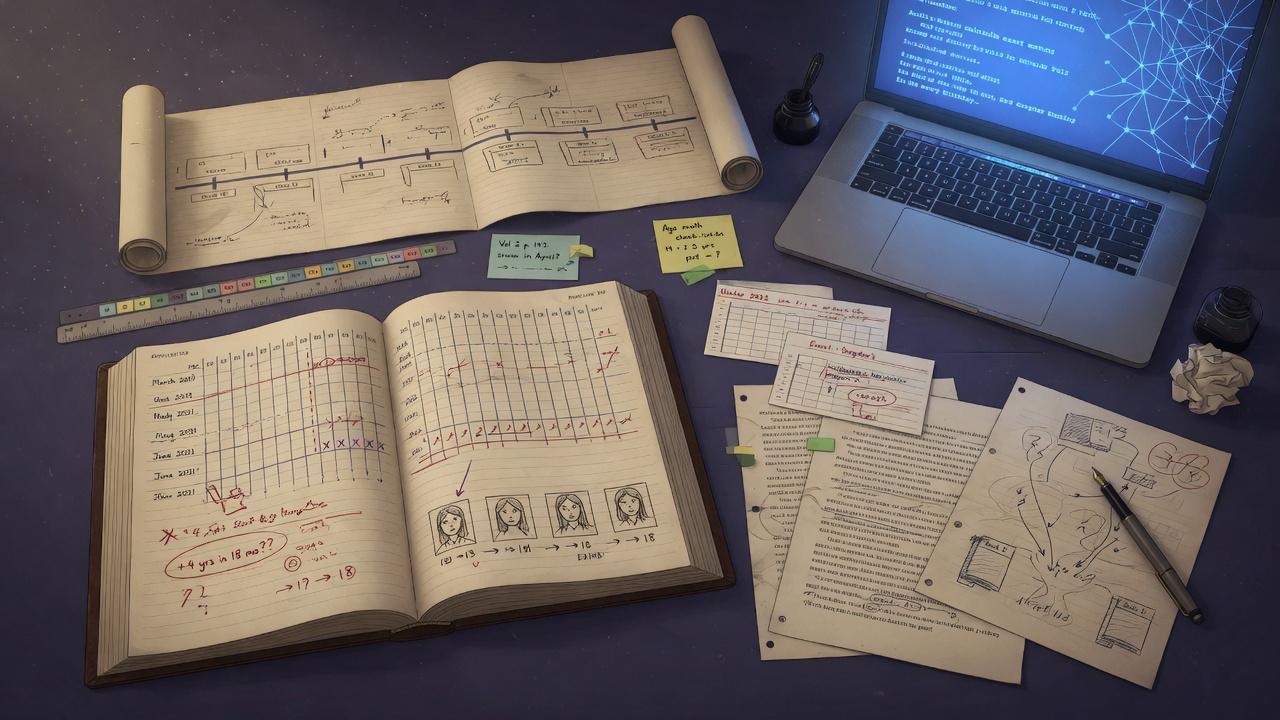
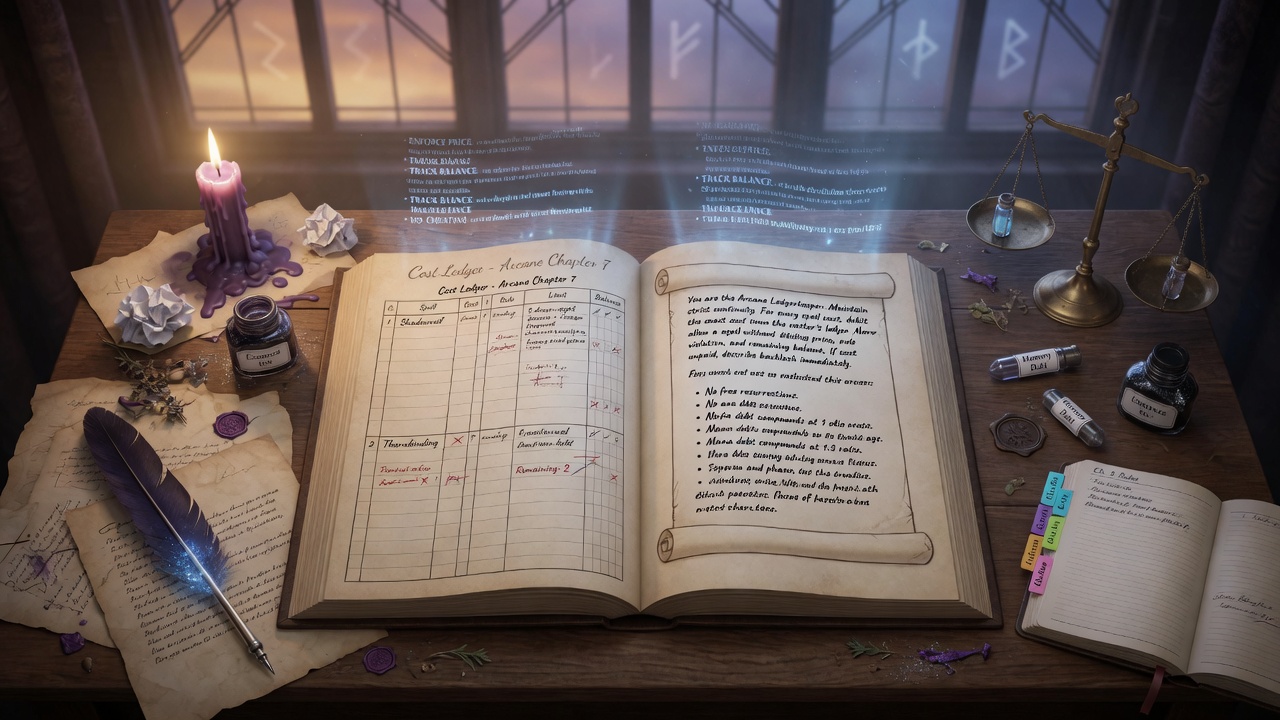
The foreshadowing ledger is a living document that tracks every planted detail in your series. AI can help you build it and maintain it across a multi-year, multi-book project.
I need help building a foreshadowing ledger for a [X]-book series. I'll be using this document throughout the series to track planted details and ensure payoffs don't get orphaned. Based on the manuscript material and notes I'm going to share, generate a structured ledger with the following columns for each entry: DETAIL ID: A unique reference code (e.g., B1-CH4-01 for Book 1, Chapter 4, first entry in that chapter). ELEMENT: A brief description of the planted detail (object, line of dialogue, character trait, worldbuilding fact, motif instance, etc.). LOCATION: Chapter and approximate scene placement in Book One. CURRENT STATUS: One of three states— DORMANT (planted but not yet activated in any book) ACTIVE (currently functioning in the plot or being developed) PAID OFF (resolved—note which book completed it) INTENDED DESTINATION: Which book (or book range) this detail is aimed at. Can be listed as "FLEXIBLE" if it's not yet assigned. ACTIVATION NOTES: What would need to happen in a future book for this detail to pay off. Keep this brief and non-prescriptive—a direction, not a scene. RISK LEVEL: LOW (easy to activate naturally, won't feel forced) MEDIUM (will require some setup in the activating book) HIGH (needs careful handling or it will feel retrofitted) After generating the initial ledger from my materials, also flag: — Any details that are HIGH risk AND have no clear destination (orphan candidates) — Any thematic clusters (multiple details pointing toward the same series-level idea) that I should be aware of — Gaps: areas of the manuscript where foreshadowing is thin and a future book might need to establish backstory retroactively My manuscript and series notes: [paste here]
The ledger isn't a constraint—it's a permission structure. When you sit down to write book three and you're unsure whether a particular revelation will feel earned, you open the ledger and check: is there anything in book one already pointing here? Often there is. The AI helped you find it before you knew you needed it.
Working With the Results: What AI Can't Do For You
These prompts generate material. They surface options, flag possibilities, and organize what already exists on your page. What they don't do is make the artistic judgment about which seeds are worth planting.
That judgment depends on things the AI genuinely can't access: your intuition about where the series is emotionally headed, the characters you haven't introduced yet, the thematic concerns you haven't articulated even to yourself. The prompts work best when you treat their output as a first-pass audit from a very well-read developmental editor who happens to have read your manuscript more closely than any human assistant would have time to.
- Run the motif architecture prompt early in revision, when you still have flexibility to add or adjust details.
- Run the sleeper detail audit chapter by chapter, then compile the results into the ledger.
- Revisit the character setup prompt whenever you're about to draft a new book—it helps you remember what you promised the reader without consciously meaning to.
- Update the ledger at the end of every drafting phase, marking what's been paid off and what's been newly planted.
The goal isn't a series that was engineered from the start. It's a series that reads as though it was. There's a meaningful difference between actual inevitability and the feeling of inevitability—and that feeling is what readers mean when they say a payoff was earned. AI won't generate that feeling for you. But it will help you build the architecture that makes it possible.

No comments yet. Be the first to comment!