





Memoir writers often begin with scattered images and half-remembered conversations rather than complete stories. AI can act as a quiet prompt generator that surfaces possible details from those fragments, yet the writer remains the one who decides what feels true. The process stays ethical when the model never supplies names, dates, or events treated as settled fact. Instead it offers sensory or emotional suggestions that the author then tests against personal records or conversations with relatives.
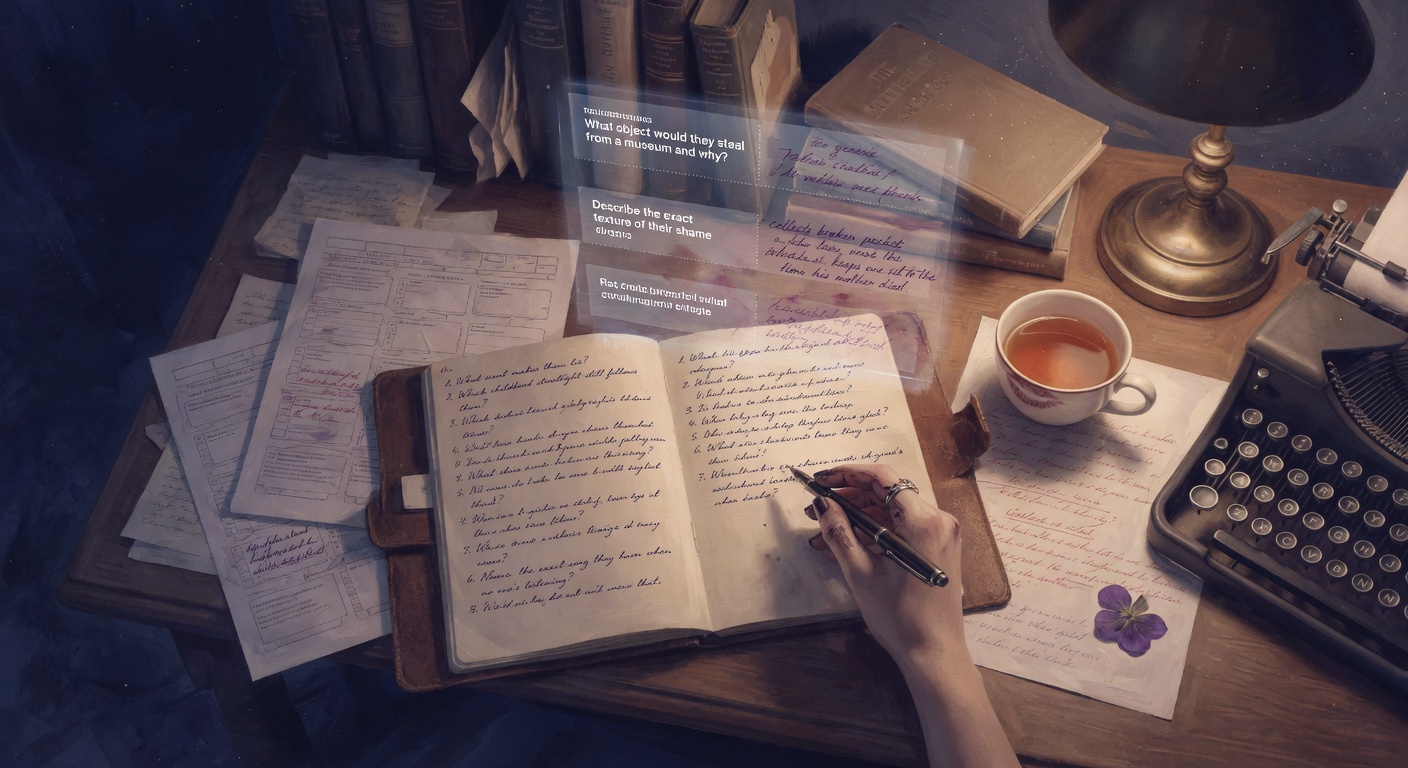
Many authors already keep a notebook of single-line triggers such as "the smell of rain on hot pavement outside the old apartment." Feeding a trigger into a model can produce three or four fresh angles without overwriting the original voice. The output serves only as raw material. Any line that later appears in the finished book must still pass through the writer's own judgment and fact-checking.
Because memoir sits close to lived experience, prompts work best when they stay narrowly scoped. A request for dialogue should specify that speakers remain unnamed and that lines stay tentative. A request for setting should limit itself to weather, objects, or sounds rather than actions or outcomes. These boundaries keep the tool from drifting into invention that later requires heavy correction.
Prompts for Eliciting Specific Memories
Use the first prompt when a single sensory fragment exists but surrounding details remain hazy. Paste the memory cue into the bracket and adjust the year or location only if they are already known to you.
Run the second prompt after an initial scene draft exists and the writer wants possible dialogue options that match remembered speech patterns rather than polished prose.
Apply the third prompt when the writer wants to test emotional tone without committing to any single interpretation of events.
Workflow Prompts for Draft Revision
Once a section has been written with or without AI help, these prompts help the author examine voice consistency and decide what to keep or discard. The model functions here as a mirror rather than an editor.
Submit the first workflow prompt after a full scene draft is complete and the writer wants to hear whether any lines drift into generic description.
Use the second prompt when the writer has several AI-generated fragments and needs help sequencing them without creating false chronology.
Run the third prompt on a finished section when the writer wants to check whether any AI suggestion has introduced unverifiable facts.
Adaptation across genres follows the same constraint pattern. For fiction the writer can change the role line from "memory assistant" to "scene builder" and allow invented names while keeping the sensory limits intact. For poetry the output shape shifts to lineated phrases under eight syllables each, still avoiding invented events. Memoir stays the strictest because the final text carries an implicit claim of accuracy that fiction and poetry do not.
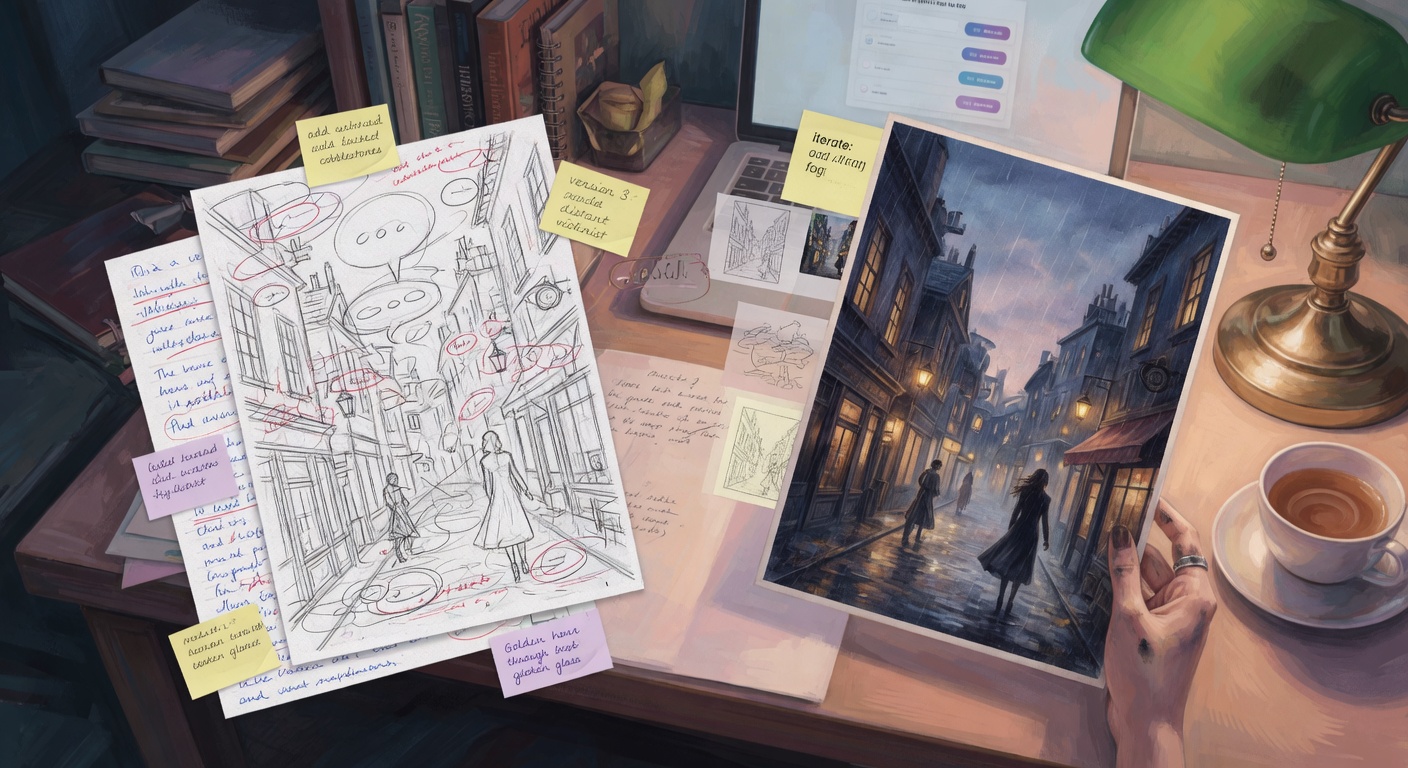
Throughout the process the writer keeps a separate document for every prompt and its output. That log makes it easy to trace which sentences originated with the model and which originated in personal recall. Regular comparison against journals, letters, or conversations with others remains the final filter. The model never replaces that step; it only supplies starting points that the author then claims or discards.

No comments yet. Be the first to comment!