




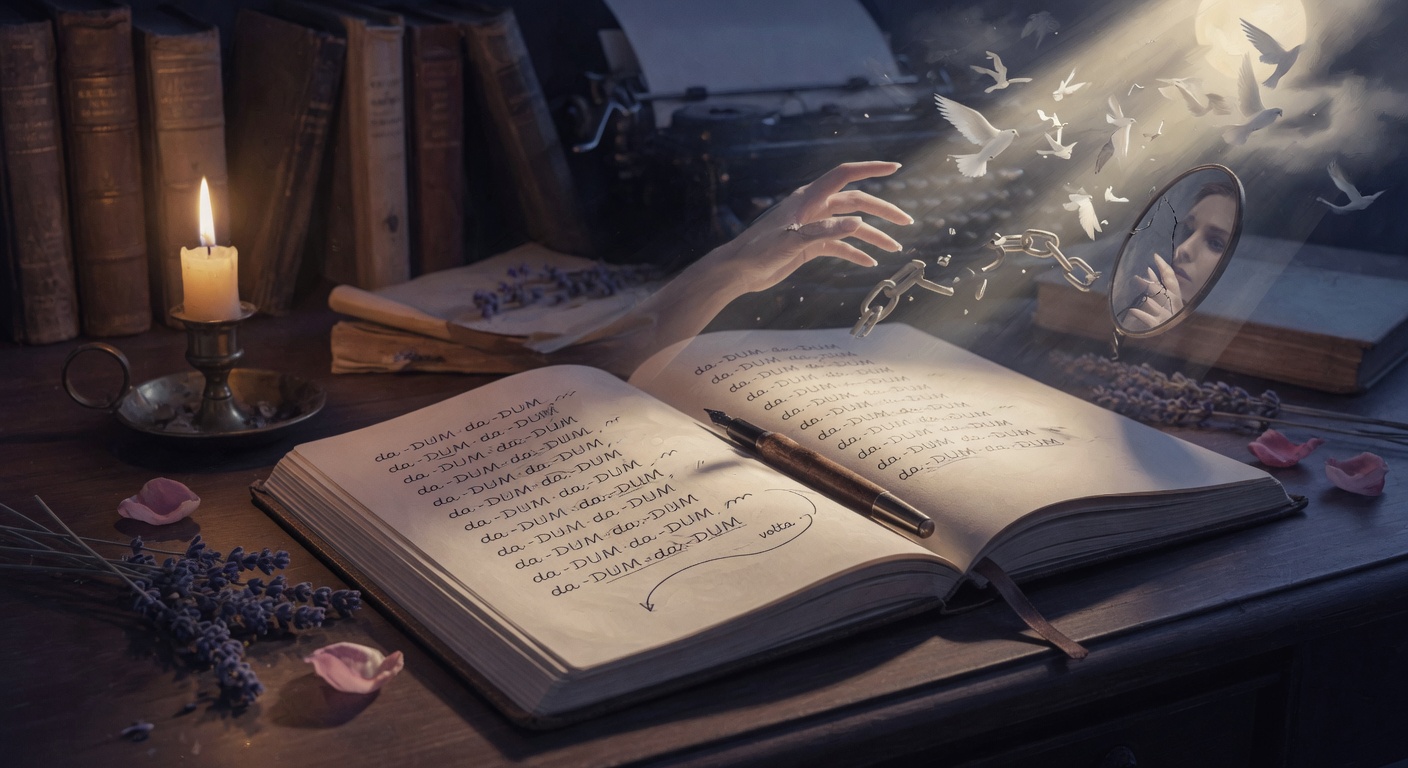
Writers who collaborate with language models on poems benefit when the request names a meter, pins down one dominant image, and requires a clear volta. These three elements force the model to move beyond vague atmosphere and produce lines that scan, pictures that hold weight, and a shift in thought at a deliberate point. Without them the output tends to drift into abstractions or repeat the same soft cadence. With them the exchange becomes a practical drafting session rather than a source of random stanzas.
The same constraints also help a poet keep personal voice intact. After the model returns a draft the writer can judge whether the meter feels natural in the mouth, whether the image earns its place, and whether the volta lands with genuine surprise. That judgment step remains the writer’s alone; the model supplies raw material that still needs ear-testing and fact-checking against lived experience.
Because the prompts below are written as complete instructions they can be copied and pasted with only minor swaps for subject matter. They also travel across genres once the writer adjusts the output shape. A novelist might ask for rhythmic prose paragraphs instead of counted lines, while a memoirist might request a reflective turn inside a single scene rather than a fourteen-line structure.
Meter and Image Prompts
Use this prompt when the poem needs a strict repeating foot and one recurring visual anchor from the start.
Use this prompt when you want the image to accumulate detail across stanzas while the meter stays consistent.
Use this prompt when you need the image to interact with a named speaker’s voice inside the chosen meter.
These prompts reward small edits after the first run. If a line fails to scan, the poet can paste the offending stanza back with the added instruction to restore the foot while keeping the bowl, bridge, or mailbox unchanged. The model then functions as a prosody assistant rather than an idea generator.
Volta-Focused Exercises
Use this prompt when the turn must occur at a precise line and reverse the emotional direction of the preceding image work.
Use this prompt when you want the volta to hinge on a change in the image itself rather than commentary.
Use this prompt for a shorter form where the volta arrives early and controls the remaining lines.
After receiving any of these drafts the writer can test the volta by reading aloud and noting whether the shift feels earned by the preceding images. If the turn arrives too early or too late, a follow-up message that quotes only the relevant lines and asks for repositioning keeps the meter and image intact while moving the pivot point.
Workflow for Cross-Genre Adaptation
The same three-part specification works when the target is prose rather than verse. A fiction writer can request paragraphs whose sentence rhythms echo a chosen meter, whose central scene is built around one repeated image, and whose emotional turn occurs at a stated paragraph break. A memoirist can ask for a short block of reflective prose that opens with a concrete object, sustains it for several sentences, and then pivots at a signaled moment. In each case the model receives the same constraints on meter, image, and volta; only the output container changes.
Because models occasionally flatten rhythm or introduce unintended objects, the writer still performs the final audit. Reading the result against the original prompt reveals whether the meter held, whether the image stayed singular, and whether the volta altered the direction without relying on summary statements. That audit is quick when the prompt itself is explicit, which is why the three elements are named at the outset rather than left to chance.
No comments yet. Be the first to comment!