
Simulated Beta Reader Panels: AI Prompts That Reveal How Different Reader Types Will React to Your Manuscript
Every novelist knows the particular dread of the beta reader spreadsheet. You send your manuscript to five trusted readers, wait six weeks, and get back feedback that ranges from "loved it, no notes" to a three-page document questioning your protagonist's entire arc. The problem isn't that beta readers disagree. The problem is that you're spending your one shot at fresh eyes on a draft that hasn't been stress-tested for the most common failure modes first.
Simulating a beta reader panel with AI before you send anything to actual humans changes the economics of revision. You get to rehearse divergent reactions, catch the blind spots specific to different reader types, and walk into your real beta swap with sharper questions instead of a vague "let me know what you think." This isn't a replacement for human readers. It's a way to make sure the humans you do recruit are spending their time on problems only they can find.
Why Persona-Specific Blind Spots Are the Ones You Miss
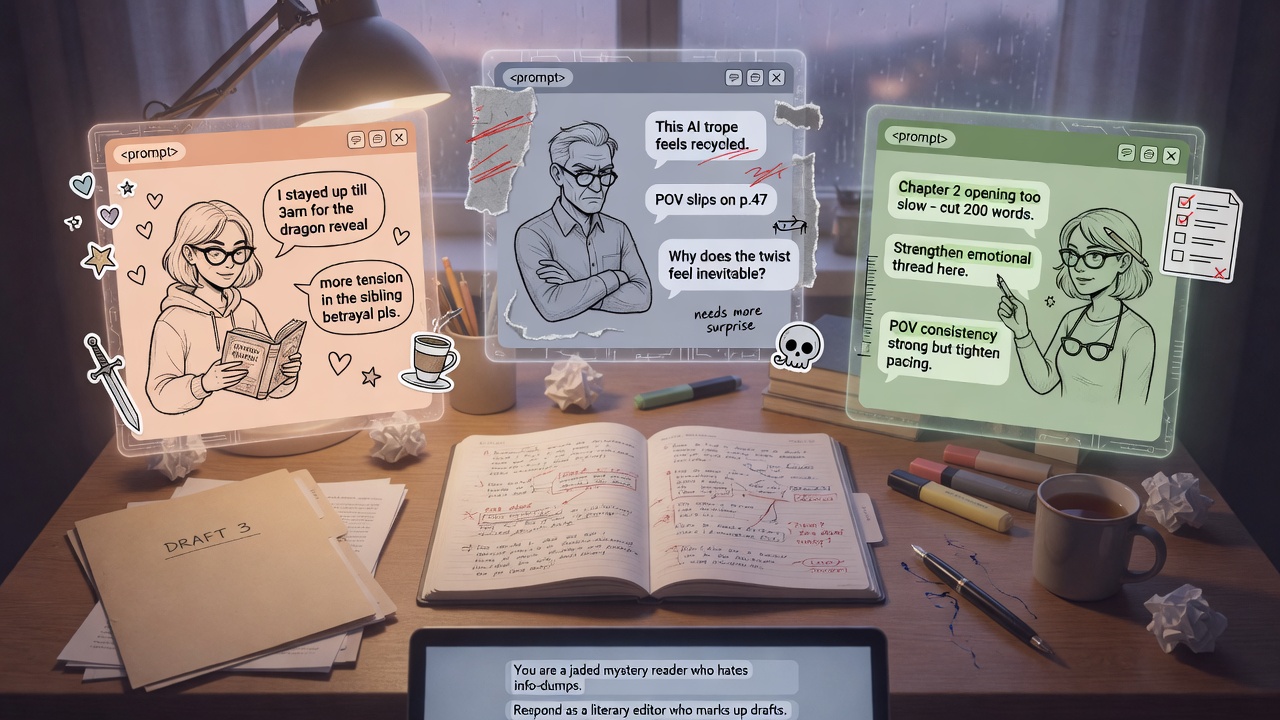
Most revision advice treats "the reader" as a single entity. In practice, your actual beta readers are wildly different people bringing wildly different expectations to the page. A romance reader who's consumed 400 books in the genre will clock a trope violation in chapter two that a general fiction reader won't even notice. A writer-friend doing a critique pass will fixate on sentence-level rhythm and repeated words in a way that a plot-focused reader glides right past. A skimmer, reading on their phone during a commute, will bail at the first paragraph that doesn't move.
These aren't contradictions in taste. They're different lenses, and each one catches a different category of problem:
- The genre purist catches violated conventions, unearned twists, and world-building logic gaps that break the implicit contract of the genre.
- The skimmer catches pacing drag, unclear stakes, and any scene where the "why should I keep reading" isn't answered fast enough.
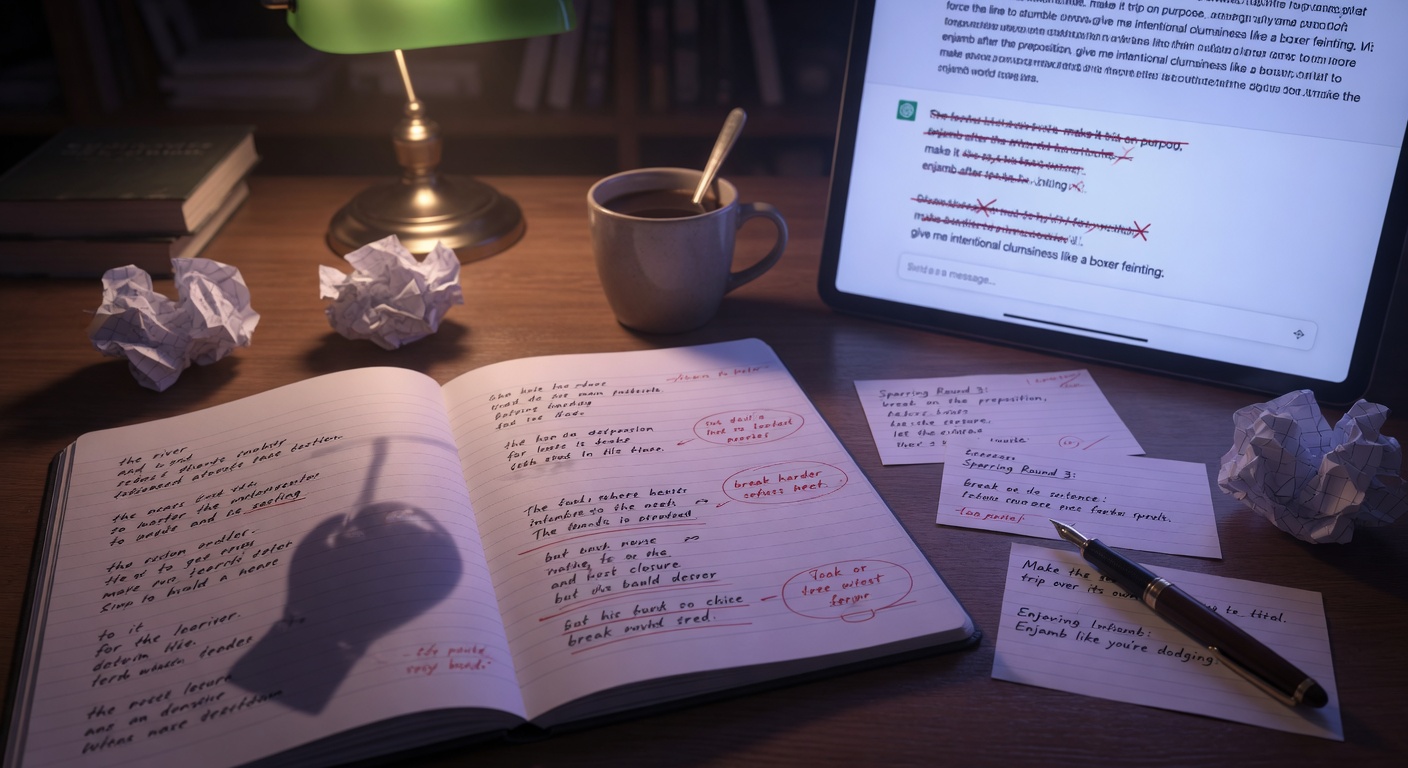
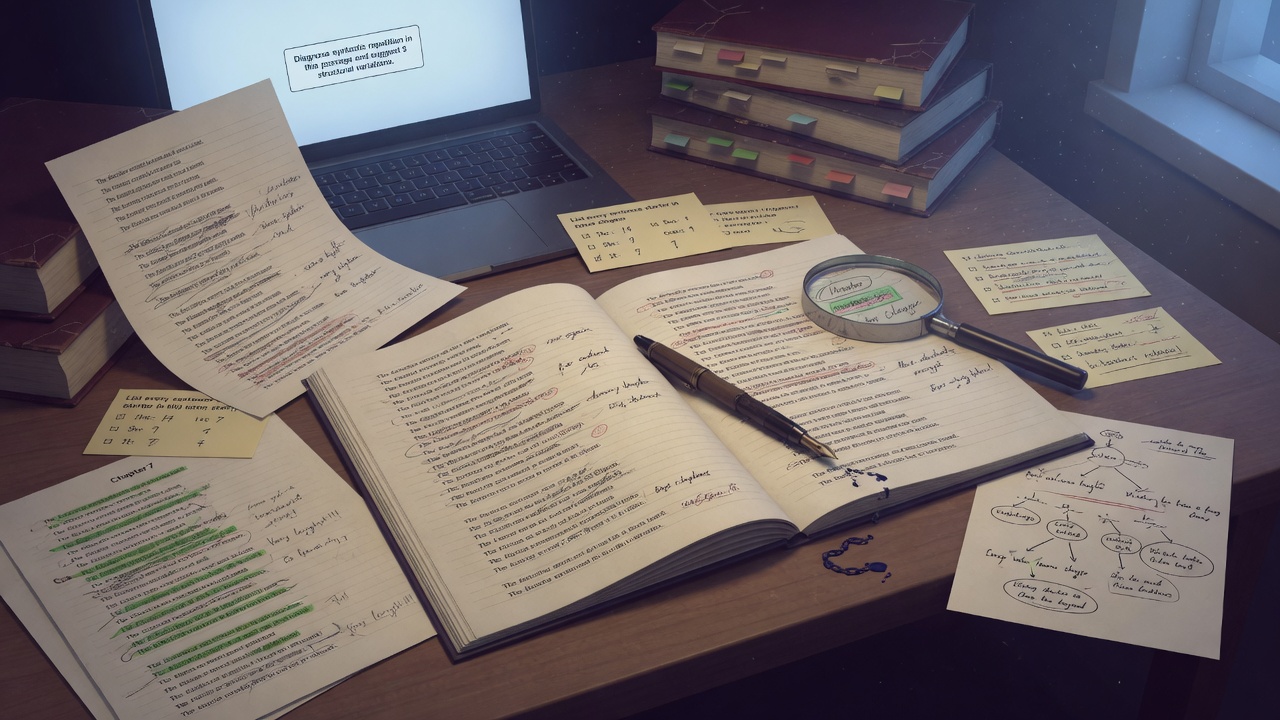
- The craft-focused writer-reader catches prose fatigue, structural repetition, and technique that calls attention to itself.
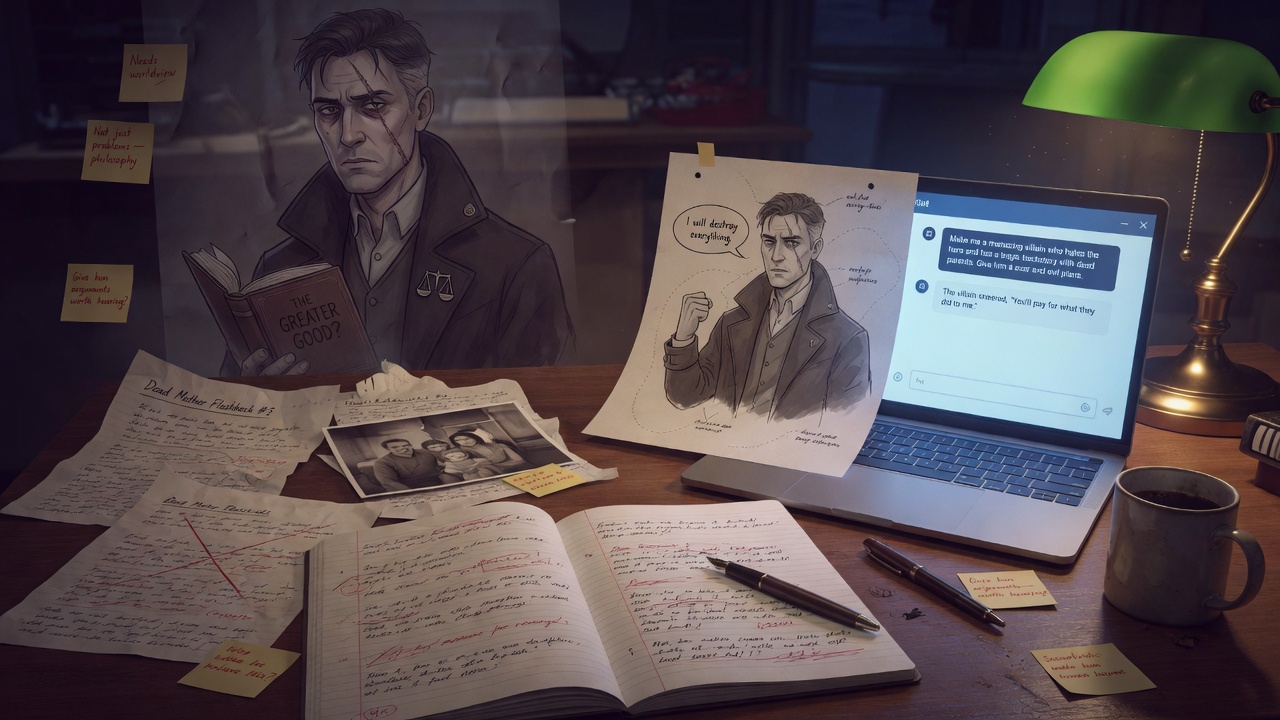
- The emotional reader catches flat characters, unearned emotional beats, and moments where they should be crying and aren't.
When you send a draft to five real people without having pressure-tested it against these lenses yourself, you're using their limited attention to discover problems a simulation could have flagged in an afternoon. Worse, you often can't tell whether a piece of feedback is a consensus problem (fix it) or a persona-specific quirk (leave it, that reader just isn't your target audience). A simulated panel run first gives you a baseline for sorting signal from noise before the real notes even arrive.
Prompt 1: Build the Panel
The first step is constructing personas specific enough to generate genuinely different reactions, not generic "reader A liked it, reader B didn't." Vague personas produce vague feedback. You want reading habits, genre history, and pet peeves detailed enough that the AI can stay in character across an entire manuscript.
I'm about to run my manuscript through a simulated beta reader panel. Help me build 5 distinct reader personas tailored to my book's genre and target audience. My book: [title, genre, comp titles, one-paragraph premise] Target reader: [age range, reading habits, what they typically read] For each persona, generate: - Name and a one-line identity (e.g., "Genre purist: reads 3-4 fantasy romances a month, has strong opinions about magic systems") - Their reading context (phone during commute vs. dedicated reading time vs. audiobook while driving) - Their genre expectations specific to THIS book's genre and subgenre - Their top 3 pet peeves that would make them put a book down - Their top 3 things that make them recommend a book to friends - How they typically give feedback (blunt and structural, vague and emotional, detailed line notes, etc.) Give me: 1. The genre purist for my specific subgenre 2. The skimmer/casual reader who reads on their phone 3. The craft-focused reader who is also a writer 4. The emotional/character-driven reader who reads for feeling over plot 5. One wildcard persona specific to my book (e.g., if I have a disability rep character, a reader from that community; if it's a mystery, a reader who's solved every mystery they've ever picked up) Keep each persona to 150 words so I can reference them easily throughout this process.Spend real time on this prompt. The wildcard persona especially matters — if your book involves specific representation, a niche profession, a real historical period, or a subculture your readers will recognize, that persona is often where the most useful friction comes from. Don't skip it because it feels like extra work; it's usually the single most valuable voice on the panel.
Prompt 2: Run the Manuscript Through Each Lens
Once you have personas, the next step is generating their actual reactions. This works best chapter by chapter for a full manuscript, though you can also feed in a synopsis plus sample chapters if you're early in revision and don't have a complete draft yet. The key instruction here is asking for the specific moment each persona would put the book down — that's the detail that turns generic praise/criticism into something actionable.
Using the 5 personas we built, I want you to react to this chapter as each of them, in character, one at a time. [Paste chapter text, or paste a detailed chapter-by-chapter synopsis if working at the full-manuscript level] For EACH persona, give me: 1. Their in-character reaction in their own voice and feedback style (2-3 sentences) 2. The specific line, scene, or moment where THIS persona would be most likely to put the book down or lose interest, and why — be precise, quote the line if it's in the text 3. What this persona would want more of 4. What this persona would skim or want cut 5. A confidence rating (low/medium/high) on whether this reaction represents a real craft issue versus this persona simply not being the book's target audience Do not soften the reactions to be nice. I want the skimmer to be bored where they'd actually be bored, and the genre purist to be annoyed where a real genre purist would be annoyed. If a persona would have no complaints, say so, but push yourself to find the honest reaction rather than defaulting to praise.The instruction not to soften the feedback matters more than it might seem. AI models default toward encouragement, and a beta panel that only ever finds minor things is worthless. If your simulated skimmer never gets bored and your simulated genre purist never spots a problem, you haven't built a useful panel — you've built a compliment generator. Push back if the first round comes back too gentle, and explicitly ask for the harshest plausible version of each persona's reaction.
Prompt 3: Separate Consensus Problems From Persona Noise
Once you've run several chapters through the panel, you'll have a pile of reactions that can feel contradictory — the emotional reader wants slower character beats where the skimmer wants faster pacing. This is normal and expected; it's exactly the tension real beta readers create. The value of the simulation is that you can now cross-reference these reactions systematically, something that's much harder to do with real feedback arriving in five different Google Docs over five different weeks.
Here are the reactions from all 5 personas across chapters 1-10: [Paste or summarize the persona reactions gathered so far] I want you to analyze these for patterns: 1. CONSENSUS PROBLEMS: Identify anything that 3 or more personas independently flagged, even if they described it differently. These are likely genuine craft issues, not just taste differences. Explain the underlying issue in plain terms. 2. PERSONA-SPECIFIC QUIRKS: Identify feedback that came from only one persona and is best explained by that persona's specific taste or expectations rather than a real flaw. Tell me why this is likely a "not the target reader" issue rather than something to fix. 3. PRODUCTIVE TENSION: Identify any places where two personas want contradictory things (e.g., skimmer wants faster, emotional reader wants slower). For each, tell me what this tension is actually revealing about the scene, and suggest a version that might satisfy both without gutting the scene's purpose. 4. Rank the consensus problems by how early in the manuscript they occur, since early problems compound and are highest priority to fix first. Be specific about which chapter and scene each issue lives in.This step is where the panel earns its keep. Real beta feedback rarely gets this kind of structured cross-referencing — you're left doing the mental math of "did three people mention this or does it just feel that way because two of them used similar words." Having the AI hold all five reactions simultaneously and sort them into consensus versus noise gives you a prioritized revision list instead of a pile of contradictory notes to puzzle over alone.
Prompt 4: Turn Findings Into a Revision Pass and a Question List
The final move is converting everything you've learned into two concrete outputs: a revision pass you do before anyone else sees the manuscript, and a targeted list of questions for your actual human beta readers. The second part is easy to skip but arguably more valuable than the revision itself — it means your real betas aren't answering "what did you think" in the abstract, they're confirming or denying specific risks you already suspect.
Based on the consensus problems and productive tensions we identified, help me build two things: 1. A PRE-BETA REVISION PASS: A prioritized checklist of specific changes to make before I send this manuscript to real readers. For each item, tell me which chapter/scene it affects, what the underlying issue is, and one concrete suggestion for how to address it (not a rewrite, just a direction). Order this by impact — start with anything affecting reader retention in the first three chapters. 2. A TARGETED QUESTION LIST for my real beta readers: 8-10 specific questions I should ask my human betas, based on the risks the simulation flagged that I'm least certain about or couldn't resolve through the productive-tension analysis. Avoid generic questions like "did you like it." Make each question specific enough that a beta reader's answer will tell me something the simulation couldn't — things like whether a twist actually lands, whether a character's motivation reads as clear once a real human's own life experience is in play, or whether pacing that reads fine on-screen behaves differently for a reader with less patience than an AI persona. Flag which of these questions are especially important to ask readers who match specific personas (e.g., ask this one to someone who reads a lot in this genre specifically).The output here should function like a briefing document you keep open while reading real beta feedback as it arrives. When a human reader's note lines up with something the simulation already flagged, you've got confirmation and can act with confidence. When a human reader raises something the simulation never caught, that's often the most valuable note in the batch — it's telling you something distinctly human that no persona simulation was built to catch.
What This Doesn't Replace
It's worth being direct about the limits here. A simulated panel rehearses plausible reactions based on patterns in genre and craft; it does not replace the unpredictable, embodied experience of an actual person reading your book on their actual couch with their actual history. Real beta readers bring things no persona simulation can: genuine surprise, genuine boredom, the specific emotional weather of their own week, and reactions to your prose that come from being an actual mind rather than a very well-briefed pattern-matcher.
What the simulation buys you is a sharper draft and better questions. You'll walk into your real beta swap having already fixed the obvious pacing drag, the genre logic gap, the repetitive sentence rhythms — the things a panel of careful readers would have caught anyway, but which would have cost you a full revision round to discover. That leaves your real readers free to catch the things only they can catch: whether the ending actually moves someone, whether the twist surprises a person who wasn't primed to look for it, whether the book, in the end, works.
No comments yet. Be the first to comment!