

Every query letter has a moment where the agent's eyes either narrow with interest or glaze over with fatigue, and that moment is almost always the comp titles. You can write a flawless log line, a hook that would make a marketing director weep with joy, and still torpedo the whole letter with two comps that signal you haven't read anything published since 2015 or don't actually know what shelf your book belongs on.
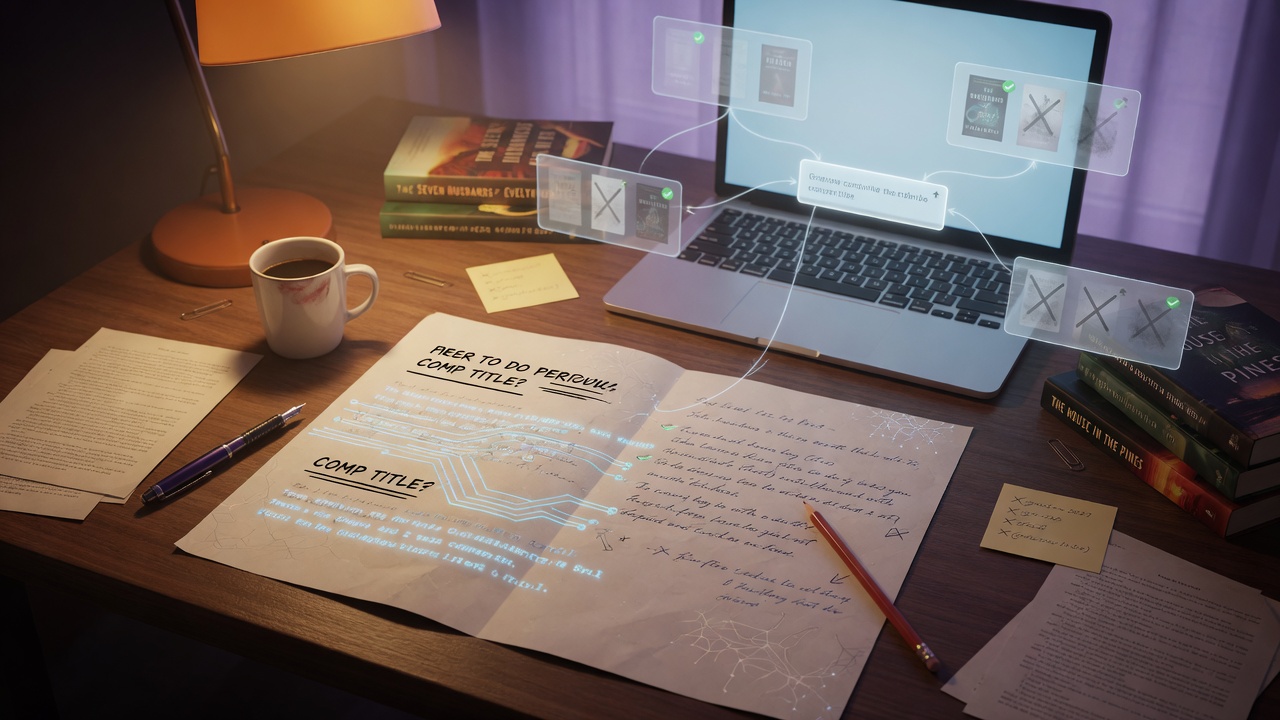
Comp titles (short for "comparison titles" or "comparable titles") are the two or three published books you cite to show an agent where your manuscript fits in the current market. Something like "for fans of Emily Henry's BEACH READ meets the propulsive dread of Paul Tremblay." Done well, this does an enormous amount of work in a single sentence: it signals genre, tone, audience, and sales potential all at once. Done poorly, it tells the agent you're either delusional about your book's scale (comping to a ten-million-copy blockbuster) or completely out of touch with your own category.
AI has become genuinely useful for this part of the query process, not because it knows which books are secretly selling well right now (it doesn't, and treating it like a real-time sales database is how people end up with fabricated or wildly outdated comps), but because it's excellent at structural comparison, pattern-matching, and stress-testing your reasoning. The trick is using it as a thinking partner for books you already know exist, not as an oracle that invents plausible-sounding titles.
What Agents Are Actually Checking When They Read Your Comps
Most writers think comps exist to say "my book is good, like these other good books." That's not quite it. Agents use comps as a fast diagnostic, and they're silently scoring you on three things simultaneously.

No comments yet. Be the first to comment!