Sensory Fact-Checking: AI Prompts That Ground Period Settings in Smell, Sound, and Touch Without Inventing Sources
The Highest-Risk Zone in Historical Fiction
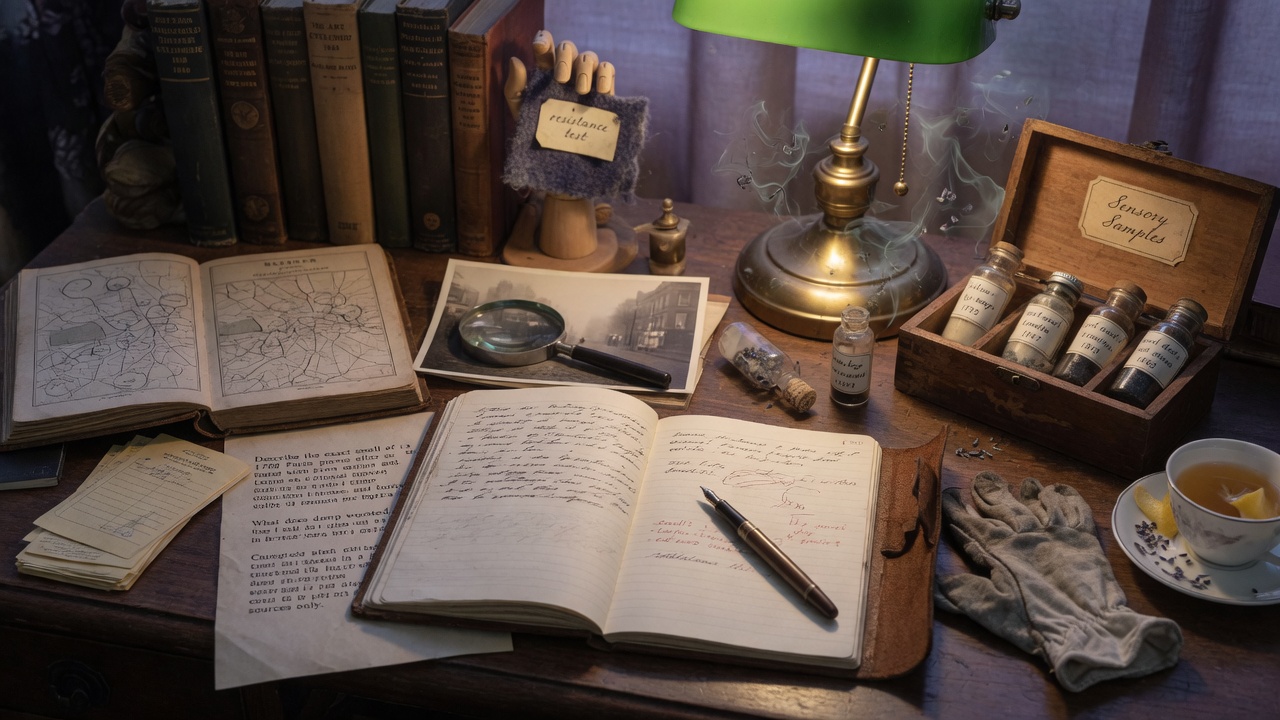
Historical novelists spend considerable energy verifying the facts readers are most likely to check: battle dates, political offices, the name of a ship's captain. What gets less scrutiny—and causes more quiet damage to a manuscript's credibility—are sensory details. The smell of a street. The specific resistance of wool against skin. The quality of silence in a house without electrical current running through its walls.
These details feel instinctive to write. That instinct is the problem. A novelist setting a scene in 1890s London will reach, almost automatically, for coal smoke, fog, the clatter of hooves. Some of that is accurate. Some of it is Victorian-era atmosphere absorbed from other novels, from films, from a general cultural impression of what the past smelled and sounded like. The difficult truth is that this impressionistic sense of period is partially constructed from fiction about fiction—a long game of telephone played across two centuries of historical novels, each borrowing sensory textures from the ones that came before.
AI makes this problem more acute and also, used correctly, more manageable. The acute part: when you ask an AI to help you write a period scene, it will produce sensory details that sound completely authoritative and may be entirely fabricated. The manageable part: AI is genuinely useful as a scaffold for research—a tool for identifying what needs to be checked, generating precise research questions, and flagging anachronism risks before they make it into print. The key distinction is between using AI to generate historical facts and using AI to structure your verification process
This article is about the second use.Why Sensory Details Resist Easy Fact-Checking

No comments yet. Be the first to comment!