

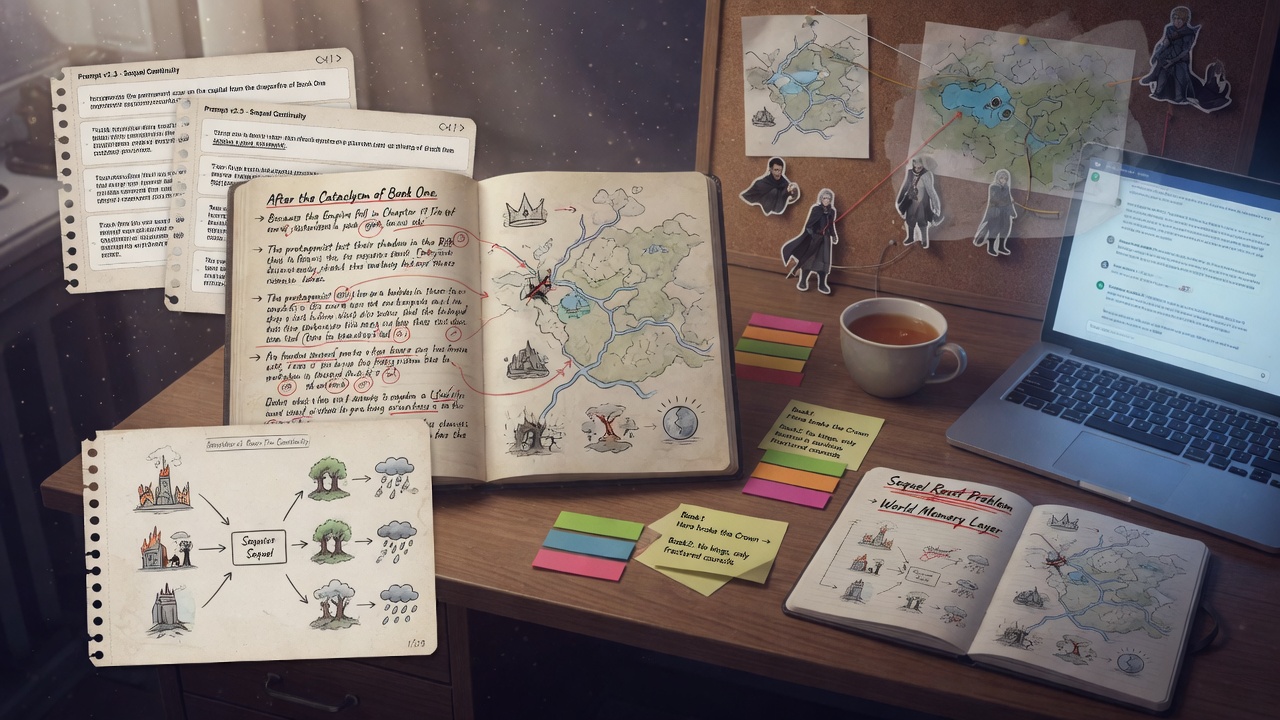
The Sequel Reset Problem
Readers can forgive a lot of things in a series—slow chapters, a subplot that fizzles, even a villain who monologues too much. What they don't forgive easily is a world that forgot what happened to it. If Book One ends with a kingdom's treasury looted, a beloved side character dead, and a decades-old alliance shattered, and Book Two opens with markets humming along fine, the dead character's best friend acting like nothing occurred, and the alliance quietly intact until the plot needs it broken again—readers notice. They may not articulate it as "consequence tracking failure," but they'll say the sequel felt flat, or that the stakes didn't feel real, or that they didn't trust the story anymore.
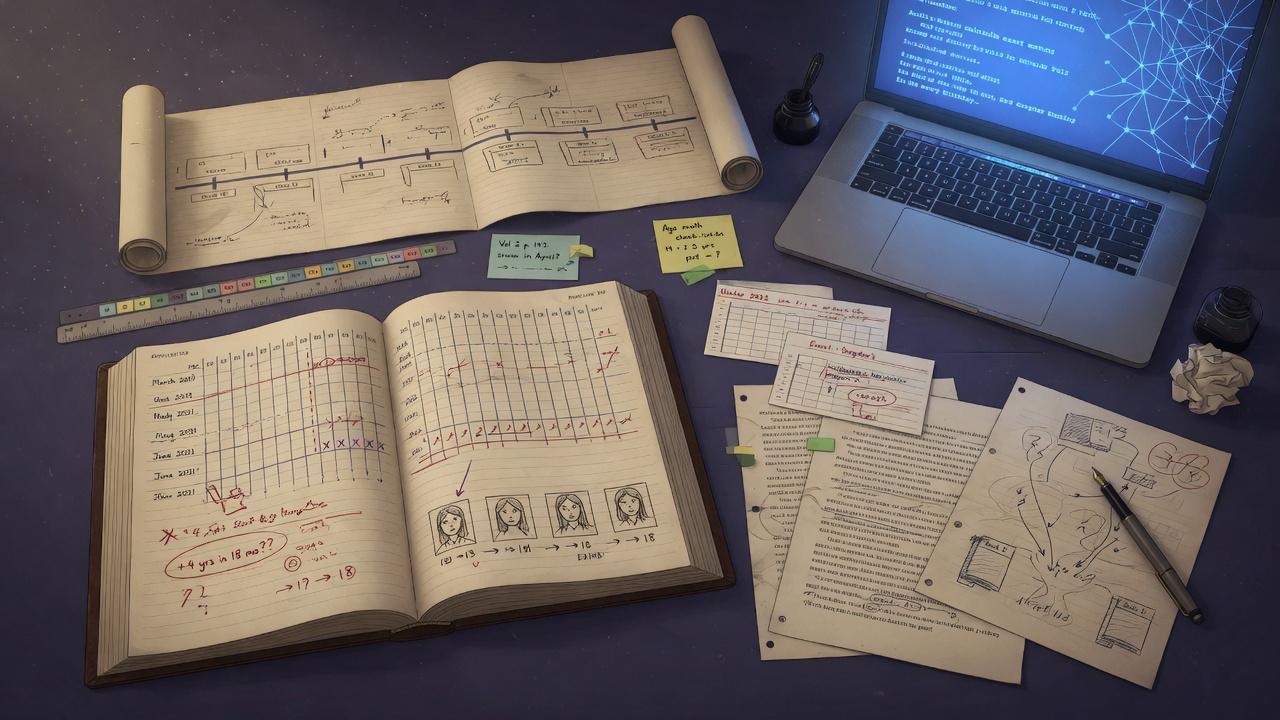
This happens because most authors track consequences in their heads, and heads are bad filing cabinets across an 18-month gap between drafting Book One and starting Book Two. You remember the big stuff—the death, the betrayal, the war. You forget the fifty smaller threads that death or betrayal should have pulled: the guild that loses its biggest patron, the trade route that no longer has an escort, the minor character who now has a grudge, the town whose economy depended on the thing you destroyed.
AI is genuinely useful here, not because it understands your world better than you do, but because it doesn't get tired of cross-referencing. It can hold your entire manuscript's event list against your sequel draft and flag mismatches faster than you can reread 100,000 words looking for continuity ghosts. The trick is giving it a structured job instead of a vague one. "Does this sequel make sense" is not a prompt. A consequence ledger is.
Building a Consequence Ledger
Before you can check whether your sequel respects Book One's events, you need an exhaustive, categorized list of what actually happened and what it should plausibly cause. This is the foundational document, and it's worth doing properly even if it takes a few passes. Feed the AI your full Book One manuscript (or detailed chapter summaries if the manuscript is too long for one pass) and ask it to extract events by category, then reason forward about downstream effects.
Read the attached manuscript for Book One of my series. I need a Consequence Ledger that captures every event with lasting narrative weight, organized by category. For each event, do the following: 1. Name the event in one line (what happened, to whom, when in the story). 2. Classify it: Death/Injury, Power Shift, Revelation/Secret Exposed, Relationship Change, Resource/Economic Change, Geographic/Environmental Change, Faction Standing Change. 3. List the characters or groups directly affected. 4. List the characters or groups indirectly affected (people who would hear about this, be impacted by its ripples, or have to react even if they weren't present). 5. Propose 3-5 plausible downstream consequences that would realistically manifest in the following months or years — political, economic, social, or emotional. Be specific rather than generic (not "tension increases" but "the grain tariff the villain's family controlled reverts to the crown, destabilizing three border towns that relied on the family's smuggling routes"). 6. Flag any event where the "obvious" consequence is one authors commonly skip in sequels (e.g., a death that should change succession, staffing, or loyalty structures but often gets ignored because it's inconvenient to the plot). Organize the final output as a table or numbered list I can reference while outlining Book Two. Do not summarize the plot — I only want the ledger.
The value of this prompt is in its specificity. Asking for "categories" forces the AI to separate a character death from a political power shift from a revealed secret, which matters because each category tends to ripple differently. A death changes succession and grief; a revealed secret changes trust and alliances; a resource change alters economies and daily life for people who never appear on page. If you just ask "what are the consequences of Book One," you'll get a vague paragraph about "the world being changed forever." The categorized version gives you something you can actually check against your draft.
Pay attention to point six in that prompt—the flag for commonly skipped consequences. This is where AI earns its keep. Authors are notoriously good at tracking the consequences that serve their plot and blind to the ones that don't. If your protagonist assassinates a duke, you'll remember to deal with the assassination's political fallout because that's probably plot-relevant. You're less likely to remember that the duke's household staff are now unemployed, that his mistress has lost her protection, that the merchants who owed him money now owe someone else, or that his hunting dogs need a new owner. Not every thread needs a scene, but a ledger that surfaces them lets you choose deliberately what to address rather than accidentally ignoring the ones that would actually matter to attentive readers.
Getting the Categories Right for Your World
The categories in the sample prompt are generic enough for most secondary-world fantasy, science fiction, or political thriller series, but you should tailor them. A series built around a magic system might need a category for "Magical/Supernatural Balance Change." A series about a corporate dystopia might need "Regulatory/Legal Change" as its own line rather than folding it into power shift. The point isn't to use my categories verbatim—it's to make sure every kind of consequence relevant to your specific world has a bucket, so nothing falls through because it didn't fit any of the boxes you gave the AI.
Testing Your Sequel's Opening Chapters Against the Ledger
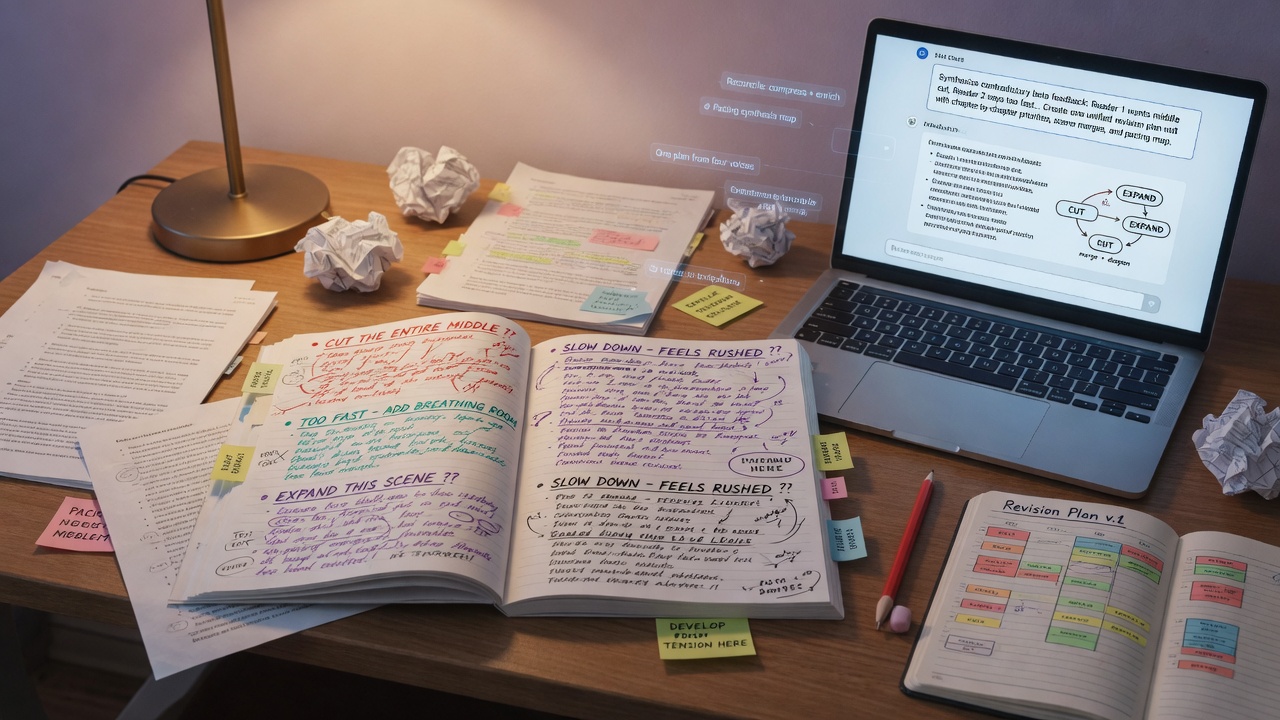
Once you have a ledger, the next move is checking your actual Book Two draft against it. This is where most authors realize how much they've quietly reset. You wrote the opening chapters focused on introducing new plot threads, and without meaning to, you wrote a world that behaves as though Book One's climax didn't happen—characters at ease who shouldn't be, economies functioning who shouldn't be, relationships unchanged that should be transformed.
I'm providing two documents: my Consequence Ledger from Book One, and the first five chapters of Book Two's draft. Go through the Book Two chapters and identify every place where the setting, a character's behavior, dialogue, or the stated stakes should logically reflect an entry on the ledger but currently doesn't. For each instance, tell me: 1. Which ledger entry is being ignored or contradicted. 2. The specific line, scene, or character choice in the draft where this becomes apparent. 3. Why a reader who finished Book One would notice the gap (what expectation is being violated). 4. A brief suggestion for how the scene could acknowledge the consequence without requiring a full rewrite — a line of dialogue, a detail of setting, a character's internal reaction, or a passing reference. Also flag the reverse problem: places where I've clearly tried to reference a Book One consequence but gotten a detail wrong (timeline, who knows what, or the scale of the impact). Be strict. I would rather you flag something that turns out to be a non-issue than let a real inconsistency through. Do not comment on prose style or pacing — I only want consequence-tracking issues.
Two things make this prompt work better than a generic "check for consistency" request. First, the instruction to be strict and accept false positives. AI tools, left to their own judgment, tend toward being agreeable and will often wave through inconsistencies rather than flag them, especially subtle ones like a character's emotional register being wrong given what they should know. Telling it explicitly that you'd rather over-flag than under-flag changes its threshold for what it surfaces.
Second, the request for a "brief suggestion" rather than a rewrite. You don't want the AI drafting your prose—you want it pointing at the gap and giving you a minimal-effort way to think about closing it. Often the fix is a single sentence: a character glancing at an empty chair, a merchant complaining about new tariffs, a guard mentioning the garrison is short-staffed since the incident. These are cheap to add and expensive to have missing, because their absence is what makes readers feel the world is fake.
Surfacing Overlooked Ripple Effects
The ledger and the draft check handle known consequences—things you already identified as significant enough to extract from Book One. But some of the most convincing world-building comes from ripples nobody thought to name because they're one or two steps removed from the obvious effect. This is where a different kind of prompt helps: one that asks the AI to reason like an economist, a sociologist, and a geographer rather than like a plot tracker.
Based on the Consequence Ledger I've shared, I want you to reason through second- and third-order effects that wouldn't show up on a typical event list because they're indirect. Consider each major event on the ledger and answer: - Economy: How would markets, trade routes, labor, taxation, or scarcity shift because of this event, even in regions or industries not directly involved in the event itself? - Factions and Institutions: Which groups gain or lose influence as an indirect result, even if they weren't parties to the original event? Consider religious bodies, guilds, military structures, criminal networks, and bureaucracies. - Minor and Background Characters: Name the kinds of people (not necessarily named characters, but roles — a dockworker, a mid-level clerk, a rural healer) whose daily life would be altered in a way that a reader familiar with the world would find plausible and telling if shown briefly. - Geography and Environment: If the event involved violence, magic, industry, or large-scale movement of people, what physical trace would remain — damaged land, resettled populations, new checkpoints, altered wildlife patterns, changed infrastructure? For each category, give me 4-6 specific, non-generic possibilities I could weave into Book Two or Book Three as background texture or minor subplot material. I'm not looking for things that need to become main plot points — I'm looking for the kind of detail that makes a world feel like it has continued existing since Book One ended.
This prompt tends to produce the material that reviewers describe as "immersive" without quite knowing why. It's rarely the big stuff that makes a sequel feel lived-in—readers expect the big stuff to matter. It's the incidental detail: the fact that a specific bridge is now guarded because of last book's smuggling scandal, the fact that a healer's apprentice took over the practice because her mentor died in the climax, the fact that a coastal town's fishing income collapsed because the harbor was blockaded for six months during the war. None of that needs a scene devoted to it. A sentence in passing does the work, and readers register it as evidence that the author is tracking a real, continuous world rather than resetting a stage set between books.
Turning the Ledger Into a Living Document
The mistake to avoid is treating the ledger as a one-time exercise you complete after Book One and then forget. Consequences compound. Book Two will generate its own set of deaths, revelations, and power shifts, some of which interact with Book One's unresolved threads in ways that need tracking for Book Three. The ledger should grow with each installment, not get replaced by a new one.
After each draft, or at minimum after each finished book, run an update pass: feed the AI the existing ledger alongside the newly finished manuscript and ask it to append new entries, note where Book Two's events either resolved or complicated a Book One consequence, and flag any threads that are still open and need attention in the next book. This keeps the document from becoming an artifact of Book One alone and turns it into the actual continuity spine of your series—the kind of resource that lets you write Book Four five years from now and still know, with confidence, exactly what your world remembers.
No comments yet. Be the first to comment!